Introduction to How to Train as a Yoga Teacher
If you are wondering how to train as a yoga teacher, the path is shorter and clearer than it looks. In most cases it means building a steady personal practice, choosing a style and a school, completing a 200-hour teacher training, and then registering and teaching your first classes. This guide walks through each step in order, explains what the certificates actually mean, and shows what a real 200-hour course looks like, including the one at Nepal Yoga Institute in Budhanilkantha, Kathmandu.
It is written for two kinds of readers: people who love yoga and quietly wonder whether they could teach it, and people who have already decided and are now comparing schools, formats and costs. Either way, you will leave with a realistic picture of the time, money and effort involved.
How to Train as a Yoga Teacher: The Short Answer
Here is the whole journey in seven steps. Each one is explained in detail below.
- Build a personal practice. Practice regularly before you try to teach.
- Decide what kind of teacher you want to be. Pick a style and a goal.
- Understand certification. Learn what 200-hour, 300-hour, RYS and RYT mean.
- Choose a training format. Studio, immersive residential, or online.
- Choose a school. Check teachers, curriculum, group size, what is included and what is not.
- Complete the training. Study, practice, and teach under supervision.
- Register and start teaching. Apply for registration if you want it, then teach small and grow.
The rest of this guide fills in the details, including the common mistakes that cost people money and the questions worth asking any school before you pay a deposit.
Who Can Train as a Yoga Teacher?
Almost anyone with a genuine interest in yoga can. You do not need to touch your toes, hold a handstand or have practiced for a decade. What matters more is curiosity, discipline and a willingness to be a student first.
There are a few practical points worth knowing before you apply:
- Flexibility is not a requirement. Teaching yoga is about understanding the practice and guiding other people through it, not performing advanced shapes.
- Age limits depend on the school. Nepal Yoga Institute, for example, lists 18 as the minimum age for its teacher training, and says its students range from 18 to 65.
- Experience requirements vary. Some advanced programs expect prior training. Nepal Yoga Institute states that students of all backgrounds and levels are welcome in its 200-hour course and that no specific experience is required.
- Health matters. A good school will ask about injuries, medication and medical conditions before you arrive, so the teachers can guide you safely.
- Language matters. Check which language the course is taught in and whether you can follow lectures on anatomy and philosophy comfortably.
It also helps to be honest about why you want to train. Many people sign up for a teacher training with no plan to teach full time. They want to understand yoga properly, deepen their own practice or take a month away from ordinary life. That is a perfectly good reason, and teaching can come later or not at all.
Step 1: Build a Personal Practice First
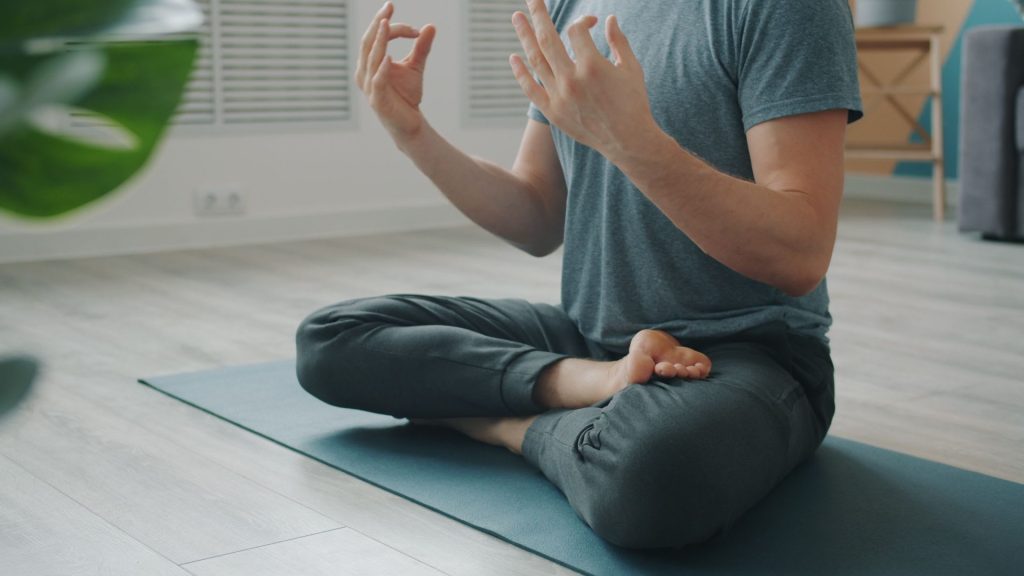
Before you think about certificates, spend time on your own mat. A teacher training is not an introduction to yoga. It assumes you already know what a sun salutation feels like, what happens when you slow your breathing, and how your body responds to different postures.
Aim for a regular rhythm rather than a heroic one. Three or four sessions a week over several months will teach you more than a burst of daily practice for a fortnight. During that time, notice things a future teacher needs to notice:
- Which postures feel natural and which feel stuck, and why that might be.
- How your breath changes when you rush or when you slow down.
- What a good cue sounds like from a teacher, and what makes you tune out.
- How you feel at the end of a class compared with the beginning.
If you are new to yoga, start with a beginner-friendly class so that the foundations are solid. The guide to yoga classes for beginners explains what to expect in your first sessions and how to choose a class that suits your level.
Keep a simple practice journal. A few lines after each session about what you practiced and how it felt becomes a useful record later, when you are building your own classes and need to remember why certain sequences worked.
A simple three-month preparation plan
If your course is a few months away, this rough plan keeps your preparation realistic without turning it into a second job.
- Month one: build the habit. Practice three or four times a week at a pace that feels comfortable, and sit quietly for a few minutes after each session.
- Month two: add breath and stillness. Introduce a short daily breathing practice and a few minutes of seated meditation, since both take up large parts of a teacher training day.
- Month three: start observing. Pay attention to how your own teachers structure a class, then try sequencing a short practice for yourself and writing it down.
Nothing here is mandatory. Its purpose is to make the first week of the course feel familiar instead of overwhelming.
Step 2: Decide What Kind of Teacher You Want to Be
Yoga is not one thing. Before choosing a school, decide what you want to teach, because the style of the training shapes the kind of teacher you become.
Some common starting points:
- Hatha yoga focuses on postures, breathing and relaxation at an accessible pace. It is a common foundation for new teachers and works well for beginners.
- Ashtanga yoga can mean the dynamic Mysore-style sequences, or in the broader classical sense, Patanjali’s eight limbs of yoga from ethical principles through meditation. Schools use the word differently, so ask what a particular school means.
- Vinyasa links movement with breath in flowing sequences and is popular in many studios.
- Meditation, pranayama and philosophy-led approaches suit people drawn to the contemplative side of yoga.
Nepal Yoga Institute teaches what it describes as traditional (Sanatan) yoga, mostly Hatha and Ashtanga, along with mantra and Raja yoga and a general overview of other types. If you want to see how each approach is taught in detail, the institute has dedicated pages on Hatha yoga teacher training in Nepal and Ashtanga yoga teacher training in Nepal.
It is also worth asking yourself who you want to teach. Beginners in a community hall, office workers on a lunch break, older adults, athletes and people dealing with stress all need different things from a class. You do not have to decide forever, but a rough idea will help you judge whether a school’s curriculum fits your goals.
Step 3: Understand Yoga Teacher Certification
This is the step that confuses most people, because the terms sound similar and are used loosely in marketing. Here is what they mean.
200-hour, 300-hour and 500-hour levels
The 200-hour training is the foundation level. It is the course most people mean when they say “yoga teacher training” or “YTT”. A 300-hour training is an advanced program taken after the 200-hour. Together, a 200-hour and a 300-hour training can lead to a 500-hour level.
Yoga Alliance: RYS and RYT
Yoga Alliance is a US-based registry and the name you will see most often in teacher training. It does not run courses itself. Instead, schools can register with it as a Registered Yoga School (RYS), and graduates of those schools can then apply to register as a Registered Yoga Teacher (RYT).
A few points that often get mixed up:
- Registration with Yoga Alliance is voluntary. It is a credentialing system, not a government licence.
- Completing a 200-hour course does not automatically make you an RYT. The training must be at a registered school, and you then apply individually.
- All 200 hours generally need to come from a single registered school. You cannot normally combine hours from different schools to reach the total.
- An E-RYT is an experienced designation, which also requires a number of teaching hours after training.
For a 200-hour program, Yoga Alliance’s current core curriculum divides the hours into four educational categories, with the rest allocated by the school:
| Category | Hours |
|---|---|
| Techniques, Training and Practice | 75 |
| Anatomy and Physiology | 30 |
| Yoga Humanities (philosophy, history, ethics) | 30 |
| Professional Essentials (teaching methodology, professional development, practicum) | 50 |
| Flexible hours allocated by the school | 15 |
Yoga Alliance has also announced changes to how its credentials and membership work from 2027, so check its website for the rules that apply on the day you register. If you want to understand how certification works for training done in Nepal specifically, the guide to yoga certification in Nepal covers it in more depth.
Do you need the registry at all?
Not necessarily. Some studios ask for it, some do not, and plenty of teachers build careers on reputation and the quality of their classes. The honest answer is that the registry is useful if you plan to teach in studios that look for it, and optional if you mainly want to learn deeply or teach in your own community. The most important thing is the quality of the training itself, not the logo on the certificate.
Step 4: Choose the Right Training Format
Once you know the level you are aiming for, decide how you want to study. The three common formats trade off time, cost, immersion and flexibility.
| Format | How it works | Best for | Watch out for |
|---|---|---|---|
| Residential or immersive | You live at the school for a few weeks, with a full daily schedule of practice and study. | People who can take time away and want depth and focus. | Needs a block of free time and travel, so plan leave and budget early. |
| Local part-time | Classes over weekends or evenings spread across several months. | People with jobs or family who want to stay at home. | Harder to stay immersed, because ordinary life continues around the course. |
| Online | Lectures and practice delivered by video, often partly live. | People who cannot travel or attend in person. | Less hands-on feedback. Rules about online delivery have changed over time, so check them if registration matters to you. |
Many people also confuse a yoga retreat with a teacher training. A retreat is a restful program for your own practice and recovery. A teacher training is a structured educational course with assessment and practice teaching. If you are unsure which suits you, the comparison of yoga retreat vs yoga teacher training lays out the differences in plain terms.
For most people, residential training is the format that changes how they practice. Living and studying in one place removes the daily distractions, and the repeated rhythm of early practice, theory, self-study and evening sessions builds habits that are hard to create in a normal week. It is not the only valid choice, but it explains why so many students travel for their training.
Step 5: Choose a School
This is where most of the value, and most of the risk, sits. Two schools can advertise the same 200 hours and deliver very different experiences. Use this checklist to compare them.
- Who teaches, and what are their credentials? Look for named teachers with real backgrounds, not just a generic “experienced teachers” line.
- How big are the groups? Small groups mean more feedback and more chances to practice teaching. A cap on student numbers is a good sign.
- What is the curriculum? Ask for the hour-by-hour breakdown across asana, pranayama, meditation, philosophy, anatomy, teaching methodology and practicum.
- Is the schedule published? A day-by-day timetable tells you how demanding the course really is.
- What is included in the price? Meals, accommodation, materials and certificate should be stated clearly. Ask what is not included, such as transport and airport transfers.
- What is the payment and refund policy? Know the deposit, when the balance is due, and what happens if you cancel.
- What registration does the school hold? If registration matters to you, look the school up on the official Yoga Alliance directory instead of relying on the school’s own wording.
- What do past students say? Read independent reviews as well as testimonials on the school’s own site.
- Is the environment right for you? Location, food, climate, quiet and accommodation all affect how well you can study.
Be wary of schools that are vague about price, hide the schedule, promise a guaranteed job, or pressure you into paying quickly. A good school is happy to answer detailed questions, and will tell you if it is not the right fit. If you are comparing schools in Nepal in particular, it helps to ask each one the same list of questions and put the answers side by side before deciding.
Step 6: Complete the Training
A 200-hour training is intense. Expect early mornings, long days and a lot of new information. Most courses combine the same core ingredients, even if the balance differs.
What you study
- Asana: learning postures, alignment, modifications, and how to teach them safely.
- Pranayama: breathing techniques and how to guide them.
- Meditation: practice, and how to lead beginners in it.
- Philosophy and history: texts such as the Yoga Sutras and the Hatha Yoga Pradipika, and the origins of yoga.
- Anatomy and physiology: how the body moves, and how yoga affects it.
- Teaching methodology: communication, class structure, cueing, adjusting and working with different groups.
- Ethics and lifestyle: the responsibilities of a teacher, and the yogic principles that support them.
- Practicum: practice teaching, observing others, and giving and receiving feedback.
What a day looks like
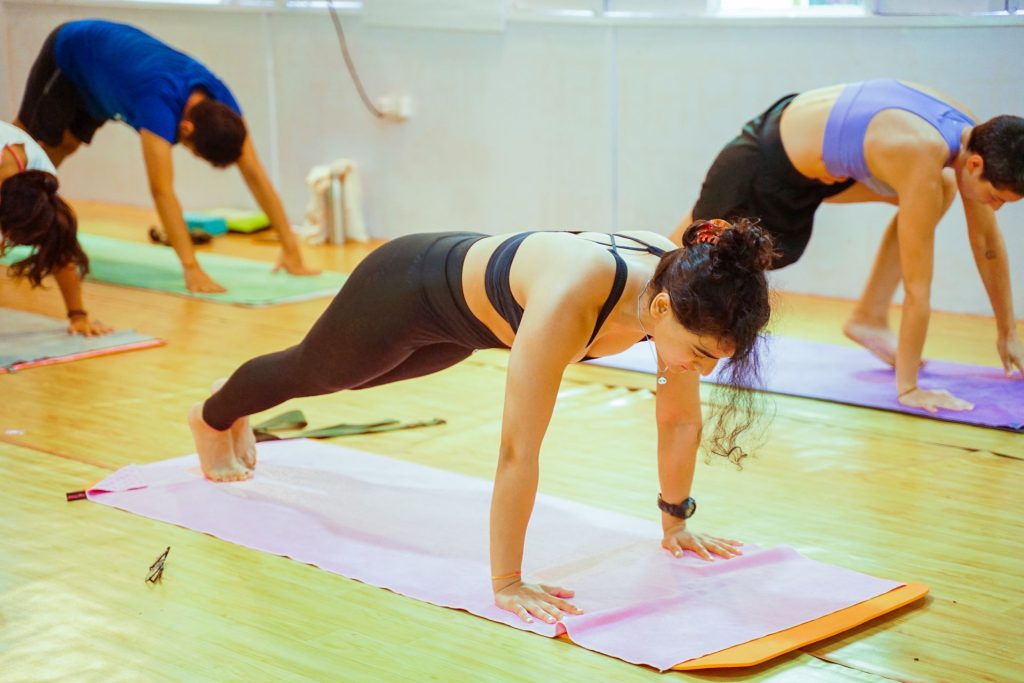
Schedules differ, but a residential day typically runs from early morning to late evening. At Nepal Yoga Institute, the published schedule begins at 6:30 with satkarma (cleansing practices), chanting and pranayama, followed by mantra chanting, asana and pranayama, then breakfast. Mid-morning is theory and yogic relaxation, the afternoon includes self-study, meditation and a workshop, and evenings have asana practice, dinner, self-study and sadhana until about 9:30 pm. The school notes that the timetable can change with the season and student requests, and there is one day off each week, typically Sunday.
How to get the most from it
- Arrive rested. The first week is the hardest, and tired students struggle most.
- Take notes by hand. They are easier to review than recordings, and writing helps memory.
- Volunteer to lead. The practicum is your best chance to find your teaching voice in a safe setting.
- Ask questions. Anatomy and philosophy can feel dense, and teachers expect you to ask.
- Protect your body. Tell teachers about pain or injury early, and rest when you need to.
- Use the day off. Walks, short hikes and quiet time help you absorb the week.
The guide to things to prepare for your yoga teacher training is a useful checklist for what to pack and how to get ready in the weeks before you arrive.
What Makes a Good Yoga Teacher
A certificate opens the door, but it does not make someone a good teacher. The qualities that matter most are mostly learned through practice, not memorized from a manual.
- Clear communication. Short, simple cues that people can follow while moving beat long explanations.
- Observation. Watching the room, not the clock or your notes, tells you when to slow down, simplify or offer an alternative.
- Adaptability. Bodies differ. A good teacher offers options so that beginners and experienced students can both work safely in the same class.
- Humility. Staying a student keeps your teaching honest. You will make mistakes, and the best teachers say so and learn from them.
- Clear boundaries. Yoga teachers are not doctors or therapists. If a student describes pain or a medical condition, the right response is to adapt the practice and suggest they speak to a qualified professional.
- Consistency. Showing up prepared, on time and calm builds trust faster than any clever sequence.
These qualities are the real reason a supervised practicum matters. Teaching a room of fellow trainees, and hearing frank feedback, is the quickest way to find out what you do well and what to work on.
Step 7: Register, Get Set Up and Start Teaching
Finishing the course is the start of the work, not the end. Here is how to move from graduate to teacher.
Register if you want to
If you completed your training at a Yoga Alliance Registered Yoga School and want the credential, you can apply to register as an RYT. Yoga Alliance currently lists a one-time application fee of $50 and annual dues of $65. Registration continues only while you keep paying dues and meeting its continuing education requirements, and those rules are being updated, so read the current terms before you apply.
Check insurance and legal basics
If you teach in a studio, ask whether the studio’s insurance covers you or whether you need your own liability cover. If you teach privately or hire space, you will probably want your own. Requirements differ by country, so check the rules where you plan to teach.
Teach small, then grow
Almost every new teacher feels nervous. Start with friends, family, a community group or a free class in a park. Ask for honest feedback on your cues, pace and clarity, and keep notes on what works. Build a few sequences you know well, then expand.
Keep learning
The best teachers stay students. Take workshops, attend other teachers’ classes, and maintain your own practice. When you are ready for more depth, an advanced course is the natural next step, and the guide to advanced yoga teacher training in Nepal explains what to expect beyond the foundation level.
A Realistic Timeline From Decision to First Class
People often ask how long the whole process takes from the first idea to the first class they teach. The honest answer is that it depends on your starting point, but this rough guide gives you a sense of the stages.
| Stage | Rough time | What happens |
|---|---|---|
| Build your practice | A few months, ideally | You practice regularly and get comfortable with the basics of asana, breathing and stillness. |
| Research and choose a school | A few weeks | You compare teachers, curriculum, group size, inclusions and registration, and ask questions. |
| Book and prepare | Depends on start dates | You pay the deposit, arrange leave and travel, and prepare. Nepal Yoga Institute starts a new 200-hour course on the 15th of every month. |
| Complete the training | 22 days at Nepal Yoga Institute | You study, practice and teach under supervision. |
| Register and teach | Weeks after graduating | You decide on registration, arrange insurance if needed and teach your first small classes. |
None of these stages has a deadline except the ones you set. Rushing the early stages is the most common reason people feel unprepared when the course begins.
Why Many Students Choose to Train in Nepal
Nepal sits between India and the Himalayas, and yoga, meditation and Buddhist and Hindu contemplative traditions are part of daily life there. For students who want to study away from home, it offers a quiet setting, mountain scenery and a slower pace than a city studio.
The practical advantages are straightforward. A residential course lets you step out of your routine, and Nepal’s landscape makes the weekly day off more rewarding, with temples, short hikes and heritage sites nearby. If you are weighing the idea, the article on why Nepal is a good country for yoga teacher training goes into the reasons in more detail.
Before you travel, check entry requirements for your nationality. Most visitors need a visa, and fees and rules change, so confirm the current details on the Nepal Department of Immigration website instead of relying on older guides. Nepal Yoga Institute also recommends travel insurance for all students.
About Nepal Yoga Institute
Nepal Yoga Institute and Retreat is a residential yoga school in Budhanilkantha, on the northern edge of the Kathmandu Valley, below Shivapuri National Park. The school lists its distance as about 22 km from Tribhuvan International Airport. Its main focus is the 200-hour yoga teacher training, alongside retreats, stress management programs and psychological counseling.
The school is led by its founder, Dr. Bal Krishna Khanal, who holds a Ph.D. in Yoga and Naturopathy from Nepal Sanskrit University, and a small team of teachers that includes a Yoga Alliance USA certified teacher, an Ayurveda doctor who teaches anatomy and physiology, and a yoga and meditation teacher. The institute states that it is registered with Yoga Alliance USA and that its teachers hold Experienced Registered Teacher status. As with any school, you can verify registration yourself on the Yoga Alliance directory before paying a deposit.
The 200-hour course at a glance
| Detail | As published by the institute |
|---|---|
| Course length | 22 days |
| Complete cost | $1,400 |
| Deposit | $200, paid in advance and non-refundable |
| Balance | Payable on orientation day in Nepal |
| Start dates | The 15th of every month, ending on the 7th or 8th of the following month |
| Group size | Up to 14 students per course |
| Day off | One day a week, typically Sunday |
| Minimum age | 18 |
According to the institute’s FAQ, the fee covers all meals and tea, training materials and shared accommodation. Transport to and from the institute is not included. Meals are sattvic, meaning organic vegetarian or vegan, and meat, fish and eggs are not served.
What the curriculum includes
The institute’s published curriculum puts the largest block of time into practice, with about 100 hours spent learning and practicing asana, pranayama, kriyas, chanting, mantra, mudra and meditation. It also includes 20 hours of philosophy, 20 hours of anatomy and physiology, a 20-hour practicum, and 15 hours of teaching methodology. Other sessions cover yogic diet, lifestyle and ethics, mantra chanting, Triyoga (karma, bhakti and jnana), and question-and-answer discussions. In the practicum, every trainee leads classes, observes others and gives and receives feedback.
You can see the full curriculum, daily schedule and booking details on the 200-hour yoga teacher training page.
Cost and Time at a Glance
Costs vary widely depending on where you train, how long the course is and what is included. Rather than guess at averages, here are the figures that are published and verifiable.
| Item | Amount | Source |
|---|---|---|
| Nepal Yoga Institute 200-hour training (complete cost) | $1,400 | Institute’s course page |
| Nepal Yoga Institute deposit | $200, non-refundable | Institute’s course page |
| Nepal Yoga Institute course length | 22 days | Institute’s course page |
| Yoga Alliance RYT application | $50 one-time | Yoga Alliance fees |
| Yoga Alliance RYT annual dues | $65 per year | Yoga Alliance fees |
Remember to budget for the things the course fee may not cover: flights, airport transfers, visa fees, travel insurance, personal spending and any extra nights before or after the program. Always ask a school for a written list of what is and is not included.
Common Mistakes to Avoid
- Choosing on price alone. The cheapest course is rarely the best, and the most expensive is not automatically better. Compare teachers, group size and inclusions.
- Skipping personal practice. Starting training with very little practice makes the course harder and less enjoyable.
- Assuming every “certified” course is registered. Verify any registration claim on the official directory.
- Ignoring the schedule. A 200-hour residential course is demanding. Plan rest before and after.
- Not asking about what is excluded. Transport, extra nights and exam or certificate fees can add up.
- Expecting a guaranteed career. Training qualifies you to begin. Building classes and a reputation takes time.
- Trying to learn everything at once. Pick a style, teach it well and add more later.
- Not telling teachers about injuries. Safe teaching starts with honest communication about your own body.
What to Do After Your 200 Hours
Give yourself time to digest the course. Many graduates feel a mix of excitement and uncertainty in the first weeks, which is normal. A simple plan helps:
- Rest and keep your daily practice going.
- Write down the sequences and cues you liked during training.
- Teach your first few classes to people you trust, and ask for feedback.
- Decide whether to register with Yoga Alliance, based on where you plan to teach.
- Plan your next step, whether that is workshops, a specialty course or an advanced training later on.
There is no deadline. Some teachers start the week after graduation, others wait a year. What matters is that you keep practicing and keep teaching in a way that feels honest to you.
FAQs About How to Train as a Yoga Teacher
Do I need to be advanced or flexible to start yoga teacher training?
No. Flexibility is not a requirement. Nepal Yoga Institute states that students from all backgrounds and experience levels are welcome and that no specific experience is required for its 200-hour training. A regular personal practice does make the course easier and more enjoyable.
How long does it take to train as a yoga teacher?
A 200-hour foundation course can be completed in about three to four weeks as a residential program, or spread over several months if you study part-time. Nepal Yoga Institute runs its 200-hour training over 22 days, starting on the 15th of every month.
How much does yoga teacher training cost?
Prices vary widely by country, school and what is included. At Nepal Yoga Institute, the complete cost of the 200-hour training is $1,400. A $200 non-refundable deposit is paid in advance, and the balance is due on orientation day in Nepal.
Is 200 hours enough to become a yoga teacher?
The 200-hour course is the standard foundation level and is enough to begin teaching. Most teachers keep learning through practice, workshops and, later, advanced training.
Is Yoga Alliance registration required to teach yoga?
No. Registration is voluntary. Some studios prefer it, and it lets you list yourself as a Registered Yoga Teacher after completing training at a Registered Yoga School.
Can I train as a yoga teacher online?
Online trainings exist, but the rules about online delivery have changed over time. If registration matters to you, check Yoga Alliance’s current requirements and confirm the course is delivered by a registered school. Many students still prefer in-person training for hands-on feedback and practice teaching.
Can I teach right after finishing my 200-hour training?
Yes. Many graduates start teaching soon after finishing, often with friends, community groups or small classes. Confidence grows with practice, so start small and ask for feedback.
What do you learn in a yoga teacher training?
You study asana, pranayama, meditation, yoga philosophy, anatomy and physiology, teaching methodology and ethics, and you complete practice teaching. Nepal Yoga Institute also includes mantra chanting, satkarma (cleansing practices) and a yogic lifestyle.
Is there a minimum age for yoga teacher training?
It depends on the school. Nepal Yoga Institute lists 18 as the minimum age for its teacher training, and its students range from 18 to 65.
Why train as a yoga teacher in Nepal?
Nepal offers a quiet Himalayan setting, a traditional approach to yoga and meditation, and the chance to study away from everyday distractions. At Nepal Yoga Institute in Budhanilkantha, Kathmandu, classes are small, with up to 14 students per course.
Ready to Start Your Teacher Training?
If you are ready to take the next step, or still have questions about dates, what is included and whether the course suits your level, ask the team directly. Tell them your experience, your goals and when you would like to come, and they will guide you.
Chat with Nepal Yoga Institute on WhatsApp: +977 9860480478
You can also reserve your place through the online booking form.