If you’ve been standing at the edge of a yoga studio schedule, scrolling past class names like Vinyasa Flow, Power Yoga, and Ashtanga Primary Series, wondering where on earth a total beginner is supposed to start — Hatha is usually the answer you’re looking for. But “usually” isn’t good enough when it’s your first time rolling out a mat, so let’s actually answer the question properly: can beginners do Hatha yoga, and what does that really look like in practice, not just in theory?
Short version: yes, beginners can do Hatha yoga, and it’s widely considered one of the most accessible entry points into the whole discipline. But the longer, more useful answer depends on what kind of Hatha class you walk into, what your body can currently do, and whether you’re asking about a weekly class or something more intensive like a teacher training course.
This guide covers all of it — what Hatha yoga actually is, why it’s recommended for beginners, what a first class really feels like, how it compares to other styles, and how to take it further if you fall in love with it, including what a structured Hatha Yoga Teacher Training in Nepal actually involves for someone starting from zero.
Quick Answer: Can Beginners Do Hatha Yoga?
| Question | Short Answer |
|---|---|
| Can beginners do Hatha yoga? | Yes — it’s generally considered the most beginner-friendly style of physical yoga |
| Do I need to be flexible first? | No. Flexibility is a result of practice, not a requirement to begin |
| Will I sweat a lot in a beginner Hatha class? | Usually not much — Hatha classes tend to move slowly with held postures rather than fast cardio-style flow |
| What age can start? | There’s no strict upper age limit for beginner Hatha practice; structured teacher training programs commonly welcome adults roughly 18 and up |
| Do I need prior yoga experience for a Hatha Yoga Teacher Training? | No specific prior experience is required to join a teacher training course, though the training itself is physically and mentally demanding |
| How is it different from Ashtanga or Vinyasa for a beginner? | Hatha moves slower with longer-held poses; Ashtanga and Vinyasa link postures together in faster, more continuous sequences |
| Where can beginners try Hatha yoga in Nepal? | Through dedicated retreat programs, stress-management packages, or a full Hatha Yoga Teacher Training |
So, Is Hatha Yoga Actually Beginner-Friendly?
Yes — and this isn’t just a reassuring line thrown at nervous newcomers. Hatha yoga is structurally built in a way that suits a first-timer better than most other styles, because of how the postures are taught and held, not sped through. When people wonder whether beginners can really keep up, what they’re usually asking is some version of: will I look foolish, will I get hurt, and will I actually be able to follow along.
The honest answer to all three is reassuring: Hatha classes are typically slower-paced, poses are held for several breaths rather than flowed through quickly, and a competent teacher spends real time on alignment and modification rather than assuming everyone in the room already knows what they’re doing.
At Nepal Yoga Institute and Retreat, Hatha is described plainly as the practice of yoga through physical technique aimed at relaxation — a class marked as Hatha generally gives you a moderate introduction to the most fundamental yoga postures, and you almost certainly won’t break a sweat, but you’ll likely leave feeling calmer, more comfortable, and more relaxed than when you walked in. That description is a pretty accurate summary of why Hatha so often gets recommended as the entry point for people who’ve never set foot on a mat before.
What Is Hatha Yoga, Exactly?
Before going further, it’s worth being precise about what “Hatha” actually refers to, because the word gets used two slightly different ways, and that’s part of why a straightforward question like this one gets confusing.
In the broadest sense, Hatha yoga is an umbrella term for any style of yoga that works through physical postures — meaning Vinyasa, Ashtanga, Iyengar, and Power Yoga are all technically forms of Hatha yoga, since “Hatha” simply signifies the physical branch of yoga as opposed to purely meditative or devotional paths. In Sanskrit, Hatha is often translated as “forceful,” and the practice is sometimes described as “determined” or “powerful” — the yoga of deliberate physical action rather than passive contemplation. A commonly cited alternate reading breaks the word into “ha” (sun) and “tha” (moon), framing the practice as a union of opposing energies within the body.
In the narrower, more everyday sense — the one most beginners actually encounter on a class schedule — “Hatha” refers specifically to a gentler, slower-paced class focused on foundational postures, held for several breaths, combined with breathing exercises and often a short meditation. This is the sense most relevant to anyone asking whether beginners can do Hatha yoga, since it’s this slower, more methodical format that makes the style so approachable for a first-timer.
A traditional Hatha practice typically introduces students to several interconnected elements beyond just physical postures:
- Asana — the physical postures themselves
- Pranayama — breath control and breathing exercises
- Shatkarma — traditional cleansing techniques
- Mudra — symbolic hand and body gestures
- Bandha — internal energy locks used alongside breathwork
A genuine beginner class won’t throw all of these at you on day one — but knowing they exist helps explain why Hatha yoga, even in its gentler beginner form, is considered a complete practice rather than just stretching.
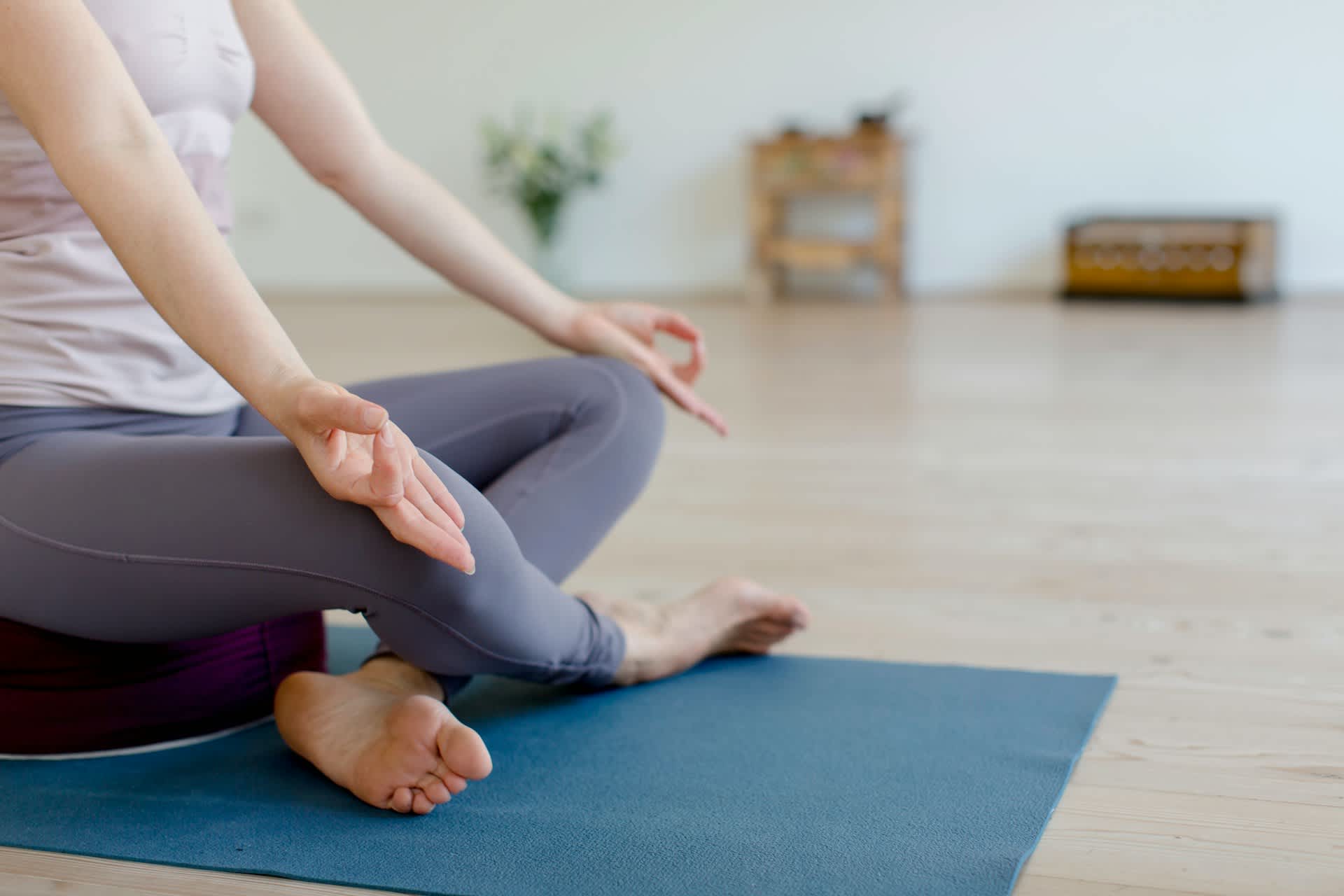
Common Hatha Yoga Postures (And Which Ones Are Actually Beginner-Level)
One thing that trips people up when researching whether beginners can do Hatha yoga is that “Hatha” as a category includes postures spanning a huge range of difficulty — from extremely gentle to genuinely advanced. A full list of classical Hatha postures includes everything from a basic forward bend to a full headstand, and seeing an intimidating pose on a list can make the whole style seem less approachable than it actually is for someone just starting out.
Here’s a clearer breakdown, separating genuinely beginner-accessible postures from ones that typically take months or years of consistent practice to build toward safely:
| Beginner-Accessible Hatha Postures | Postures That Take Time to Build Toward |
|---|---|
| Triangle Pose (Trikonasana) | Headstand (Sirsasana) |
| Cobra Pose (Bhujangasana) | Shoulder Stand (Sarvangasana) |
| Standing Forward Bend (Pada Hasthasana) | Peacock Pose (Mayurasana) |
| Sitting Forward Bend (Paschimottanasana) — with modification | Crow Pose (Kakasana) |
| Locust Pose (Shalabhasana) — gentle variation | Plough Pose (Halasana) |
| Half Spinal Twist (Ardha Matsyendrasana) — supported | Full Bow Pose (Dhanurasana) |
This is exactly why beginner Hatha yoga needs a little nuance: yes, it’s absolutely doable, as long as the class or program is actually structured to start you at the appropriate level and build up gradually, rather than expecting you to attempt an inversion in your first week.
Why Hatha Is Recommended as the Starting Point for Beginners
A few specific features of Hatha yoga make it the style most commonly recommended when people ask where a complete beginner should start.
The pace allows time to actually learn alignment. Because postures are held rather than quickly transitioned through, there’s time for a teacher to correct your form and for you to feel what proper alignment actually feels like in your own body — something that’s much harder to absorb in a fast-moving flow class.
It builds the foundation other styles assume you already have. Vinyasa and Ashtanga both move through sequences that assume a working knowledge of basic postures. Starting with Hatha means you arrive at those faster-paced styles, if you choose to try them later, already knowing the shapes your body needs to make.
It combines breath, movement, and stillness from day one. Rather than treating breathing as an afterthought, Hatha classes typically integrate pranayama and a closing relaxation or short meditation, giving beginners a fuller picture of what yoga actually is beyond just physical exercise.
It’s genuinely low-injury-risk when taught properly. Slower movement and longer holds give your body and your teacher more opportunity to catch and correct problems before they become strain, which matters most in exactly the early weeks when your body doesn’t yet know its own limits.
What a Beginner’s First Hatha Yoga Class Actually Feels Like
It helps to know what to expect walking in, since uncertainty is usually what stops people from trying in the first place.
A typical beginner-friendly Hatha session tends to follow a predictable shape: a few minutes of settling in and gentle breathing to transition out of your day, a sequence of foundational standing and seated postures held for several breaths each with verbal and sometimes hands-on cueing from the teacher, a short period of simple pranayama practice, and a closing relaxation pose (Shavasana) lying flat and still for several minutes before the class ends. The whole thing usually runs somewhere between 60 and 90 minutes, depending on the setting.
Nobody expects a beginner to touch their toes, hold a pose perfectly, or keep pace with anyone else in the room. A well-taught beginner Hatha class is built around modification as the default, not the exception — props, bent knees, shortened holds, and simplified versions of a pose are all completely normal, not a sign you’re doing something wrong.
Hatha Yoga vs. Other Styles: Which Is Actually Best for a Beginner?
Since the question of whether Hatha yoga is good for beginners often comes paired with “…or should I try something else instead,” it’s worth a direct comparison.
| Style | Pace | Typical Beginner Experience |
|---|---|---|
| Hatha Yoga | Slow, postures held for multiple breaths | Generally considered the gentlest, most accessible starting point |
| Vinyasa Yoga | Moderate to fast, continuous flow linked to breath | Can be overwhelming for a total beginner trying to keep pace |
| Ashtanga Yoga | Fast, fixed sequence (the Primary Series), physically demanding | More athletic; some schools, including Nepal Yoga Institute, explicitly welcome beginners with no prior experience, though the pace itself is more intense than Hatha |
| Power Yoga | Fast, strength and cardio-focused | Generally recommended after some foundational experience, including some Hatha practice |
| Iyengar Yoga | Slow, highly focused on precise alignment, uses props extensively | Also considered beginner-friendly, with a strong emphasis on technical correctness |
Worth noting here: even Ashtanga, often assumed to be too intense for a first-timer, doesn’t technically require prior experience to begin at some schools — Nepal Yoga Institute’s own description of its Ashtanga Yoga Teacher Training states plainly that no prior experience is required to join the course. That said, the physical pace of Ashtanga is genuinely more demanding than Hatha’s, which is exactly why Hatha remains the more commonly recommended starting point for someone easing into yoga for the very first time, even when other styles technically accept beginners too.
Addressing the Real Concerns Beginners Have
Beyond the basic question, a few more specific worries about starting Hatha yoga as a beginner tend to come up repeatedly.
“I’m not flexible at all.” Nobody starts flexible — flexibility is an outcome of consistent practice over time, not a prerequisite for showing up. A genuinely beginner-friendly Hatha class is built for exactly this starting point.
“I’m older than everyone else doing yoga online.” Hatha yoga, with its gentler pace and emphasis on held postures rather than athletic flow, is one of the more commonly recommended styles for older beginners specifically, precisely because of its lower-impact structure — though as with any new physical activity, it’s sensible to check with a doctor first if you have an existing health condition.
“I have an old injury.” A good teacher, told about an injury in advance, can usually offer a modification rather than exclude you from a pose entirely. This is part of why Hatha’s slower pace matters — there’s time for that individual adjustment to actually happen.
“I’ll feel embarrassed if I can’t keep up.” In a properly run beginner Hatha class, there isn’t really a “keeping up” dynamic the way there is in a fast flow class — everyone moves through held postures at a broadly similar, unhurried pace, which removes a lot of the social pressure that keeps people out of yoga in the first place.
For general, evidence-based information on yoga’s safety profile and health effects — useful if any of these concerns are tied to a specific health condition — the U.S. National Center for Complementary and Integrative Health maintains a plain-language overview of what the research shows about yoga, including guidance on checking with a healthcare provider before starting if you have a relevant medical condition.
What Benefits Can a Beginner Actually Expect?
It helps to know what you’re working toward, beyond simply “feeling calmer.” A consistent beginner Hatha practice tends to produce a fairly predictable set of changes over the first few months, even at a gentle pace.
- Gradual improvement in flexibility, particularly through the hips, hamstrings, and spine — the areas most repetitive seated or desk-based lifestyles tend to stiffen first.
- Better body awareness, meaning a more accurate sense of your own posture, balance, and alignment in everyday movement, not just on the mat.
- A noticeable reduction in day-to-day tension, especially through the shoulders and lower back, as the breathing and stretching components do their work together.
- Steadier, more controlled breathing, carried over from pranayama practice, which many beginners report noticing most clearly during stressful moments outside of class.
- A calmer baseline mood, often attributed to the combination of physical movement, breath regulation, and the closing relaxation most Hatha sessions end with.
None of this happens after a single class — it builds gradually, which is exactly why consistency, covered further below, matters more than any single intense session.
Setting Realistic Expectations for Your First Month
Knowing what a typical first month looks like helps prevent the two most common reasons beginners quit early: expecting too much too soon, or expecting nothing and being surprised when something actually shifts.
In roughly the first one to two weeks, most beginners are still learning the basic vocabulary of class — pose names, how to breathe through a hold, what a modification actually looks like. Mild muscle soreness in areas you don’t normally stretch is common and not a cause for concern. By weeks three and four, most people report the poses starting to feel more familiar, with noticeably less mental effort spent simply remembering what to do next, freeing up attention for breath and alignment instead. It’s also around this point that the calming, after-class effect tends to become more pronounced and more reliable session to session, rather than occasional.
If you don’t feel dramatically different after your first week, that’s entirely normal, not a sign Hatha yoga isn’t working for you or that beginners somehow can’t do it. The style’s benefits, much like its pace, build steadily rather than arriving all at once.
How to Actually Start Hatha Yoga as a Complete Beginner
If beginners can do Hatha yoga this easily in theory, the next question is simply how to begin in practice.
- Start with a class explicitly labeled for beginners, rather than a general Hatha class that assumes some familiarity — the distinction matters more than the word “Hatha” alone.
- Tell the teacher you’re new before class starts. This single step does more to shape your experience than almost anything else — it lets them keep an eye on your form and offer modifications proactively.
- Wear comfortable, non-restrictive clothing you can move and stretch in without worrying about it.
- Bring your own mat if you have one, but don’t worry if you don’t — most studios and programs provide them.
- Don’t eat a heavy meal in the hour or two beforehand, since several postures involve bending and twisting through the torso.
- Go in with zero performance expectations. The goal of a first class is to feel what the practice is like, not to execute every pose correctly.
- Consider an immersive option if a weekly class doesn’t appeal to you — a short retreat or an intensive teacher training program can be a genuinely effective way to build a foundation quickly, with daily guided practice rather than once-a-week sessions.
Trying Hatha Yoga Before Committing to a Full Teacher Training
Not every beginner wants to jump straight into a multi-week teacher training course, and that’s a completely reasonable instinct. If you’d rather test the waters first, Nepal Yoga Institute and Retreat offers lower-commitment ways to experience guided Hatha-influenced practice in the same Budhanilkantha setting used for its full training programs.
Their Five Days Yoga Retreat Program is a shorter, structured option that combines daily yoga practice with rest and a calm natural setting, without the academic workload of a certification course. For something more flexible in length, the Long Term/Short Term Yoga Retreat Package can be adjusted to fit your available time. And if your main goal is simply relaxation and stress relief rather than building a yoga practice specifically, their Five Days Stress Management Package is built around a similar gentle, guided structure. Any of these can be a sensible way to answer “can beginners do Hatha yoga” for yourself, firsthand, before deciding whether to pursue something more structured.
Taking It Further: Hatha Yoga Teacher Training for Beginners
Here’s where the question shifts from “can a beginner attend a Hatha class” to something bigger: can a beginner complete an actual Hatha Yoga Teacher Training? This is a genuinely different question, and it deserves an honest, two-part answer.
Nepal Yoga Institute’s own Hatha Yoga Teacher Training in Nepal page describes the course as open to anyone who wants to practice yoga, teach yoga, and gain a deeper knowledge of it — but it’s also direct about the fact that the training itself is intense on a physical, mental, and spiritual level, requiring genuine physical stamina and mental discipline. That’s an important distinction: the Hatha yoga practice itself is gentle and accessible to beginners, but a multi-week teacher training condensing that practice into daily, structured, several-hours-a-day study is a serious undertaking regardless of style.
The encouraging part: according to Nepal Yoga Institute’s own course information, there’s no specific prior experience requirement to join a yoga teacher training course, and course participants have ranged in age from 18 to 65. In other words, you don’t need to already be practicing for years before you can enroll — but you should go in understanding that the training days themselves are long, structured, and physically demanding by design, not a leisurely retreat.
During a Hatha Yoga Teacher Training, students are typically introduced to the full set of traditional elements mentioned earlier — asana, pranayama, shatkarma, mudra, and bandha — alongside foundational yoga philosophy and anatomy, moving well beyond what a single beginner class would ever cover. It’s a genuinely comprehensive introduction to the discipline, not just an extended version of a beginner class.
Who Tends to Join a Hatha Yoga Teacher Training as a True Beginner
- Someone who has taken a handful of beginner classes and wants to go deeper quickly, rather than slowly over months
- Someone drawn more to the philosophy, breathwork, and lifestyle side of yoga than to advanced physical postures specifically
- Someone with reasonable general fitness and no major unaddressed injuries, comfortable with an early-rising, structured daily schedule
- Someone who wants the Yoga Alliance-recognized certification that comes with completing a registered training, even without a long personal practice history beforehand
If any of that sounds like you, the honest answer to “can beginners do Hatha yoga teacher training” is also yes — just with the clear understanding that it’s a demanding month, not a gentle vacation with yoga attached.
Other Paths Worth Knowing About
Nepal Yoga Institute’s Hatha program isn’t the only option on offer, and a beginner weighing their choices might reasonably want to compare before committing. The school’s 200 Hours Yoga Teacher Training covers a broader, traditional (Sanatan) curriculum drawing from both Hatha and Ashtanga yoga rather than specializing in one style, which can suit a beginner who isn’t yet sure which style they want to focus on.
For those specifically curious about the faster-paced alternative discussed earlier, the Ashtanga Yoga Teacher Training in Nepal page is worth reading directly, since — as mentioned above — it also states no prior experience is required to join. And for students wanting to continue beyond an initial 200-hour foundation, the school also lists an advanced-level yoga teacher training as a next step.
If you have specific questions about which program actually fits your situation as a beginner, the institute’s FAQ page covers a wide range of practical questions — from what’s included in course costs to daily schedules — and is a genuinely useful read before reaching out directly.
Practical Tips for Beginners Starting a Hatha Practice
- Consistency matters more than intensity. A short, regular practice builds more real progress than an occasional long session.
- Don’t compare your pose to anyone else’s. Bodies vary enormously in natural flexibility and proportion — the same pose looks different on every person, and that’s completely normal.
- Breathe through discomfort, never through pain. A stretch should feel like effort, not sharp or shooting pain; the latter is your body’s signal to back off immediately.
- Hydrate normally, but avoid overdoing it right before class, since several postures involve forward folds and twists through the abdomen.
- Keep a simple journal of how each class felt, especially in the first few weeks — it’s a genuinely useful way to notice progress that might otherwise feel invisible day to day.
- Give it at least a few sessions before deciding whether it’s for you. The first class is often the most awkward; most beginners report feeling noticeably more comfortable by the third or fourth session.
Common Myths About Hatha Yoga for Beginners
- “You need to be flexible to start.” Flexibility develops through practice; it’s an outcome, not an entry requirement.
- “Hatha is ‘easy’ and doesn’t count as a real workout.” It’s lower-intensity than Vinyasa or Power Yoga, but it still builds genuine strength, balance, and body awareness over time — it’s gentler, not inconsequential.
- “You have to be young to start.” There’s no meaningful upper age limit on beginning a Hatha practice; its gentler pace is part of why it’s commonly recommended across a wide age range.
- “A Hatha Yoga Teacher Training is only for people who’ve practiced for years.” As covered above, no specific prior experience is required to join — though the training itself is still a serious physical and mental commitment.
- “All Hatha classes are basically the same.” The word “Hatha” can describe anything from a gentle beginner session to a demanding, advanced practice — always check the specific class description or program details rather than assuming from the name alone.
Frequently Asked Questions
1. Can beginners do Hatha yoga with no experience at all? Yes. Hatha yoga is widely considered the most accessible starting point for complete beginners, thanks to its slower pace and emphasis on held, foundational postures rather than fast-moving sequences.
2. Is Hatha yoga hard for beginners? A beginner-level Hatha class is specifically designed not to be physically overwhelming. Some postures within the broader Hatha category are advanced, but a genuine beginner class won’t include those until you’ve built a foundation.
3. How many times a week should a beginner practice Hatha yoga? Two to three sessions a week is a commonly recommended starting frequency, giving your body time to adapt between sessions without losing the benefit of consistency.
4. Do I need to be flexible before starting Hatha yoga? No. Flexibility develops as a result of regular practice; it isn’t something you need to already have.
5. What should a beginner wear to a Hatha yoga class? Comfortable, non-restrictive clothing that allows a full range of movement — fitted enough that it won’t ride up during bends and folds, but not tight or constricting.
6. Can older adults do Hatha yoga as beginners? Yes — Hatha’s gentler, slower pace makes it one of the more commonly recommended styles for older beginners, though anyone with an existing health condition should check with a doctor before starting.
7. How long does it take a beginner to get comfortable with Hatha yoga? Most beginners report feeling noticeably more at ease by their third or fourth class, though genuine comfort with a wider range of postures typically builds over several months of consistent practice.
8. Is Hatha yoga better than Vinyasa for a complete beginner? Generally, yes, for an absolute first-timer — Hatha’s slower pace allows more time to learn proper alignment before moving on to faster-paced styles like Vinyasa.
9. Can a beginner join a Hatha Yoga Teacher Training, or do I need prior experience? According to Nepal Yoga Institute’s own course information, no specific prior yoga experience is required to join a teacher training course — though the training itself is physically and mentally demanding regardless of your starting point.
10. What age range typically joins a Hatha Yoga Teacher Training in Nepal? Students have ranged from roughly 18 to 65 years old, according to the institute’s own course details.
11. Will I need to do a headstand or other advanced pose as a beginner? No. Advanced postures like headstand, shoulder stand, or crow pose are part of the broader Hatha category but are not expected of a genuine beginner — they’re built up to gradually with experience.
12. Is Hatha yoga good for weight loss as a beginner? Hatha is lower-intensity than cardio-focused styles like Power Yoga or fast Vinyasa, so on its own it’s typically less effective purely for calorie burning, though it offers other well-documented benefits like stress reduction, flexibility, and body awareness.
13. Can I do Hatha yoga if I have a previous injury? Often yes, with appropriate modifications — it’s important to tell your teacher about any injury in advance so postures can be adapted safely rather than attempted at full range.
14. What’s the difference between a Hatha class and a Hatha Yoga Teacher Training? A class is a single session, typically an hour to 90 minutes. A teacher training is a multi-week, intensive program covering practice, philosophy, anatomy, and teaching methodology in depth, aimed at those who want a structured, in-depth education and often a teaching certification.
15. Do I need any equipment to start Hatha yoga as a beginner? A yoga mat is the main essential, and many studios and programs provide one. Props like blocks or straps can help beginners with limited flexibility but aren’t strictly required to begin.
16. Is Hatha yoga safe to practice daily as a beginner? For most healthy beginners, a daily gentle Hatha practice is generally considered safe, though it’s sensible to include rest or lighter days and to listen to your body rather than pushing through fatigue or pain.
17. Can beginners get a Yoga Alliance-recognized certification through a Hatha Yoga Teacher Training? Yes — completing a Hatha Yoga Teacher Training at a Yoga Alliance-registered school, such as Nepal Yoga Institute, makes graduates eligible for Yoga Alliance certification, regardless of their experience level before starting. You can read more about Yoga Alliance’s role in certifying yoga teachers and schools directly on their site.
18. How is Hatha yoga different from meditation? Hatha yoga includes physical postures and breathing practices alongside a meditative component, while meditation on its own typically focuses purely on stillness and mental focus without physical postures. Many Hatha classes include a short meditation as part of the session.
19. What if I can’t keep up in a beginner Hatha class? A properly run beginner class is paced for exactly that stage, with modifications offered as standard rather than as a special accommodation — there generally isn’t a “keeping up” dynamic the way there is in faster-paced styles.
20. Where can a beginner try Hatha yoga in Nepal specifically? Options range from a short structured retreat to a full teacher training. Nepal Yoga Institute and Retreat, based in Budhanilkantha near Kathmandu, offers both — from shorter retreat and stress-management packages to its full Hatha Yoga Teacher Training for those ready for a deeper commitment.
Final Thoughts: Yes, Beginners Can Do Hatha Yoga

If there’s one thing worth taking away from all of this, it’s that the question “can beginners do Hatha yoga” has a genuinely reassuring answer, not a hedged one: yes, and it’s specifically designed to welcome you. The slower pace, the held postures, the room for modification, and the emphasis on breath and alignment over speed all point the same direction — Hatha is built for exactly the stage you’re starting from.
Whether that means a weekly local class, a short guided retreat, or eventually a full Hatha Yoga Teacher Training in Nepal, there’s a reasonable, well-structured entry point waiting at whatever pace you’re ready for.
Ready to Start Your Hatha Yoga Journey?
If you’re curious whether a Hatha Yoga Teacher Training, a shorter retreat, or simply a few guided sessions would suit you best as a beginner, the team at Nepal Yoga Institute and Retreat is happy to talk it through directly. Message their yoga teacher on WhatsApp at +977 9860480478 to ask questions about the program, current dates, or anything else before you commit.