Introduction to Yoga Training
Yoga training means different things to different people. For one person it is a weekly class to loosen a stiff back. For another it is five quiet days away from work, and for a third it is a three-week course that ends with a teaching certificate. The right choice depends on your goal, your time and your budget, and the fastest way to decide is to see the formats side by side.
This guide does that, using Nepal Yoga Institute and Retreat in Kathmandu as a worked example, so the numbers you see are real ones. For instance, its 200-hour teacher training costs $1,400, runs for 22 days and starts on the 15th of every month, while its shorter retreat and stress programs are priced on request.
If you only have a minute: pick a retreat or stress program if you want to feel better and learn the basics, pick teacher training if you want to teach or study the subject properly, and pick regular classes if you want a habit at home. The sections below explain how to tell which one is yours.
What Yoga Training Actually Means
The phrase covers four common formats, and search results mix them together, which is why it is easy to land on the wrong one.
- Classes and courses: regular sessions in a studio or online, usually an hour or so at a time.
- Retreats: a few days or weeks away from home with yoga, meals and rest built into the day.
- Wellbeing and stress programs: a retreat format focused on rest, breathing and stress management.
- Teacher training: a structured course, often residential, that prepares you to teach and can lead to registration with Yoga Alliance.
All four teach the same core tools: postures (asana), breathing practices (pranayama), meditation and a basic grounding in yoga philosophy. What changes is depth, time and cost. Nepal Yoga Institute, for example, says its classes are delivered inside structured programs rather than as drop-in sessions, so its yoga training comes as a retreat, a stress program or a teacher training. If you want a single class on a random Tuesday, that format will not fit, and it is better to know that before you travel.
The Four Formats Compared
| Format | Typical time | Best for | Main trade-off |
|---|---|---|---|
| Classes and courses | One hour or so, weekly | Building a habit around your normal life | Slow progress, and attention is shared with a larger group |
| Yoga retreat | A few days to several weeks | A reset, plus learning the basics in a calm setting | Time away from work and home |
| Stress management program | About five days at Nepal Yoga Institute, longer on request | Burnout, tension, a mind that will not switch off | Not a substitute for medical care |
| Teacher training (200-hour) | 22 days at Nepal Yoga Institute | Future teachers and serious students | Demanding schedule and a fixed cost |
Notice that the formats are not ranked. A teacher training is not “better” than a retreat. It answers a different question. If you are unsure which question you are asking, the comparison of a yoga retreat versus yoga teacher training goes through the decision step by step.
Yoga Training for Beginners
The most common fear among beginners is being the least flexible person in the room. It is a bad reason to avoid yoga. Flexibility is something you build, not a requirement for starting, and a good teacher adapts the posture to your body instead of the other way round.
There is one safety point worth stating clearly. The US National Center for Complementary and Integrative Health (NCCIH) says yoga is generally considered safe for healthy people when practised appropriately, that it can cause injury like any physical activity, and that practising under a qualified instructor lowers the risk, while learning alone without supervision has been linked to higher risk. For pregnancy, it advises checking with a health care provider first and modifying some poses. You can read the full guidance on the NCCIH yoga page.
Practical tips for a first program:
- Tell the teacher about injuries, medication and medical conditions before you start.
- Choose a slower style first. Hatha is usually the gentler entry point.
- Look for small groups, where the teacher can see you and adjust a posture for your body.
- Do not compare yourself with the person on the next mat. Nepal Yoga Institute’s own code of conduct asks students to focus on their own progress and not to compare themselves with others.
For a plain description of what a first session feels like, see the institute’s guide to yoga classes for beginners.
Styles You Will Meet in Yoga Training
Style names can sound intimidating, but they describe where the emphasis sits. Nepal Yoga Institute teaches what it calls traditional (Sanatan) yoga, with the main styles being Ashtanga, Hatha, Mantra and Raja yoga, plus a general introduction to others.
| Style | How the institute describes it | What it feels like |
|---|---|---|
| Hatha | Physical techniques: asana, pranayama, shatkarma (cleansing), mudra and bandha | Slower and more accessible, and a calm finish rather than a hard workout |
| Ashtanga | Patanjali’s eight limbs, from asana and pranayama to dharana, dhyana and samadhi | A wider path that includes ethics and meditation, not only postures |
| Mantra and pranayama | Morning chanting and breathwork | A quiet, grounding start to the day |
| Raja yoga and meditation | Meditation sessions through the afternoon and evening | Time to sit and let the mind slow down |
If one of these appeals to you, the institute has dedicated pages for Hatha yoga teacher training in Nepal and Ashtanga yoga teacher training in Nepal. Both pages describe the training as demanding physically, mentally and spiritually, so they are worth reading even if you never plan to teach.
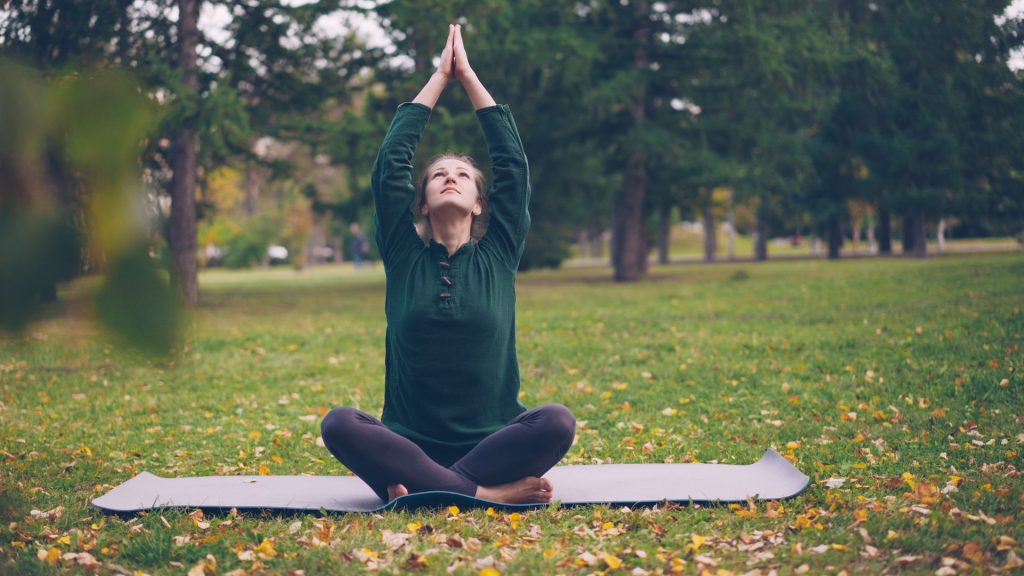
What a Day of Yoga Training Looks Like
Schedules show the real shape of a program better than a brochure. Here are two published ones from Nepal Yoga Institute.
The five-day retreat
On the middle days of the five-day yoga retreat, the published timetable is gentle and spacious:
| Time | Activity |
|---|---|
| 6:00 – 7:00 | Lukewarm water with honey and lemon (ushapan) |
| 7:00 – 7:15 | Optional jala neti nasal cleanse and tea |
| 7:15 – 8:00 | Mantra singing and pranayama |
| 8:00 – 9:00 | Asana practice |
| 9:00 – 10:00 | Breakfast |
| 10:00 – 11:30 | Relaxation time |
| 11:30 – 12:30 | Ayurveda oil massage |
| 12:30 – 13:30 | Ayurveda sauna |
| 13:30 – 14:30 | Lunch |
| 14:30 – 16:00 | Relaxation time |
| 16:00 – 18:00 | Yoga and meditation |
| 18:00 – 19:00 | Dinner |
Day one is an easier arrival. Check-in starts at 12:00 with a herbal tea welcome and a Nepalese lunch, followed by rest, yogic relaxation, an Ayurvedic massage, an optional steam bath and an evening session of yoga and meditation. Notice how little of the day is pushing. Two guided practice windows, long rests and bodywork are built in. The full plan is on the five-day yoga retreat program page.
The teacher training day
The 200-hour course is a different pace. The published timetable runs from 06:30 to 21:30 with theory, two asana sessions, meditation, a workshop and evening self-study, and the institute notes it can vary by season and student requests.
| Time | Activity |
|---|---|
| 06:30 – 07:00 | Satkarma, chanting and pranayama |
| 07:15 – 09:30 | Mantra chanting, yogasana and pranayama |
| 09:30 – 10:30 | Breakfast |
| 10:30 – 13:00 | Theory class and yogic relaxation |
| 13:00 – 14:00 | Lunch |
| 14:00 – 15:00 | Self-study |
| 15:00 – 16:45 | Meditation and workshop |
| 17:00 – 18:30 | Asana practice |
| 18:30 – 19:30 | Dinner |
| 19:30 – 21:30 | Self-study and sadhana |
Teacher training students get one day off a week, typically Sunday, which they can use for short hikes, heritage sites, temples or volunteering. The contrast between the two tables is the whole decision in miniature: a retreat is built around rest, and a training is built around study.
Yoga Training for Stress and Burnout
Many people come to yoga because life feels too loud. A stress-focused program is built for that. Nepal Yoga Institute offers a five-day stress management package that follows a similar rhythm to the retreat, with morning cleansing, mantra, pranayama and asana, and adds a stress-level and resilience-capacity assessment on the first day (14:00 to 15:00) along with management techniques.
On days two to four, the published schedule includes a stress management session from 11:30 to 12:30, then breathing exercises and yoga nidra from 15:00 to 16:30 and asana and meditation from 16:30 to 18:00. Day five adds a second stress management session. The method draws on the founder’s academic work. Dr. Bal Krishna Khanal holds a Ph.D. in Yoga and Naturopathy from Nepal Sanskrit University, with research on stress management through yoga and naturopathy.
Be realistic about what this is. A short program can teach you breathing and relaxation techniques and give you time to rest, but it is not medical treatment. If you are dealing with anxiety, depression or another health problem, speak to a health professional as well. The institute also lists a psychological counseling service on its site. For simple practices you can try at home, the guide to yoga for anxiety management covers poses and breathing.
Yoga Training at Nepal Yoga Institute: Programs, Fees and Days
Nepal Yoga Institute and Retreat is a residential yoga school at Budhanilkantha-11, Kathmandu, on the northern edge of the valley below Shivapuri National Park. Its site lists the distance as about 22 km from Tribhuvan International Airport and 24 km from Thamel. The school states that it is a Yoga Alliance USA registered school and that its teachers hold Experienced Registered Teacher (ERYT) status. It is open seven days a week from 6:00 to 21:00, with contact possible 24 hours a day.
| Program | Length | Published price | Best for |
|---|---|---|---|
| Five-day yoga retreat | 5 days | Calculated on request according to group size | First-timers and busy people who want a reset |
| Short-term or long-term retreat package | Flexible, can be increased or decreased | Calculated on request, depending on duration and group size | People who want to stay longer |
| Five-day stress management package | 5 days | Calculated on request according to group size | Burnout, tension and overload |
| Corporate stress management program | By arrangement | By arrangement | Teams and companies |
| 200-hour yoga teacher training | 22 days | $1,400 | Aspiring teachers and serious students |
Retreat and stress packages have no fixed price online, so the honest way to find out is to ask with your dates and group size. The long-term and short-term retreat package page explains the flexible option. For the registration deposit, the institute’s FAQ states $200 for teacher training and 20% of the package for retreats, non-refundable, with full payment due on arrival. It says it processes applications within three working days and confirms by email.
Group size is part of the offer. The 200-hour teacher training takes up to 14 students per course, and during practice teaching students are split into smaller groups so everyone teaches and gets feedback.
Teacher Training in Brief: The 200-Hour Course
If your goal is to teach, or to study yoga properly, the 200-hour course is the standard starting point. Here are the published details.
| Detail | Published information |
|---|---|
| Total cost | $1,400, with accommodation and meals included |
| Length | 22 days |
| Start date | The 15th of every month |
| End date | The 7th or 8th of the following month |
| Group size | Up to 14 students |
| Deposit | $200, non-refundable. The balance is due on orientation day in Nepal |
| Not included | Transport to and from the institute |
As shown on its Book Now page on 2 November 2026, the next intakes are 15 November 2026 and 15 December 2026, then the 15th of every month from January to September 2027, each with 14 seats. Confirm availability before you buy flights.
The curriculum, as the institute publishes it, gives 100 hours to practice, 20 each to philosophy, anatomy and physiology, and practicum, 15 each to teaching methodology and Q&A discussions, 10 to yogic diet, lifestyle and ethics, and 5 each to mantra chanting and Triyoga (karma, bhakti, jnana). Full details are on the 200-hour yoga teacher training page, and a longer walkthrough of fees, visa and registration is in the guide to YTT Nepal.
What Yoga Alliance registration means
Yoga Alliance is a registry that sets minimum standards for teacher training schools. To register as an RYT 200, a teacher must complete a 200-hour training with a school registered with Yoga Alliance as an RYS 200. Registration is a separate step after the course, and it confirms a minimum curriculum standard, not the quality of an individual teacher. Higher designations follow a similar path: an RYT 500 comes from a 500-hour training, or from a 200-hour training plus 300 additional hours at a school registered for that level. You can see the full requirements on Yoga Alliance’s teacher designations page. Whichever school you consider, check its status in the Yoga Alliance directory yourself before paying a deposit.
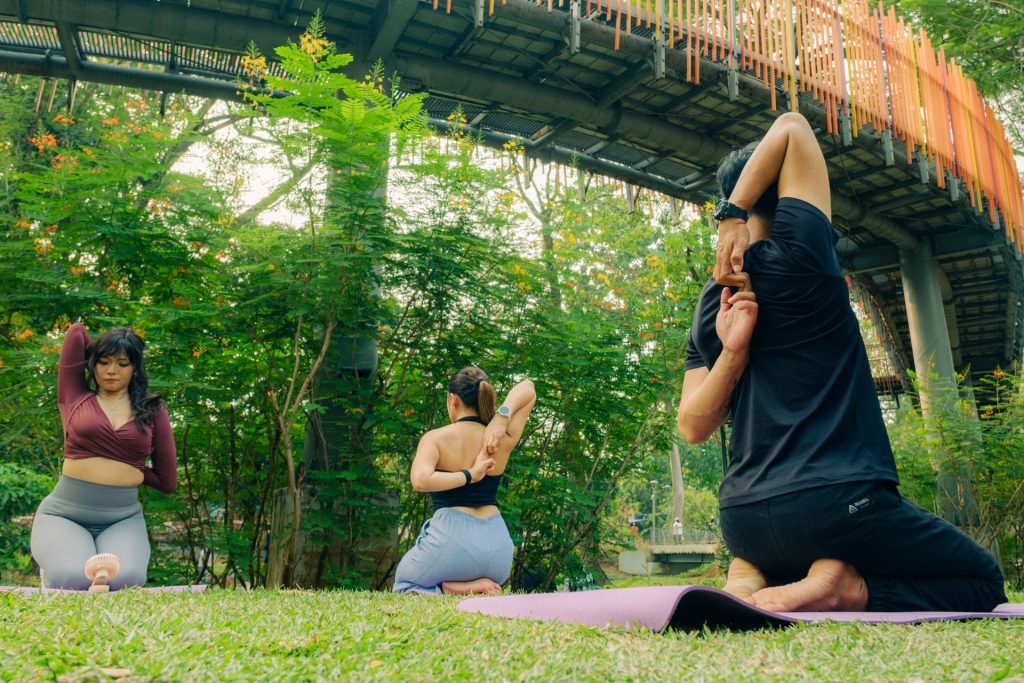
Why Do Yoga Training in Nepal
Nepal is home to Mount Everest (8,848 metres) and a long line of Himalayan peaks, and the Kathmandu Valley holds three historic cities: Kathmandu, Bhaktapur and Lalitpur. For a residential program, the practical advantage is quiet. The institute describes clean air, birdsong in the early morning and a view over the valley, and short hikes toward Chisapani through the Shivapuri conservation area start close by.
The setting also offers optional extras. The institute works with the J.P. Foundation (Maitri Sewa Ashram), and students can take part in karma yoga, the yoga of selfless action, through volunteering with senior residents or helping with the organic garden. Participation is voluntary and nothing is mandatory. For those who prefer mountains, the institute describes yoga treks to destinations including Annapurna Base Camp, Everest Base Camp, Langtang Valley, Upper Mustang, Gosaikunda and Chisapani.
Cost is another factor. Public listings for 200-hour teacher trainings in Nepal range from roughly $1,000 to $2,700, depending on location, room type and what is included, which is why comparing what the fee covers matters more than comparing the headline number.
Visa and travel basics
Most visitors need a tourist visa. The visa-on-arrival fees listed on Nepal’s embassy pages are $30 for 15 days, $50 for 30 days and $125 for 90 days, and extensions cost $45 for a minimum of 15 days plus $3 for each additional day. Rules and fees change, so confirm the current ones with Nepal’s Department of Immigration before you fly. A taxi from the airport to the institute costs roughly US$20 according to its FAQ, and airport pickup can be requested on the booking form. The institute recommends travel insurance and can send an invitation letter by email if you need one.
Food, Rooms and What to Bring
Food. Meals are sattvic: organic vegetarian or vegan, mostly sourced from local organic farms. Meat, fish and eggs are not served. Special dietary needs should be emailed in advance.
Rooms. Accommodation for the teacher training is shared. If you arrive alone, the team says it will arrange a roommate.
Equipment. The institute provides mats, blankets, cushions and other supports, and still recommends your own mat and towel for a longer stay. Free Wi-Fi is available in your free time.
Packing. Comfortable clothes for practice, warm clothes in winter, summer clothes with an umbrella and sunblock in the hot and rainy seasons, mosquito repellent, a hat, a flashlight and trekking shoes for forest walks. The institute runs programs every month and says there is no single best month, so choose by the weather you prefer. Its course page describes March to June as hotter, July to September as rainy and December to February as cold in the mornings and evenings.
Online or In Person: Which Yoga Training Format Works Better
Online yoga training is convenient, and for a weekly habit it can work well. You choose the time, you save travel, and you can repeat a session as often as you like. The limits are practical. No one can see your alignment, nobody adjusts a posture for your body, and it is easy to skip a session when the sofa is two metres away. That matters most for beginners, because the NCCIH notes that learning yoga alone without supervision has been linked to a higher risk of injury.
In-person training, especially a residential program, removes the choice. You are in the room, the day has a structure, and the teacher can respond to what they see. The cost is time and travel. A reasonable approach for many people is to combine the two: use online sessions to build a base, then book an in-person retreat or course when you want depth. If you are weighing this for teacher training specifically, the institute compares online yoga teacher training with in-person courses in detail.
Matching a Program to Your Situation
The table below turns the formats into simple scenarios. They are examples of how to think, not stories about particular students.
| If this describes you | Consider | Why |
|---|---|---|
| You have a few days of leave and feel run down | A five-day retreat or stress management package | Rest, breathing practice and gentle asana are built into each day |
| You want to try yoga before committing money | A beginner class or short retreat | Low commitment, and you learn whether you enjoy the practice |
| You can take a few weeks off and want to teach | A 200-hour teacher training | It is the standard foundation and can lead to Yoga Alliance registration |
| You already teach and want more depth | A second-level course, such as a 300-hour programme | It builds on a 200-hour foundation |
| You want a longer stay without certification | A flexible long-term retreat package | Duration can be increased or decreased to suit your plans |
| Your team is stressed | A corporate stress management program | It is arranged around the group |
If more than one row fits, start with the shorter option. A five-day program costs less in time and money, and it tells you whether a longer commitment is worth it. If the teacher training row is the one that fits, remember that the deposit is non-refundable at Nepal Yoga Institute, so settle your dates first.
Common Mistakes When Choosing Yoga Training
- Choosing by price alone. A low fee can leave out meals, materials or accommodation. Compare what each price covers.
- Booking teacher training when you want a rest. A 22-day course with a 06:30 start and an evening study block is not a holiday.
- Skipping the health conversation. Injuries and medical conditions change how a teacher guides you. Share them early.
- Assuming a logo means registration. Verify a school in the Yoga Alliance directory before paying.
- Ignoring the location. A quiet setting suits study and rest, but it is a drive from the tourist centre. The institute is about 24 km from Thamel.
- Not asking about dates and pricing. Where prices are calculated on request, ask for a written quote.
- Expecting instant change. A few days of practice can leave you calmer, but lasting habits come from regular practice afterwards.
Code of Conduct and Daily Rules
Every program has house rules, and reading them before you arrive avoids surprises. Nepal Yoga Institute publishes a short code of conduct covering these points: treat students and teachers with respect, with no discrimination, harassment or bullying; follow safety guidelines and tell the teacher about injuries or medical conditions; keep a non-judgmental attitude and focus on your own progress; maintain cleanliness and hygiene and avoid strong perfumes; keep silence in the studio before and after class; and arrive on time, joining quietly if you are late.
For the teacher training, the school also asks everyone to follow the ethical code of Patanjali’s eight limbs: no violence, no swearing, no meat, no smoking and no alcohol or drugs. It says phones and other devices are not permitted during class time, and that free Wi-Fi is available in your free time. These rules are part of what makes a residential program feel different from a drop-in class, and they suit people who want a structured, undistracted stretch of time.
How to Prepare Before You Arrive
A little preparation makes the first days easier, whichever format you choose.
- Practise a little each day for a few weeks. A short routine of stretching, breathing and sitting still helps your body adjust to early starts.
- Arrange travel insurance. The institute recommends it for all students.
- Bring your regular medication. The institute advises bringing it from home, and branded toiletries if you have preferences, because they may not always be available locally.
- Share your health information. The booking form asks about medication, health conditions and previous yoga experience, so fill it in carefully.
- Plan for weather. Pack warm clothes in winter, and rain gear and sun protection in the warmer months.
- Read the practical guide. The institute’s article on things to prepare for your yoga teacher training lists what to bring.
Arriving a day early can also help. The institute says extra nights before or after a program are available at a rate agreed in advance, which gives you time to recover from the journey before the first session.
One more practical point: yoga training works best when it fits your real life afterwards. A retreat that leaves you calm for a week and then fades is still worth doing, but the benefit grows if you keep a short daily practice going once you are home. Even ten minutes of breathing and gentle stretching, done most days, tends to do more than an occasional long session. Before you leave any program, ask the teachers for a simple routine you can repeat on your own, and write it down while it is fresh.
If you are training to teach, the same idea applies: teach a regular class soon after you finish, even to friends, because the confidence you build in the first few months decides whether the training turns into a habit or a memory.
How to Choose Your Yoga Training
Use this short checklist before you commit to any program, at Nepal Yoga Institute or elsewhere.
- Name your goal in one sentence. “Feel calmer”, “learn the basics” and “become a teacher” lead to three different programs.
- Match the time you have. Five days, three weeks and a weekly class are not interchangeable.
- Ask what is included. A good program states the total price, the deposit and what is not covered.
- Check group size and teachers. Small groups and named teachers with published backgrounds are a good sign.
- Verify registration. For teacher training, check the school in the Yoga Alliance directory and ask which level applies.
- Read the schedule. If it is not published, ask for it.
- Know the refund terms. At Nepal Yoga Institute the deposit is non-refundable, so be sure of your dates.
- Be honest about your body. Share injuries and medical conditions with the teacher before you start.
If you are leaning toward teaching, the step-by-step guide on how to train as a yoga teacher picks up where this checklist ends.

Frequently Asked Questions About Yoga Training
What is yoga training?
Yoga training is a broad term. It can mean regular classes, a retreat, a stress management program or a teacher training course. All of them teach postures, breathing, meditation and basic philosophy, with different depth and duration.
Is yoga training suitable for complete beginners?
Yes. Nepal Yoga Institute says it welcomes all backgrounds and levels, with no specific experience required for its teacher training. Start with a slower style, tell the teacher about any injuries and choose a small group.
How long does yoga training take?
It depends on the format. At Nepal Yoga Institute the stress management and retreat programs start at five days, and the 200-hour teacher training runs for 22 days, starting on the 15th of every month.
How much does yoga training cost?
The 200-hour teacher training at Nepal Yoga Institute costs $1,400, including accommodation and meals. Retreat and stress program prices are calculated on request according to group size, and for the flexible retreat package according to duration as well.
Is yoga training safe?
The NCCIH says yoga is generally considered safe for healthy people when practised appropriately, though injuries can happen, and that learning under a qualified instructor lowers the risk. Tell your teacher about injuries and medical conditions, and talk to a health care provider first if you are pregnant.
Do I need a certificate to teach yoga?
Requirements vary by country and employer. Many studios ask for a certificate from a Registered Yoga School. To register as an RYT 200 with Yoga Alliance, you complete a 200-hour training at a school registered as an RYS 200.
What is the difference between a yoga retreat and teacher training?
A retreat is built around rest, gentle practice and learning the basics. Teacher training is a structured course of study that includes philosophy, anatomy, teaching methodology and practice teaching. The institute’s retreat day has long rests, while its training day runs from 06:30 to 21:30.
What is included in the teacher training fee?
The Book Now page lists the price as covering accommodation and meals, and the institute’s FAQ adds tea, training materials and shared accommodation. Transport to and from the institute is not included.
Can I do a 300-hour course at Nepal Yoga Institute?
The institute says a 300-hour course is available for booking, but it does not publish a separate price, schedule or syllabus. Contact the team for a written quote.
How do I book yoga training at Nepal Yoga Institute?
Complete the online booking form on the Book Now page, or message the team on WhatsApp. The institute says it processes applications within three working days and confirms by email. A non-refundable deposit starts your registration.
Ready to Choose Your Yoga Training?
The quickest way to find the right program is to talk to a real person. Tell the team your dates, your experience and what you hope to feel at the end, and they can recommend a retreat, a stress program or the 200-hour training.
Chat with our yoga teacher on WhatsApp: +977 9860480478
Prefer to apply directly? Use the Book Now page, or email info@nepalyogainstitute.com.
Nepal Yoga Institute and Retreat, Budhanilkantha-11, Kathmandu 44600, Nepal.