Introduction to Best Yoga Teacher Training in Nepal
Searching for the best yoga teacher training in Nepal usually ends in a tab full of schools that all say the same thing: authentic, certified, life-changing. None of that helps you decide. What helps is a clear set of questions you can ask any school, and honest answers to them. This guide gives you those questions, then answers them for our own course at Nepal Yoga Institute and Retreat in Kathmandu, so you can compare us against anyone else on the same terms.
The short version of our course: the 200-hour training costs $1,400, runs for 22 days, starts on the 15th of every month and takes up to 14 students. We will not tell you we are the best. We will show you the evidence and let you judge.
What “Best” Should Mean When You Choose a Yoga Teacher Training
“Best” is personal. A school that suits a 25-year-old who wants a lively, modern course may be wrong for a 55-year-old who wants a quiet, traditional one. Rankings you find online are often built on affiliate commissions or on one writer’s taste, and they rarely explain how the picks were made. A better approach is to decide what you need and then test schools against it.
Here are the criteria we think matter, and why. Use the same list on every school you consider, including ours.
| Criterion | What to ask | Why it matters |
|---|---|---|
| Registration | Is the school registered with Yoga Alliance, and at which level? | Only a registered school’s graduates can apply to register as an RYT 200 |
| Group size | How many students per course? | Small groups mean more feedback and more time teaching |
| Teachers | Who teaches each subject, and what are their published backgrounds? | A school should name its teachers, not only its brand |
| Curriculum | Are hours listed by subject? | Vague syllabi hide how little time goes to teaching practice |
| Total cost | What is included, what is extra, and what is the deposit rule? | A low headline fee can leave out meals, rooms or materials |
| Schedule | Is the daily timetable published? | You can judge whether the pace suits your body and stamina |
| Dates | When does each intake start, and how many seats are there? | You need this before you book flights |
| Setting | Where is it, and how far from the airport and the city? | Quiet helps study, but distance affects your plans |
| Honesty | Does the school say what it does not offer? | It is the best early signal of whether you can trust the rest |
We will return to each row below. If you want a wider comparison of schools before you decide, we also publish a separate list of the best yoga training schools in Nepal, and a full walkthrough of fees, visa and registration in our YTT Nepal guide.
Is a Yoga Teacher Training the Right Format for You?
Before you compare schools, check that teacher training is what you want. Many people sign up for the certificate when what they actually want is a rest, a reset or a deeper personal practice. A teacher training is demanding. Our own timetable runs from 06:30 to 21:30 with study blocks and a workshop, and we publish a day off only once a week. If your goal is to unwind, a retreat will serve you better, and we explain the difference in our guide to yoga retreat versus yoga teacher training.
A teacher training suits you if you want to teach, if you want to study yoga properly with philosophy, anatomy and teaching practice, or if you want a structured stretch of weeks away from your normal routine. We welcome students from all backgrounds and levels, and no specific yoga experience is required for our teacher training. You must be at least 18, and our students range from 18 to 65. It is still worth building a short daily practice for a few weeks before you arrive, because the early mornings are easier on a body that is used to moving.
Yoga Alliance Registration: What It Means and How to Check It
The most common question we hear is whether a certificate from Nepal will be recognised. The answer depends on whether the school is a Registered Yoga School with Yoga Alliance, the registry that sets minimum standards for teacher training schools.
Here is how it works, based on Yoga Alliance’s own pages. To register as an RYT 200 (Registered Yoga Teacher), you complete a 200-hour training with a school registered as an RYS 200. The training requirement is that single completed training, and Yoga Alliance lists no minimum teaching hours for RYT 200. All 200 hours must come from the same school, and separate trainings cannot be combined to reach the 200 hours. Registration is then a separate step you take yourself after the course.
Two limits are worth knowing. First, registration confirms that a school’s curriculum meets a minimum standard, not that any individual teacher is excellent. Second, it only helps you if the school really is registered at the level it claims, so check for yourself. Yoga Alliance publishes an online directory of registered schools, and you can read how the higher designations work on its teacher designations page. For example, the RYT 500 comes either from a single 500-hour training or from a 200-hour training plus a further 300 hours at a school registered for that level.
On our own about page we state that Nepal Yoga Institute and Retreat is a Yoga Alliance USA registered school and that our teachers hold Experienced Registered Teacher (ERYT) status with that body. Please do not take our word for it. Search the directory, and when you write to us, ask which level applies to the course you are booking. Yoga Alliance also sets requirements for the lead trainers of a registered school, so it is fair to ask who will lead your course and which credential they hold. We explain more on our page about yoga certification in Nepal.
What the Best Yoga Teacher Training in Nepal Costs
Price is where schools differ most, and where comparisons mislead most. Public listings for 200-hour trainings in Nepal range from roughly $1,000 to $2,700, depending on the city, the room type and what the fee covers. A fee that looks low may exclude meals or accommodation, and a fee that looks high may include a private room. The only fair comparison is the total cost for the same things.
Our price is published and stays the same all year. Here is exactly what it covers.
| Item | Our published terms |
|---|---|
| Total cost, 200-hour training | $1,400, described on our site as the complete cost |
| What the price covers | Accommodation and meals, plus tea, training materials and shared accommodation, as listed in our FAQ |
| Deposit to reserve your seat | $200, non-refundable |
| Balance | $1,200, payable on orientation day in Nepal |
| Not included | Transport to and from the institute |
| Airport taxi (optional) | Roughly US$20 (about 2,000 rupees), per our FAQ |
| Travel insurance | We recommend it for all students |
| Extra nights before or after the course | Available at a rate agreed in advance |
The $1,200 balance is simple arithmetic: $1,400 minus the $200 deposit. Our FAQ also states that we charge no additional taxes or fees beyond what is on our website, which covers lodging, meals and sessions. Payment options we list are bank transfer, Western Union, credit card or cash.
We want to be direct about the deposit. It is non-refundable. That protects the seat we hold for you, but it also means you should be sure of your dates before you pay. If your plans are uncertain, ask us in writing before you commit. We say this because a school that hides its refund terms is a school to be cautious about, and we would rather you read ours first.
About Us: Nepal Yoga Institute and Retreat
We are a residential yoga school at Budhanilkantha-11 in Kathmandu, on the northern edge of the valley, at the foothills of the Manichud Hills and just below Shivapuri National Park. We are about 22 km from Tribhuvan International Airport and 24 km from Thamel, the main tourist district. Our doors are open seven days a week from 6:00 to 21:00, and you can contact our team at any hour.
We teach what we call traditional (Sanatan) yoga. In practice that means mostly Ashtanga, Hatha, Mantra and Raja yoga, with a general introduction to other types. We follow a classical and retreat method and a methodical way of study. Our aim, in our own words, is to give quality education and service in a homely atmosphere. If you want a closer look at the two main asana traditions, our pages on Hatha yoga teacher training and Ashtanga yoga teacher training explain each one. Both describe the training as demanding physically, mentally and spiritually.
Our founder and teachers
Our founder and senior teacher is Dr. Bal Krishna Khanal. He holds a Ph.D. in Yoga and Naturopathy from Nepal Sanskrit University, with research on stress management through yoga and naturopathy. His founder profile also lists a three-year diploma in yoga and naturopathy from Gandhi National Academy in New Delhi, completed in 1999, a postgraduate degree in psychological counseling from Tribhuvan University completed in 2006, and certification as a naturopathic physician under the National Skill Testing Board of CTEVT in Nepal.
Three more teachers appear on our yoga teachers page, and these are the details we publish for them:
- Yogini Indu is a Yoga Alliance USA certified teacher with more than ten years of teaching experience. She teaches Hatha, Ashtanga, Tantra yoga and yoga philosophy.
- Dr. Roshan Baskota is a registered Ayurveda doctor, with a Bachelor of Ayurvedic Medicine and Surgery from Tribhuvan University. He teaches anatomy and physiology.
- Madhav Bhattarai teaches yoga and meditation. He completed yoga teacher training at the Patanjali Institute in Haridwar, has practised Vipassana meditation, and spent nine months practising yoga and meditation at the Isha Foundation.
These are our teachers’ own published details. When you write to us, you are welcome to ask which of them will lead your intake and to confirm any credential directly with the registry.
Our 200-Hour Curriculum, Hour by Hour
“200 hours” says little until you see how the time is divided. This is the breakdown published on our course page.
| Subject | Hours | What it covers |
|---|---|---|
| Practice | 100 | Asanas, pranayamas, kriyas, chanting, mantra, mudra, meditation and other traditional techniques, including how to teach them |
| Philosophy | 20 | Yoga Sutras, Hatha Yoga Pradipika, and the origin and history of yoga |
| Anatomy and physiology | 20 | Physical anatomy and physiology as well as energy anatomy, and their use in practice |
| Practicum | 20 | Each trainee leads as the teacher, observes others, and gives and receives feedback |
| Teaching methodology | 15 | Communication skills, teaching styles, class preparation, group dynamics |
| Q&A discussions | 15 | Review of the training, trainee reports and open questions |
| Yogic diet, lifestyle and ethics | 10 | Ahimsa, dharma and karma, teacher ethics and sattvic meals |
| Mantra chant and prayer | 5 | Morning chanting or prayer |
| Triyoga (Karma, Bhakti, Jnana) | 5 | The paths of action, devotion and knowledge |
Half of the listed hours go to practice, and 20 more go to a practicum where every trainee leads the class. That reflects how we teach: we do not ask you to memorise and recite sequences. We would rather you learn to look, explore and teach from your own understanding. We divide students into smaller groups during teaching periods so that every student gets the chance to teach and receive feedback. Our main reference book is by Swami Satyananda Saraswati, published by the Bihar School of Yoga, and you receive a copy along with our own manual.
A Typical Training Day With Us
A published timetable lets you judge the pace before you pay. This is ours. It can vary with the season and student requests.
| Time | Activity |
|---|---|
| 06:30 – 07:00 | Satkarma, chanting and pranayama |
| 07:00 – 07:15 | Tea break |
| 07:15 – 09:30 | Mantra chanting, yogasana and pranayama |
| 09:30 – 10:30 | Breakfast |
| 10:30 – 13:00 | Theory class and yogic relaxation |
| 13:00 – 14:00 | Lunch |
| 14:00 – 15:00 | Self-study |
| 15:00 – 16:45 | Meditation and workshop |
| 16:45 – 17:00 | Tea break |
| 17:00 – 18:30 | Asana practice |
| 18:30 – 19:30 | Dinner |
| 19:30 – 21:30 | Self-study and sadhana |
There are two main physical sessions, a long theory block before lunch and quiet study in the evening. You get one day off each week, usually Sunday. Students use it for short hikes, visits to heritage sites and temples, or volunteering. We ask that phones and other devices are not used during class time, and free Wi-Fi is available in your free time.
Dates, Intakes and How to Book
Our course starts on the 15th of every month and ends on the 7th or 8th of the following month, depending on whether the month has 30 or 31 days. Each course takes up to 14 students. When this article was written, our Book Now page listed 15 November 2026 and 15 December 2026, followed by an intake on the 15th of every month from January to September 2027, each with 14 seats at $1,400. The page shows the seat cap, not live availability, so confirm a place with us before you buy flights.
To book, complete the online form on our Book Now page, which asks for your details, program, start date, arrival and departure dates, whether you want airport pickup, and your health and yoga experience. We process applications within three working days and confirm by email. If you need an invitation letter for your travel arrangements, we can send one by email. Full course details are on our 200-hour yoga teacher training page.

Food, Rooms and House Rules
Food. Meals are sattvic: organic vegetarian or vegan, with most food sourced from local organic farms. We do not serve meat, fish or eggs, and our dairy products are cow-based. Please email us in advance if you have special dietary needs.
Rooms. Accommodation is shared. If you arrive alone, we arrange a roommate for you, and many students join without a friend or partner.
Equipment. We provide yoga mats, blankets, cushions and other supports. We still recommend bringing your own mat and towel for a longer stay.
Rules. We ask everyone to follow the ethical code of Patanjali’s eight limbs: no violence, no swearing, no meat, no smoking and no alcohol or drugs. Respect and honesty are expected from staff, guests and students alike. Our code of conduct also asks you to follow safety guidance, tell your teacher about injuries or medical conditions, focus on your own progress instead of comparing yourself with others, and arrive on time.
Optional service. We work with the J.P. Foundation (Maitri Sewa Ashram), a social organisation involved in education, health and senior-citizen care. Students may take part in karma yoga there, but it is voluntary and nothing is mandatory.
Where to Train: Kathmandu, Pokhara and Beyond
Nepal has several training hubs, and the setting changes the experience. Kathmandu is the capital and the main arrival point, with the valley’s three historic cities: Kathmandu, Bhaktapur and Lalitpur. Pokhara is a lake town that many schools also use. We cannot speak for other schools, and we have not studied them in enough depth to rank them, so the useful question is what you want from the place: culture and heritage at your doorstep, or lakes and a slower pace.
Our own setting is quiet and a little removed from the tourist centre. From our premises, the valley can be seen, and short hikes through the Shivapuri conservation area toward Chisapani start close by. That suits study and early-morning practice. The cost is distance: we are about 24 km from Thamel, so you will not be strolling to restaurants after class. If nightlife and shops matter to you, weigh that honestly. For a longer look at why the country itself works well for this kind of training, read our article on why Nepal is a strong country for yoga teacher training.
Visa, Travel and the Best Season
Most visitors need a tourist visa. The visa-on-arrival fees listed on Nepal’s embassy pages are $30 for 15 days, $50 for 30 days and $125 for 90 days. Extensions cost $45 for a minimum of 15 days plus $3 for each additional day. Fees and rules change, so confirm the current ones on the official Department of Immigration website before you fly. A 22-day course fits inside a 30-day visa, and if you plan to trek or travel before or after, a 90-day visa saves a trip to an immigration office.
From the airport, a taxi to our institute costs roughly US$20 according to our FAQ, and you can request airport pickup on the booking form. We recommend travel insurance for every student.
On timing, we run the course every month and we do not claim there is a single best month. Choose by the weather you prefer. Our course page describes March to June as the hotter months, July to September as the rainy season with warmer weather and rainfall, and December to February as cold in the mornings and evenings. Pack comfortable clothes for practice, warm layers in winter, rain gear and sun protection in the warmer months, mosquito repellent, a flashlight and walking shoes. Bring your regular medication from home.
A Practical Way to Shortlist and Compare Schools
Reading ten websites is tiring, and most of them blur together. A simple process saves time and gives you better answers.
- Fix your non-negotiables first. Write down your budget ceiling, your possible dates, the style of yoga you want, and whether you need a private room. Anything that fails one of these drops off the list immediately.
- Shortlist three schools, not ten. Three is enough to compare properly. More than that and the details start to merge.
- Send the same email to each. Ask for the total cost with a list of inclusions, the daily timetable, the named teachers for your intake, the group size, the refund terms and the registration level. Compare how quickly and how clearly each school answers. A school that replies with specifics is usually a school that runs its course with the same care.
- Check the registry yourself. Do not rely on a logo on a homepage. Search the directory and confirm the school and the level.
- Read independent reviews for detail. Look for comments that name teachers, describe the food and the schedule, and mention both good and difficult moments. A review that only says “amazing” tells you nothing.
- Ask to speak to a past student. A confident school will usually put you in touch, or point you to recent graduates who are happy to answer questions.
- Sleep on it. A deposit is easier to give than to recover. Give yourself a day before you commit.
If our course comes out ahead on your list, good. If another school does, that is a good outcome too, because the point is that you train somewhere that fits you. We would rather you arrive confident than arrive because we out-marketed someone.
What to Expect Physically and Mentally
It helps to know what the weeks feel like before you start. This is a general picture, based on how a residential course of this length is structured, and everyone’s experience differs.
In the first days, the early start and the long hours of sitting and practice are the main adjustment. Muscles you rarely use will complain, especially in the hips, hamstrings and lower back. Go gently, tell your teacher about any injury, and focus on your own progress rather than the person on the next mat. In the middle of the course, many students find the routine settles. The theory classes begin to connect with what the body is doing, and practice teaching becomes the centre of attention. Teaching in front of a group can feel uncomfortable at first, and that is normal. Feedback in small groups is meant to make it manageable.
Towards the end, tiredness and excitement often arrive together. You are close to finishing, and you are also ready for a rest. Leave a few free days after the course if you can, rather than flying out the next morning. It gives you time to absorb what you learned, to see a little more of Nepal, and to avoid arriving home exhausted.
A few practical habits make the course easier:
- Keep a small notebook for questions and teaching ideas, and write in it every day.
- Drink water regularly, and rest during your free afternoon time instead of filling every gap.
- Tell us early if something is wrong, whether it is physical, emotional or practical. Small problems are easier to fix on day two than on day twelve.
- Arrive a day early if your flight is long, so you start the course rested.
Red Flags When Choosing a Yoga Teacher Training
Whether you choose us or someone else, watch for these warning signs.
- No named teachers. If you cannot find who will teach you, ask. A school should be able to tell you.
- A fee with no inclusions list. If meals, rooms and materials are not stated, ask before you pay.
- Registration claims you cannot verify. A logo is not proof. Look the school up in the directory.
- No published timetable or curriculum hours. A school that will not show you how the time is spent may not spend it well.
- Vague refund terms. Know what happens to your deposit if your plans change.
- Pressure to book fast. Fake scarcity (“only two seats left”) is a sales tactic, not information. Ask for the seat count in writing.
- Ratings with no detail. Look for independent reviews that mention specifics such as teachers, food and schedule. Be wary of lists where every link is a booking link, since the writer may earn a commission.
- Promises of transformation. A good course teaches you skills. It cannot promise how you will feel.
On that last point we would rather be modest. A residential course is intense, and benefits depend on how much you bring. If you are already teaching and want a deeper second stage, read our guide to advanced yoga teacher training in Nepal, and note the honest limit we state there: we say a 300-hour course is available for booking, but we do not publish a separate price, schedule or syllabus for it, so ask us for a written quote.
After You Graduate
Finishing the course is where the real work starts. Rest for a few days first, because three weeks of early starts and evening study is tiring. Then write up your notes while they are fresh, and, if you want to use the designation, submit your completion certificate to Yoga Alliance to register as an RYT 200 after reading its current requirements. Teach regularly, even one class a week, because teaching hours build confidence and count toward the higher designations later. If you plan to go further, remember the route described earlier: a 200-hour training followed by 300 more hours at a school registered for that level.
If you are still deciding whether to train at all, our step-by-step guide on how to train as a yoga teacher walks through the steps in order.
Frequently Asked Questions About Yoga Teacher Training in Nepal
Which is the best yoga teacher training in Nepal?
There is no single best school, because “best” depends on your goals, budget and style. Compare schools on the same criteria: registration, group size, named teachers, curriculum hours, total cost and what it includes, the daily timetable, refund terms and honesty about limits. Then choose the one that fits you.
How much does a 200-hour yoga teacher training cost in Nepal?
Public listings range from roughly $1,000 to $2,700, depending on location, room type and inclusions. At Nepal Yoga Institute and Retreat the published cost is $1,400, with accommodation and meals included, plus a $200 non-refundable deposit and the balance on orientation day.
How many days is the course?
Our 200-hour course runs for 22 days. It starts on the 15th of every month and ends on the 7th or 8th of the following month, depending on whether the month has 30 or 31 days.
Is the certificate recognised internationally?
Recognition depends on whether the school is registered with Yoga Alliance. To register as an RYT 200, you complete a 200-hour training with an RYS 200 school. We state on our about page that we are a Yoga Alliance USA registered school. Check any school in the directory before paying, and ask which level applies.
Do I need yoga experience to join?
No. We welcome all backgrounds and levels, and no specific experience is required for our teacher training. You must be at least 18. The course is demanding, so a short daily practice beforehand makes the first week easier.
What is included in the fee?
The price covers accommodation and meals, and our FAQ adds tea, training materials and shared accommodation. Transport to and from the institute is not included, and we recommend travel insurance.
How many students are in each course?
Up to 14 students per course. During practice teaching we split the group into smaller groups so every student gets the chance to teach and receive feedback.
What is the best time of year to train in Nepal?
There is no single best month. We run courses every month, so choose by the weather you prefer: hotter from March to June, rainy from July to September, and cold in the mornings and evenings from December to February.
Which visa do I need?
Most visitors need a tourist visa. The embassy-listed visa-on-arrival fees are $30 for 15 days, $50 for 30 days and $125 for 90 days. A 22-day course fits inside a 30-day visa. Confirm current rules for your nationality with the Department of Immigration.
How do I book, and can I get a refund on the deposit?
Complete the online form on our Book Now page. We process applications within three working days and confirm by email. The $200 deposit is non-refundable, and the balance is due on orientation day, so be sure of your dates before you pay.
Talk to Us About Your Dates
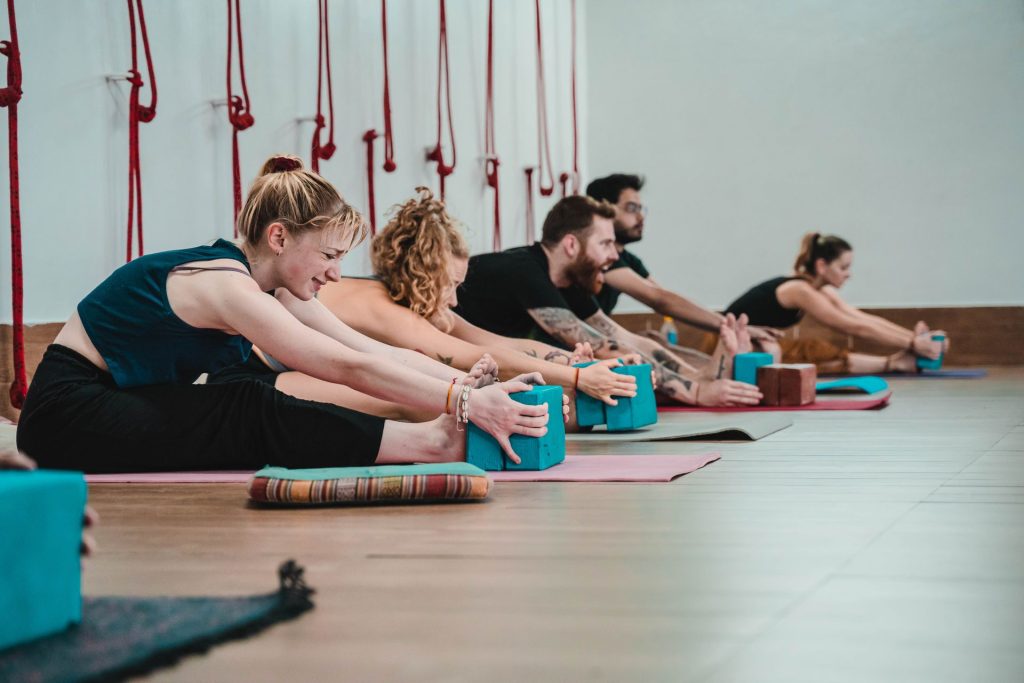
The quickest way to find out whether our course is the right one for you is to ask us directly. Tell us your preferred month, your yoga experience and what you want from the training, and we will tell you honestly whether we are a good fit, including when another kind of program would serve you better.
Chat with our yoga teacher on WhatsApp: +977 9860480478
Prefer to apply directly? Use our Book Now page, or email info@nepalyogainstitute.com.
Nepal Yoga Institute and Retreat, Budhanilkantha-11, Kathmandu 44600, Nepal.