Introduction to Hatha Yoga Class for Beginners
If you’ve never set foot in a yoga class and someone suggested starting with Hatha, that’s good advice. Of all the yoga styles practiced today, Hatha is the one most consistently built around a beginner’s pace — longer holds, fewer transitions, and far more time to actually find your way into a posture rather than being swept past it. It’s also, somewhat usefully, the hardest style to get visibly “wrong” on your first attempt, since the whole point is working at your own current level rather than matching anyone else’s range of motion.
This guide walks through what Hatha yoga actually is, where it comes from, what a beginner-level class looks like in practice, the poses you’re likely to encounter first, what the research actually says about its benefits, and how to take it further — whether that means a single studio class or a fully structured training — if you decide you want to.
What Does “Hatha Yoga” Actually Mean?
In Sanskrit, hatha is often translated as “forceful,” “determined,” or read as a combination of ha (sun) and tha (moon) — the union of opposing energies that physical yoga practice is traditionally meant to balance. In the broadest sense, Hatha Yoga refers to any branch of yoga that uses physical technique — postures, breathing, and relaxation — to prepare the body and mind for deeper practice. That’s actually a wider definition than most people assume: strictly speaking, Vinyasa, Ashtanga, Iyengar, and Power Yoga are all technically forms of Hatha Yoga, since they all build on the same foundation of physical posture work.
In everyday studio language, though, “Hatha” has come to mean something more specific: a slower-paced class built around holding individual postures for longer, with less continuous linking between poses than a Vinyasa or Ashtanga-style flow class. When a class is simply labeled “Hatha” on a studio schedule, it generally signals a moderate, foundational introduction to the most essential yoga postures — you’re unlikely to work up much of a sweat, but you’ll typically leave feeling calmer, looser, and more settled than when you walked in.
It’s worth noting that a complete Hatha Yoga system, as traditionally taught and as covered in a proper teacher training, is considerably broader than just the physical postures most beginners picture. It traditionally includes five interconnected components: asana (postures), pranayama (breath control), shatkarma (internal cleansing techniques), mudra (symbolic hand and body gestures used to direct energy), and bandha (internal muscular locks). A beginner’s studio class will usually only touch the first two of these directly, but understanding that the fuller system exists helps explain why a dedicated Hatha teacher training looks so different from — and considerably deeper than — a single weekly class.
A Short History of Hatha Yoga
Hatha Yoga’s most influential surviving manual is the Hatha Yoga Pradipika, a Sanskrit text composed in the 15th century by Swami Swatmarama. It remains one of the three classic texts on the subject — alongside the Gheranda Samhita and the Shiva Samhita — and is still studied in yoga teacher trainings worldwide today, laying out the foundational postures, breathing techniques, and internal practices that much of modern yoga still draws from.
Swatmarama connects his own teaching lineage to the Nath tradition of yogis, and in particular to Gorakhnath, a revered yogi-saint traditionally credited with popularizing Hatha Yoga, and his own teacher, Matsyendranath. The connection between the Naths and Nepal runs deep: Gorakhnath is traditionally worshipped in Nepal as a patron saint and was historically regarded as a protective deity of the ruling kings, and the Gorkha district of Nepal — from which the Gurkhas take their name — is named after him.
Modern academic scholarship is divided on exactly how directly the Nath yogis originated Hatha Yoga as a formal system, with some scholars tracing its roots instead to the broader Dashanami Sampradaya tradition — but the cultural and devotional connection between the Nath lineage and Nepal is well documented regardless of the precise historical lineage, which is part of why Nepal carries genuine, longstanding significance for anyone studying this particular style.
Beyond the Hatha Yoga Pradipika, two other texts are traditionally grouped alongside it as the “classic trio” of Hatha Yoga literature: the Gheranda Samhita and the Shiva Samhita. Together, these three texts form the historical foundation that most modern yoga teacher trainings — including beginner-oriented ones — still draw their philosophical grounding from, even when the physical sequencing taught today looks considerably different from what’s described in the original Sanskrit.
What Makes Hatha Different From Other Yoga Styles
Beginners often arrive confused about which style to pick, so it helps to see how Hatha compares directly to the styles it’s most often confused with.
| Style | Pace | Structure | Best For |
|---|---|---|---|
| Hatha | Slow to moderate | Individual postures held longer, minimal linking | True beginners, and anyone wanting a gentler, more meditative practice |
| Vinyasa | Moderate to vigorous | Continuous, breath-linked flow between poses, sequence varies daily | Those who want variety and a more cardio-driven class |
| Ashtanga | Vigorous | Fixed sequence, identical every practice, breath-linked vinyasa throughout | Practitioners who want structure, repetition, and physical intensity |
| Yin | Very slow, passive | Very few postures per class, held for several minutes each | Deep connective-tissue release, restorative practice |
None of these is objectively better — they serve different goals. What makes Hatha specifically well-suited to a first yoga class is the combination of a slower pace and enough time in each posture to actually learn correct alignment, rather than being swept into the next pose before you’ve found your footing in the current one.
Common Hatha Yoga Poses for Beginners
A beginner Hatha class typically draws from a core set of foundational postures, each targeting different areas of strength, flexibility, or balance. These are among the poses most commonly included in a Hatha curriculum:
| Pose (Sanskrit) | English Name | What It Works On |
|---|---|---|
| Trikonasana | Triangle Pose | Legs, hips, side-body stretch, balance |
| Pada Hasthasana | Standing Forward Bend | Hamstrings, spine, calming the nervous system |
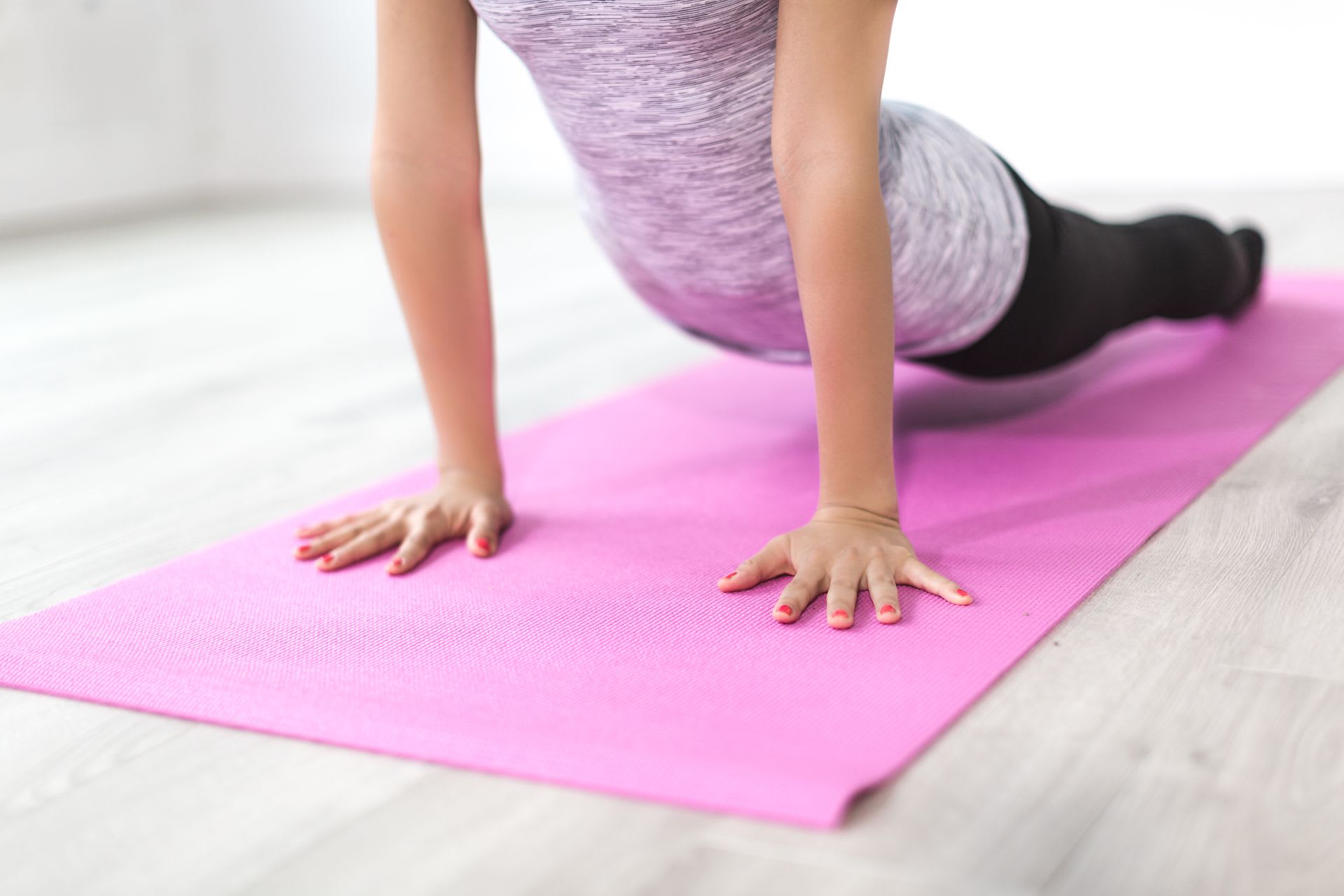
| Bhujangasana | Cobra Pose | Spinal extension, chest opening, back strength |
| Shalabhasana | Locust Pose | Lower back and posterior chain strength |
| Dhanurasana | Bow Pose | Full spinal backbend, shoulder and hip flexors |
| Ardha Matsyendrasana | Half Spinal Twist Pose | Spinal mobility, digestion, detoxification |
| Paschimottanasana | Sitting Forward Bend | Hamstrings, lower back, calming effect |
| Matsyasana | Fish Pose | Chest and throat opening, counterpose to shoulderstand |
| Halasana | Plough Pose | Spine, shoulders, calming inversion |
| Sarvangasana | Shoulder Stand | Thyroid stimulation, circulation, inversion practice |
| Sirsasana | Headstand | Core and shoulder strength, focus, advanced inversion |
| Kakasana | Crow Pose | Arm balance, core strength, concentration |
| Mayurasana | Peacock Pose | Advanced core and arm-balance strength |
A genuine beginner’s class will not throw all of these at you in one session, and several — Headstand, Crow Pose, and Peacock Pose in particular — are typically introduced only once the more foundational standing and seated postures feel stable. A good teacher sequences gradually, building strength and body awareness before introducing the more demanding inversions and arm balances.
A few of these deserve a slightly closer look, since they tend to anchor most beginner sequences:
- Triangle Pose (Trikonasana) is usually one of the very first standing postures taught, since it builds leg strength and hip alignment while being relatively accessible with a block under the lower hand for those with tighter hamstrings.
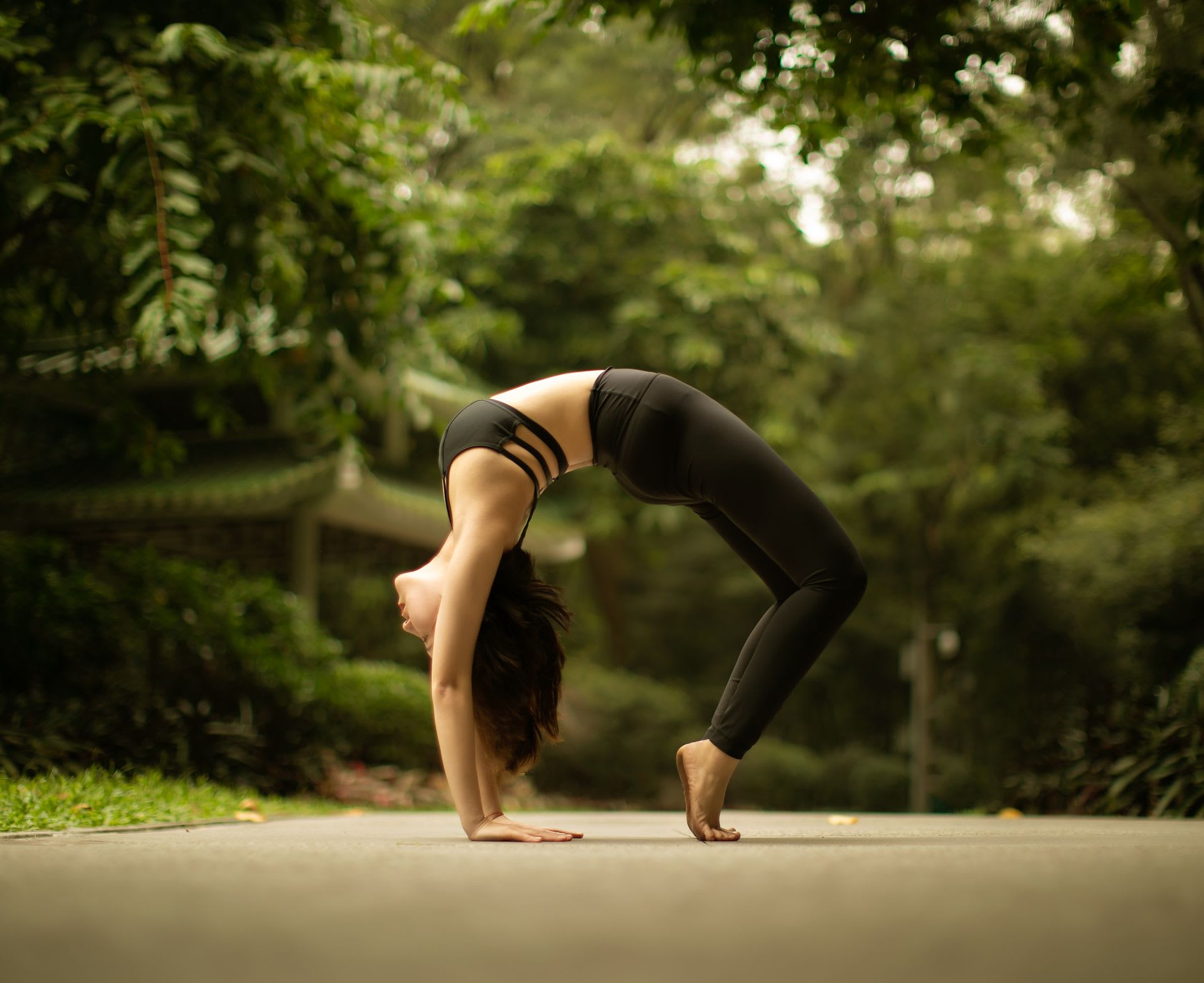
- Cobra Pose (Bhujangasana) is a gentle backbend that strengthens the muscles along the spine and counters the forward-hunched posture many people carry from sitting at desks — it’s often the first real backbend a beginner encounters.
- Sitting Forward Bend (Paschimottanasana) stretches the entire back body and is almost universally included in a closing sequence for its calming, introspective effect, with bent knees as a completely normal modification for tighter hamstrings.
- Shoulder Stand (Sarvangasana) and Plough Pose (Halasana) are typically taught together as a pair toward the end of class, and are approached cautiously for genuine beginners — a qualified teacher will often substitute a supported, simplified variation using a wall or props until the neck and shoulders have built sufficient strength and flexibility.
What a Hatha Yoga Class for Beginners Actually Feels Like
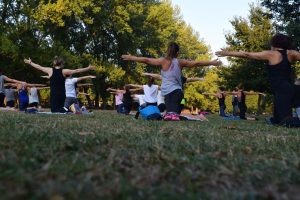
If you’ve never taken a yoga class before, here’s a realistic picture of what the hour tends to look like:
- A settling-in period. Most Hatha classes open with a few minutes of seated breathing or gentle stretching to shift attention away from the day and into the body.
- Standing postures first. Classes typically move through standing poses like Triangle Pose while the body is still relatively fresh, building strength, alignment, and balance.
- Seated and floor work. The middle of the class usually moves to the floor for forward bends, twists, and backbends like Cobra or Locust Pose.
- A gentle inversion or two, if the class level allows for it — often Plough Pose or a supported Shoulder Stand, approached carefully and skipped entirely for genuine beginners if appropriate.
- A closing relaxation. Nearly every Hatha class ends with a few minutes lying still in Savasana (Corpse Pose), allowing the body to absorb the practice before returning to ordinary activity.
The overall pace is forgiving. You won’t be expected to get every posture “right” on your first attempt, and a properly run beginner class will offer modifications — blocks, straps, or bent-knee variations — for virtually every pose on this list.
Breathing in a Hatha Class: What Beginners Should Know
Breath is treated as equally important to the postures themselves in Hatha yoga, even at the beginner level, though the depth of formal pranayama instruction usually increases gradually:
- Ujjayi breath — a slightly audible breath made by gently narrowing the back of the throat — is commonly introduced early, since it helps maintain focus and a steady internal rhythm through a posture.
- Nasal breathing is the default throughout most Hatha classes; mouth breathing is generally discouraged once a student is comfortable, since nasal breathing is considered calming and more sustainable through longer holds.
- Breath leads movement, not the other way around. A common beginner habit is holding the breath during a challenging pose — a good teacher will consistently cue you back toward steady, even inhales and exhales rather than letting the breath become shallow or held.
- Dedicated pranayama exercises — alternate nostril breathing (Nadi Shodhana) and the “skull-shining” breath (Kapalabhati), for example — are typically introduced as separate practices once basic postural breathing feels comfortable, often in a more structured course rather than a single drop-in class.
Common Mistakes Beginners Make in Their First Few Hatha Classes
A handful of habits show up often enough in new students that it’s worth naming them in advance:
- Trying to go as deep into a pose as the person next to you, rather than working within your own current range of motion. Hatha is practiced individually in a shared room, not as group choreography.
- Holding the breath during unfamiliar or challenging postures. This is almost always an unconscious reaction to effort — noticing it and returning to steady breath is itself part of the practice.
- Skipping the final relaxation (Savasana) because it looks like “doing nothing.” It’s actually where much of the nervous-system benefit of the practice is absorbed, and skipping it regularly undercuts the point of the rest of the class.
- Practicing on a full stomach. Most teachers recommend at least a couple of hours after a full meal before practicing, since several postures involve abdominal compression.
- Comparing day-to-day progress too closely. Flexibility and strength in yoga postures fluctuate with sleep, stress, and time of day — a stiffer class than last week isn’t a sign of regression.
What to Wear and Bring to a Hatha Yoga Class for Beginners
- Comfortable, breathable clothing that allows a full range of motion — fitted enough that it won’t fall over your head during a forward bend or inversion, but not restrictive.
- A yoga mat, though most studios and training centers provide one if you don’t have your own — worth confirming in advance.
- Bare feet. Hatha is practiced without shoes or socks, both for grip and for the traditional significance of direct contact with the mat or floor.
- A light shawl or layer for the relaxation portion at the end of class, since body temperature drops once you stop moving.
- An open mind about modifications. Blocks, straps, and bolsters aren’t a sign you’re doing something wrong — they’re standard tools that make postures accessible at every level.
What the Research Says About Yoga’s Benefits
It’s worth being precise here rather than making sweeping claims. According to the U.S. National Center for Complementary and Integrative Health (NCCIH), research suggests yoga may help improve general wellness by relieving stress and supporting better sleep, balance, and mental and emotional health, and some studies have found it may offer modest benefits for certain pain conditions, including low-back pain and neck pain. The research base is still developing and results vary by study and by the specific style of yoga practiced, so it’s reasonable to expect a gradual, cumulative effect from consistent practice rather than a dramatic transformation after a single class.
What most beginners notice first, practically speaking, isn’t flexibility — it’s a change in how their body feels day-to-day: less habitual tension in the shoulders and lower back, better awareness of posture, and a calmer baseline after a session. These are the kinds of outcomes a slower-paced Hatha practice is specifically well suited to producing, precisely because of the longer holds and more deliberate pacing.
| Benefit Area | What Beginners Commonly Report | What Research Generally Supports |
|---|---|---|
| Physical | Looser hips and hamstrings, improved posture awareness, steadier balance | Some evidence for improved flexibility, balance, and modest benefit for specific pain conditions like low-back and neck pain |
| Mental/Emotional | A calmer, less reactive baseline mood after class | Reviewed studies have found evidence of improvements in general mental well-being and resilience |
| Sleep | Easier time winding down on practice days | Yoga is among the approaches studied for improving sleep quality, with some supportive findings |
| Stress | A noticeable drop in tension immediately after class | Stress relief is one of the more consistently supported benefits across the research reviewed by NCCIH |
As with any physical practice, individual results vary, and the research base — while growing — is still developing in certain areas. None of this is a substitute for medical care, and existing health conditions should always be discussed with both a doctor and your yoga teacher.
Is Hatha Yoga Safe for Complete Beginners?
Generally, yes — Hatha is one of the more accessible entry points into yoga specifically because of its slower pace, but a few sensible precautions apply to any physical practice:
- Mention any existing injuries or health conditions to your teacher before class. A properly trained instructor will offer a modification for nearly any posture rather than asking you to skip the class entirely.
- Expect some muscle soreness after your first few classes, particularly if you’re not otherwise physically active — this is a normal adaptation response, not a sign something has gone wrong.
- Pregnancy, recent surgery, or uncontrolled blood pressure conditions warrant a conversation with both your doctor and your yoga teacher before attending a general class, since several common postures (deep twists, inversions) may need to be modified or avoided.
- Discomfort and sharp pain are different signals. A degree of muscular effort and stretch sensation is normal; sharp, joint-level pain is not, and is always a reason to ease out of a pose immediately.
The Role of a Good Teacher in a Beginner’s First Months
The single biggest variable in how safely and enjoyably a beginner progresses through Hatha yoga isn’t natural flexibility or fitness — it’s the quality of instruction. A good teacher for beginners will typically:
- Demonstrate before asking you to attempt a posture, rather than describing it verbally and expecting you to guess the shape.
- Walk the room during practice, offering hands-on or verbal adjustments individually rather than only instructing from the front.
- Explain the purpose behind a posture, not just its shape — knowing that Cobra Pose strengthens the back muscles that support good posture, for instance, makes the pose easier to engage with intentionally.
- Offer modifications as a default, not an afterthought, treating blocks, straps, and bent-knee variations as standard tools rather than a sign a student is falling short.
- Check in verbally about injuries or limitations at the start of class, rather than assuming every student can attempt every posture as demonstrated.
This is one of the clearest arguments for learning Hatha yoga in a properly structured setting with individual attention — whether that’s a small studio class or a dedicated training — rather than purely from video content, particularly in the first few months while fundamental alignment habits are still being formed.
Learning Hatha Yoga at Nepal Yoga Institute
Nepal Yoga Institute, based in Budhanilkantha on the quiet northern edge of Kathmandu, teaches Hatha Yoga as one of its core styles, alongside Ashtanga. According to the institute, Hatha Yoga’s roots run specifically through Nepal via the Nath lineage — the school notes that Yogi Gorakhnath is traditionally credited with the style’s development, and that his teacher Matsyendranath is said to have performed sadhana (spiritual practice) in Nepal.
For complete beginners who simply want to experience Hatha yoga and understand the fundamentals without committing to a full certification course, the institute’s Five-Day Yoga Retreat Program is a short, lower-commitment starting point that blends daily yoga practice, guided meditation, and simple vegetarian meals.
For those who want to go deeper — whether to build a serious personal practice or to become a certified instructor — Nepal Yoga Institute’s Hatha Yoga Teacher Training introduces the full system: asanas, pranayama (breathwork), shatkarma (cleansing techniques), mudra, and bandha, alongside the anatomical and philosophical grounding needed to teach safely. The training is explicitly described as intense on a physical, mental, and spiritual level, and is built for anyone who wants both a deeper personal practice and a globally recognized teaching credential.
Program Structure and Cost
Hatha-style training at Nepal Yoga Institute runs within the institute’s established 200-Hour Yoga Teacher Training framework, with the following published details:
| Detail | Information |
|---|---|
| Total cost | $1,400 USD |
| Deposit | $200 USD, non-refundable, with the balance due on orientation day in Nepal |
| Course length | 22 days |
| Start date | 15th of every month |
| Class size | Up to 14 students per course |
| Certification | Yoga Alliance–recognized, allowing graduates to register as teachers internationally |
This structure covers the full curriculum breakdown the institute publishes — including dedicated hours for asana practice, yoga philosophy, anatomy and physiology, teaching methodology, and a supervised practicum — and students typically get one rest day per week, often used for short hikes or visits to nearby heritage sites.
A Representative Training Day
| Time | Activity |
|---|---|
| 6:30 AM – 7:00 AM | Satkarma (cleansing techniques), chanting, and pranayama |
| 7:00 AM – 7:15 AM | Tea break |
| 7:15 AM – 9:30 AM | Mantra chanting, yogasana, and pranayama |
| 9:30 AM – 10:30 AM | Breakfast |
| 10:30 AM – 1:00 PM | Theory class and yogic relaxation |
| 1:00 PM – 2:00 PM | Lunch |
| 2:00 PM – 3:00 PM | Self-study |
| 3:00 PM – 4:45 PM | Meditation and workshop |
| 4:45 PM – 5:00 PM | Tea break |
| 5:00 PM – 6:30 PM | Asana practice |
| 6:30 PM – 7:30 PM | Dinner |
| 7:30 PM – 9:30 PM | Self-study and sadhana |
This schedule may shift slightly by season and student needs, and one full day off is typically given each week.
Why Learn Hatha Yoga Specifically in Nepal
Beyond the Nath-lineage connection, Nepal offers a few practical advantages for anyone seriously considering a dedicated Hatha training rather than a studio class back home:
- Genuine immersion. A multi-week residential course removes the daily scheduling conflicts that make it hard to build a consistent practice around a full-time job, letting the body adapt to daily practice in a way an occasional weekly class can’t replicate.
- English-language instruction delivered fluently alongside traditional Sanskrit terminology, since Nepal’s yoga schools cater heavily to international students.
- A visa-on-arrival system available to most nationalities at Kathmandu’s international airport, simplifying the logistics of a multi-week stay.
- A living cultural context. Practicing Hatha yoga in the same country where its Nath-lineage founders are still culturally and religiously significant adds a dimension that’s simply unavailable in a studio in most Western cities.
- Lower overall cost for a comparable multi-week immersion program than many Western countries, without a corresponding drop in instruction quality at a properly accredited school.
What to Expect in Your First Month of Practice
For anyone considering a longer, more structured Hatha training rather than a single class, it helps to know what a realistic early trajectory looks like:
- Week 1: Expect genuine muscle soreness, some disorientation with Sanskrit terminology, and a steep learning curve on basic alignment. This is completely normal and fades quickly.
- Weeks 2–3: Postures that felt impossible in week one start to feel merely difficult. Balance improves noticeably, and the breath becomes easier to sustain through longer holds.
- Week 3 onward: Many students report their first genuine sense of calm carrying over into daily life outside the practice room — steadier sleep, less reactive stress responses, and a clearer sense of body awareness.
None of this is guaranteed or identical across individuals, but it reflects a broadly typical adaptation curve reported by beginner-level students in structured, daily-practice settings.
Who Nepal Yoga Institute’s Hatha Training Is For
- Beginners who want deep, structured instruction rather than a single drop-in class
- Practitioners wanting to understand the physical, breathing, and cleansing dimensions of Hatha yoga together, rather than asana in isolation
- Anyone pursuing an internationally recognized teaching certification
- People specifically drawn to Nepal’s documented Nath-lineage connection to Hatha yoga’s history, rather than a generic studio setting
You can find out more about the people behind the training on the institute’s About Us and Founder pages, and read firsthand accounts from past students on the Testimonials page.
Beyond the Mat: What Else Is Built Into the Experience
Nepal Yoga Institute frames its training as more than just physical instruction. Students have the option to take part in Karma Yoga — the yogic path of selfless action, typically involving community or social service work alongside the practice — and the institute’s broader approach weaves in mindfulness practice alongside the physical postures, reflecting the idea that Hatha yoga was never meant to be separated from its surrounding philosophical and ethical framework.
How to Choose a Beginner-Friendly Hatha Program
A few honest questions worth asking before committing to any Hatha yoga training, in Nepal or anywhere else:
- Does the program explicitly welcome complete beginners, or does it assume a level of existing flexibility and stamina you don’t yet have?
- Is the certification Yoga Alliance–recognized, so it’s actually usable if you decide to teach afterward?
- What’s the class size? Individual correction and alignment feedback — genuinely important for beginners learning posture fundamentals — is harder to deliver well in an oversized group.
- Does the curriculum cover philosophy, anatomy, and breathing, or only physical postures? A complete introduction to Hatha yoga covers all of these together, not asana in isolation.
- What’s actually included in the published cost? Confirm accommodation, meals, and certification fees directly, since these vary meaningfully between schools.
- How is the daily schedule structured? A well-run program balances practice, theory, and rest rather than cramming every hour with activity — burnout in the first week is a common and avoidable mistake among new students pushing too hard, too fast.
- Is there a genuine rest day built into the week? Consistent daily practice is valuable, but a program with zero built-in recovery time, even for beginners, is a sign of poor pacing rather than rigor.
Frequently Asked Questions about Hatha Yoga Class for Beginners
1. What does “Hatha” mean in Hatha Yoga? It’s generally translated as “forceful” or “determined” in Sanskrit, and is also understood as the union of “ha” (sun) and “tha” (moon) — the balancing of opposing energies through physical practice.
2. Is Hatha Yoga suitable for complete beginners? Yes. Of the major yoga styles, Hatha is generally considered the most accessible starting point, due to its slower pace and longer pose holds.
3. Will I sweat a lot in a beginner Hatha class? Not usually. Hatha is typically slower-paced than Vinyasa or Ashtanga, so most students leave feeling calm and loosened rather than having worked up a heavy sweat.
4. What’s the difference between Hatha and Vinyasa yoga? Hatha holds individual postures longer with minimal linking between them; Vinyasa links postures together in a continuous, breath-paced flow that varies from class to class.
5. Do I need to be flexible before starting Hatha yoga? No. Flexibility develops through consistent practice — it isn’t a prerequisite for starting, and a good beginner class provides modifications for every posture.
6. How long does a typical beginner Hatha class last? Most studio classes run 60 to 90 minutes, including a settling-in period, standing and seated postures, and a closing relaxation.
7. Who is traditionally credited with developing Hatha Yoga? The Hatha Yoga Pradipika, the style’s most influential early text, connects its lineage to the Nath yogi tradition, particularly Gorakhnath and his teacher Matsyendranath — both of whom have a historically documented connection to Nepal.
8. Is Hatha Yoga the same as all physical yoga? Technically, Hatha is the broad umbrella term for any posture-based yoga practice, including Vinyasa and Ashtanga — but in everyday studio use, “Hatha” refers specifically to the slower, foundational style covered in this guide.
9. What poses will I learn first in a beginner Hatha class? Expect standing postures like Triangle Pose and Standing Forward Bend, along with gentler seated and floor poses like Cobra, Locust, and Sitting Forward Bend, before progressing toward more advanced postures like Headstand or Crow Pose.
10. Can Hatha Yoga help with stress and sleep? Research summarized by the NCCIH suggests yoga may help improve general wellness, including stress relief and sleep, though results vary and more research is still developing in this area.
11. How much does a Hatha Yoga Teacher Training cost in Nepal? At Nepal Yoga Institute, the published cost for the 200-hour program that covers Hatha training is $1,400 USD total, including a $200 non-refundable deposit, for a 22-day course.
12. How often do Hatha Yoga Teacher Training courses start in Nepal? At Nepal Yoga Institute, courses begin on the 15th of every month, with up to 14 students per course.
13. Do I need a teacher training course to just try Hatha yoga, or can I start with something shorter? You don’t need a full teacher training to get started — a shorter program like a five-day retreat is a lower-commitment way to experience daily Hatha practice before deciding whether to pursue a full certification.
14. Is Hatha Yoga safe during pregnancy or with an existing injury? It can be with proper modification, but it’s important to disclose any health conditions, injuries, or pregnancy to your teacher in advance so postures can be adapted appropriately — and to consult a doctor beforehand if you have specific concerns.
Single Class, Short Retreat, or Full Training? A Quick Decision Guide
| If you… | Consider |
|---|---|
| Just want to try Hatha yoga once or twice to see if it suits you | A local drop-in studio class |
| Want a short, structured introduction with meditation and good food, without a long commitment | A short program like Nepal Yoga Institute’s Five-Day Yoga Retreat |
| Want to build a serious personal practice and understand the full system (asana, pranayama, shatkarma, philosophy) | A dedicated multi-week training like the Hatha Yoga Teacher Training in Nepal |
| Want an internationally recognized credential to teach | The same full teacher training, completed through to certification |
There’s no wrong entry point — the honest answer is to match the commitment to where you’re actually starting from, and let your experience there tell you whether you want to go deeper.
Final Thoughts on Hatha Yoga Class for Beginners
Hatha yoga earns its reputation as the right place to start precisely because it was never designed to rush anyone. The slower pace, longer holds, and foundational posture set give a genuine beginner the time to actually learn — not just copy — each pose, which is a meaningfully different experience from being swept through a fast-paced flow class on day one. And because its roots run through a lineage still culturally alive in Nepal today, learning it there offers something a studio class elsewhere simply can’t replicate.
If you’re ready to experience it properly, with the kind of individual guidance a single drop-in class can’t offer, Nepal Yoga Institute’s Hatha Yoga Teacher Training gives you both a structured introduction and, if you choose to go further, an internationally recognized teaching certification.
Ready to Start?
Course dates are confirmed, the next intake begins on the 15th of the month, and spots are limited to 14 students for a genuinely personal learning experience. Book your place here, or get in touch with any questions before you commit — whichever path fits where you’re starting from, the first step is the same one every beginner takes: showing up to the mat.