Introduction to Ashtanga Series for Beginners
Walk into your first Ashtanga class and you’ll hear the word “series” thrown around constantly — Primary Series, Second Series, “still working on First Series.” If you’re new to this style of yoga, it can sound like a private code. It isn’t. It’s actually one of the most logically structured systems in the entire yoga world, and once you understand how the pieces fit together, it becomes far less intimidating and far more motivating.
This guide breaks down what “Ashtanga” actually means, how the six series are organized, where beginners genuinely start (hint: it’s not where most people assume), and what a structured beginner training in Nepal looks like from the inside.
What Does “Ashtanga” Actually Mean?
Before it was the name of a yoga style, “Ashtanga” was a philosophical term. In Sanskrit, ashta means eight and anga means limb — Ashtanga literally translates to “eight limbs.” The term comes from the Yoga Sutras of Patanjali, an ancient text that describes yoga as an eightfold path toward mental clarity and self-realization, of which physical postures (asana) are only one part.
This is genuinely useful to know as a beginner, because it explains something that confuses a lot of new students: the “Ashtanga Yoga” taught in modern studios — the vigorous, breath-linked sequence of poses — is a physical practice named after Patanjali’s eight-limbed philosophy, built by teachers who considered the two inseparable. When you take an Ashtanga class, you’re doing the third limb (asana) of an eight-part system, even if the breathing (limb four) and concentration work (limbs five through seven) are the parts you notice less on day one.
The Eight Limbs of Ashtanga Yoga
| Limb | Sanskrit | Meaning |
|---|---|---|
| 1 | Yama | Ethical restraints — how you relate to others (non-violence, truthfulness, non-stealing, moderation, non-attachment) |
| 2 | Niyama | Personal observances — how you relate to yourself (cleanliness, contentment, discipline, self-study, surrender) |
| 3 | Asana | Physical postures — the part practiced on the mat |
| 4 | Pranayama | Breath control — regulating and extending the breath |
| 5 | Pratyahara | Withdrawal of the senses — turning attention inward |
| 6 | Dharana | Concentration — holding focus on a single point |
| 7 | Dhyana | Meditation — sustained, effortless awareness |
| 8 | Samadhi | Absorption — a state of deep union and stillness |
Most beginner-focused Ashtanga classes concentrate on the third and fourth limbs (asana and pranayama), with drishti (gazing point) and bandha (internal lock) work quietly building the concentration skills of dharana. A proper teacher training goes further, walking students through all eight limbs so the physical practice is understood in its full context rather than as gymnastics.
From Philosophy to Physical Practice: A Short, Necessary History
The physical Ashtanga sequence most people mean when they say “Ashtanga Yoga” today was systematized in Mysore, South India, by Sri K. Pattabhi Jois, who began studying yoga under his own teacher, Tirumalai Krishnamacharya, at the age of twelve in 1927. Krishnamacharya is widely credited as one of the most influential figures in the revival of postural yoga in the twentieth century, and several of his students — including Jois and, separately, B.K.S. Iyengar — went on to found the yoga styles most widely practiced in the West today.
In 1948, Jois founded the Ashtanga Yoga Research Institute in Mysore, later renamed the Sri K. Pattabhi Jois Ashtanga Yoga Institute (KPJAYI). He taught there for six decades, until his death in 2009, training thousands of international students who carried the method home and opened their own schools — which is why the same fixed sequence, taught with the same vinyasa count, now shows up in studios from Kathmandu to Los Angeles. Leadership of KPJAYI later passed to his grandson, Sharath Jois, who continues the lineage today.
Knowing this history matters for a beginner for one practical reason: it tells you that Ashtanga isn’t a wellness trend that was invented for a fitness market. It’s a documented physical and philosophical system with a single traceable lineage, which is part of why the sequence stays consistent no matter where in the world you learn it. It also explains why Ashtanga teachers care so much about who trained whom — in a system built on direct, personal transmission from teacher to student for nearly a century, a teacher’s own lineage is treated as a genuine credential, not just a biographical detail.
It’s worth being a well-rounded beginner here too: like many influential teachers of his era, Pattabhi Jois’s legacy is not without controversy, and some of his former students have publicly described inappropriate physical adjustments during his lifetime, which his grandson Sharath Jois has since publicly acknowledged. This doesn’t change the technical validity of the sequence itself, but it’s part of an honest picture of the tradition’s history, and it’s part of why modern, ethically run schools place such emphasis on consent-based adjustments and clear communication between teacher and student today.
The Six Ashtanga Series, Explained for Beginners
Ashtanga’s asana practice is organized into six series, each with a fixed sequence of postures. Every series shares the same opening (sun salutations) and the same closing sequence — only the middle section changes.
| Series | Sanskrit Name | Meaning | Focus | Who It’s For |
|---|---|---|---|---|
| Primary Series | Yoga Chikitsa | “Yoga therapy” | Alignment, detoxification, foundational strength and flexibility through forward bends, twists, and hip openers | Every beginner starts here, regardless of fitness level |
| Intermediate Series | Nadi Shodhana | “Nerve cleansing” | Deeper backbends, hip openers, and leg-behind-head postures that work on the nervous system | Practitioners with a stable, comfortable Primary Series practice |
| Advanced A | Sthira Bhaga | “Steadiness and strength” | Demanding arm balances and deep flexibility work | Long-term practitioners, often years into daily practice |
| Advanced B, C, D | Sthira Bhaga | “Steadiness and strength” | Progressively more difficult variations of the Advanced A postures | Very small numbers of highly experienced practitioners; rarely taught outside specialized settings |
A critical point for beginners: you do not choose which series to practice based on preference. In the traditional Mysore method, a teacher decides when a student is ready to receive a new posture, and by extension, when they’re ready to be introduced to the next series. This isn’t gatekeeping for its own sake — it’s built on decades of observation that rushing ahead before the body and breath are ready leads to injury, not faster progress. The overwhelming majority of Ashtanga practitioners worldwide, including many long-term teachers, practice within Primary and Intermediate for their entire yoga lives and never move into the Advanced series — and that is considered a complete, legitimate practice, not an unfinished one.
A Closer Look at Each Series
Primary Series (Yoga Chikitsa). Every beginner’s starting point. Built around forward bends, twists, and hip-opening postures, its stated purpose is to detoxify and align the body before more demanding work begins. Most practitioners spend anywhere from several months to a few years building a stable, comfortable version of this series before a teacher introduces Intermediate postures.
Intermediate Series (Nadi Shodhana). Where the emphasis shifts from forward folding to backbending, along with deeper hip work and several leg-behind-head postures. It’s traditionally described as working on the nervous system, and it demands considerably more spinal flexibility and shoulder strength than Primary. Teachers generally only introduce Intermediate postures once a student’s Primary Series practice is stable and their body shows readiness for backbending work specifically.
Advanced Series A–D (Sthira Bhaga). Four increasingly demanding sequences built around complex arm balances, extreme flexibility, and highly technical transitions. These are practiced by a small minority of long-term Ashtanga students — often after a decade or more of daily practice — and are rarely, if ever, taught as part of a standard beginner or teacher training program. If a program markets “Advanced Series training” to beginners, that’s a signal worth questioning rather than a selling point.
Starting Point: Why Every Beginner Begins With the Primary Series
The Primary Series — Yoga Chikitsa — is the entry point for the entire Ashtanga system, and it’s designed to be accessible to complete beginners, not just people who are already flexible or fit. Its job is to methodically prepare the body for everything that follows:
- Sun Salutations A and B warm the body and establish the breath-to-movement rhythm used throughout every series.
- Standing postures (triangle pose, extended side angle, wide-legged forward folds) build the leg strength, hip mobility, and alignment that protect the lower back and knees later in the practice.
- Seated forward bends and twists (Paschimottanasana through the Marichyasana variations) work through the hamstrings, hips, and spine.
- Arm balances and hip openers (Bhujapidasana, Kurmasana, Supta Kurmasana) build the shoulder and core strength most beginners don’t yet have, which is exactly why they’re introduced gradually rather than all at once.
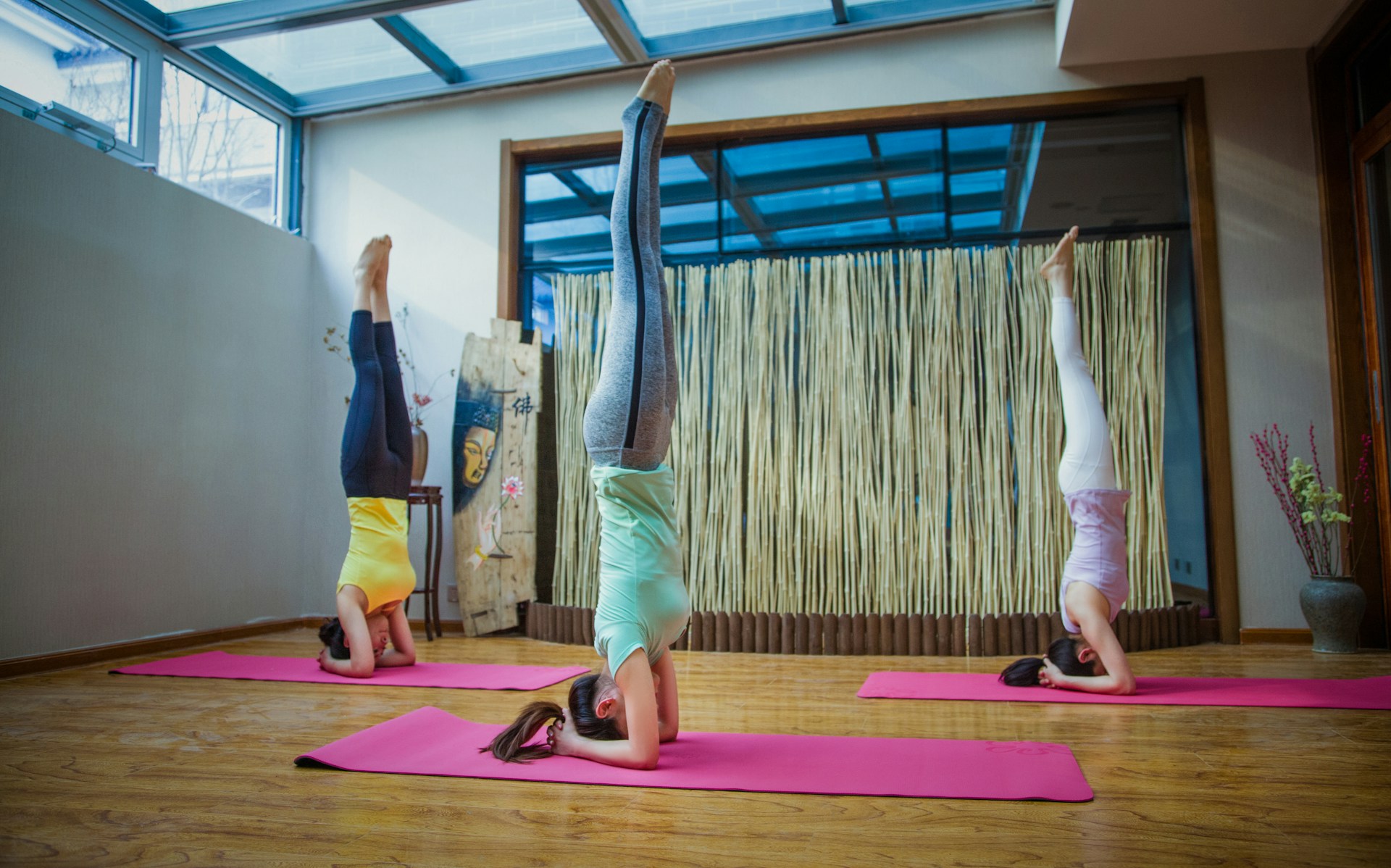
- Backbends and the closing sequence (Urdhva Dhanurasana through the shoulderstand family and headstand) round out the practice and calm the nervous system before final relaxation.
A full, unmodified Primary Series typically takes 75–120 minutes. As a beginner, you will not do the full sequence in your first class, or your first month — a good teacher gives you a handful of postures at a time, in the traditional Mysore method, letting each one stabilize before adding the next.
Signs You’re Ready to Move Beyond Primary Series
Because progression in Ashtanga isn’t calendar-based, it helps to know what a teacher is actually looking for before introducing new postures:
- Consistency, not perfection — a near-daily practice over a sustained period matters more than how deep any single posture looks.
- Stable breath throughout the full Primary Series, rather than breath that becomes ragged or held under strain in the more demanding postures.
- Steady bandha engagement, so the deeper backbends of Intermediate Series have a foundation of core support to work from.
- No unresolved pain in the wrists, lower back, or shoulders that current postures are already aggravating.
- A teacher’s direct observation over time — this is inherently a relationship-based judgment, which is exactly why a fixed number of weeks or a home-practice count doesn’t substitute for training under a teacher who knows your body.
Mysore Style vs. Led Classes: Which Should Beginners Choose?
Ashtanga is taught in two formats, and beginners often assume the group-led class is the “easier” entry point. In practice, it’s usually the opposite.
| Mysore Style | Led Class | |
|---|---|---|
| Pace | Self-paced, with the teacher moving through the room correcting individually | Fixed pace, set by the teacher’s spoken count |
| Best for beginners? | Yes — new postures are introduced only when you’re ready | Better once you already know the sequence and want to refine timing |
| Individual attention | High — a teacher can adapt or hold back a posture based on your body that day | Limited — the whole room moves together |
| Learning curve | Slower to start, safer long-term | Faster exposure, but easy to feel lost or rushed as a beginner |
Nearly every reputable beginner-level Ashtanga program, including structured teacher trainings, uses Mysore-style practice as the daily foundation, adding one or two led classes per week once students have learned enough of the sequence to follow the count.
What Vinyasa, Ujjayi, Bandha, and Drishti Actually Mean (Beginner Glossary)
You’ll hear these four words in every single class, so it’s worth understanding them before you start rather than guessing:
| Term | Simple Explanation |
|---|---|
| Vinyasa | A specific, breath-linked movement that connects one posture to the next — Ashtanga’s answer to “what do I do between poses” |
| Ujjayi | An audible breath made by slightly narrowing the throat, used throughout the entire practice to build heat and hold focus |
| Bandha | An internal muscular engagement (mainly at the pelvic floor and lower belly) that supports and protects the spine during deeper stretches |
| Drishti | A fixed gazing point held in each posture, used to anchor concentration rather than letting the eyes and mind wander |
Together, these four elements are what separate Ashtanga from simply “doing stretches in a sequence.” They’re also exactly what a structured beginner training spends real time teaching properly, because they’re difficult to self-teach from a video.
How Ashtanga Compares to Other Common Yoga Styles
Beginners often ask how Ashtanga stacks up against the styles they may have already tried. The honest answer is that they’re built around different priorities:
| Style | Sequence | Pace | Best Suited To |
|---|---|---|---|
| Ashtanga | Fixed, identical every practice | Vigorous, continuous | Students who want structure, repetition, and measurable progress |
| Vinyasa | Varies class to class | Flowing, moderate to vigorous | Students who prefer variety and creative sequencing |
| Hatha | Often fixed within a course, varies between teachers | Slower, longer holds | Beginners wanting a gentler introduction to postures and breath |
| Yin | Very few postures per class | Very slow, passive, long holds | Deep connective-tissue release and restorative practice |
None of these is objectively “better” — they serve different goals. What makes Ashtanga distinct for a beginner is precisely its lack of variety: you memorize one sequence and repeat it, which is either exactly what you’re looking for or genuinely not your preference, and it’s worth being honest with yourself about which before committing to a multi-week training built entirely around it.
Modifications and Props: What Beginners Actually Need
A common misconception is that Ashtanga is a props-free, no-modifications practice. In a well-taught beginner setting, the opposite is true:
- Blocks are commonly used under the hands in standing forward folds and twists for students who can’t yet reach the floor without rounding the lower back.
- Straps help in seated forward bends and the reclining leg postures near the end of the seated sequence, standing in for the flexibility to bind hands to feet directly.
- Bent-knee variations are entirely normal in nearly every seated forward bend for the first months of practice — straight legs are a long-term goal, not a starting requirement.
- Skipped or simplified postures. A good Mysore teacher will simply skip a posture a student isn’t ready for (Supta Kurmasana and Karandavasana are common examples) rather than forcing an unsafe attempt, and add it back in later.
If a teacher insists on full, unmodified expression of every posture from day one regardless of a student’s body, that’s a red flag for a beginner-level program — not a sign of a rigorous one.
Common Mistakes First-Time Ashtanga Students Make
A handful of habits show up disproportionately often in beginners, and knowing them in advance can save weeks of frustration or an avoidable strain:
- Trying to memorize the whole sequence from a chart or app before ever stepping into a room. It’s tempting, but it usually produces sloppy transitions and poor breath timing that then have to be unlearned. Let a teacher build the sequence into you posture by posture instead.
- Comparing your body to the person on the next mat. Ashtanga is practiced in a shared room, but it is never a group choreography — the person next to you may be five years into their practice while you’re on day three, and that’s exactly as it should be.
- Skipping the standing sequence to “save energy” for the harder seated postures. The standing postures exist specifically to prepare the hips and legs for what follows; skipping them increases injury risk rather than conserving useful effort.
- Holding the breath during difficult transitions, particularly jump-backs and jump-throughs. If you notice you’ve stopped breathing audibly, that’s the moment to slow down, not push through.
- Practicing through sharp or joint-level pain, as opposed to the ordinary muscular effort and stretch sensation the practice legitimately involves. The difference matters, and a good teacher will help you learn to tell them apart.
- Under-hydrating and under-eating around practice out of a mistaken belief that Ashtanga is meant to be done while depleted. Consistent energy intake around your practice — not during it — supports progress rather than hindering it.
Realistic Benefits for a True Beginner
Practitioners and teachers commonly describe a consistent set of changes after a few months of steady Primary Series practice — these are practice-based observations from the Ashtanga teaching tradition rather than formal medical claims, and individual results vary:
- Noticeably improved hip, hamstring, and shoulder flexibility
- Increased core and upper-body strength, particularly from the arm-balance and vinyasa transition work
- Better cardiovascular conditioning from the continuous, flowing nature of the practice
- Reduced day-to-day stress, attributed to the combined effect of vigorous movement and controlled breathing
- Improved posture and body awareness from the repeated attention to alignment in the same postures
None of these arrive in the first week. Ashtanga rewards a modest, repeated practice far more than an occasional intense one — which is one of the reasons a short, immersive training is such an effective way to actually build the habit.
Who Should Be Cautious as a Beginner
Ashtanga is accessible to beginners of ordinary fitness, but it is genuinely vigorous, and a few situations call for extra care and a conversation with your teacher before starting:
- Pregnancy — many postures, particularly deep twists and belly-compressing forward bends, require significant modification
- Existing lower-back, SI-joint, hamstring, knee, or wrist issues — these are the joints under the most repetitive load across the Primary Series
- Uncontrolled blood pressure conditions — the inversions in the closing sequence (shoulderstand, headstand) may need to be modified or skipped
- Recent surgery or acute injury of any kind
A properly trained Mysore-style teacher modifies postures constantly for exactly these situations. This is one of the strongest reasons to learn Ashtanga in a supervised setting as a beginner, rather than entirely from online videos — an experienced eye catches compensations you can’t feel yourself, especially in your first weeks.
Learning the Ashtanga Series in Nepal
Nepal has become one of the more credible places in the world to begin Ashtanga seriously, for reasons that go beyond scenery. The country sits at the historical and cultural crossroads of Vedic, Hindu, and Buddhist traditions, and Kathmandu Valley in particular carries centuries of temple, meditation, and yogic tradition into daily life — placing a beginner’s first real Ashtanga practice inside a living context rather than a studio disconnected from where these ideas began.
There are practical reasons too:
- Genuinely lower training and living costs compared to many Western countries and several popular Indian training hubs, without a corresponding drop in teaching quality.
- A quiet, Himalayan-adjacent setting. Kathmandu sits at roughly 1,400 metres, and many schools are positioned on the valley’s quieter edges — well suited to the disciplined early-morning rhythm Ashtanga requires.
- English-language instruction delivered fluently alongside traditional Sanskrit terminology, since Nepal’s yoga schools cater heavily to international students.
- Visa-on-arrival access for most nationalities at Kathmandu’s international airport, simplifying the logistics of a multi-week beginner training.
- An established, Yoga Alliance-recognized teacher training ecosystem, so a genuine beginner can go from zero experience to an internationally recognized qualification in a single structured course if they choose to.
- A slower daily rhythm outside the training itself. Kathmandu Valley moves at a different pace than most home cities, with fewer scheduling demands competing for the early nights and early mornings an Ashtanga-focused training asks of you — which, in practice, makes the discipline noticeably easier to sustain for the duration of a course than trying to build the same habit around a full working week at home.
Beginner Ashtanga Training at Nepal Yoga Institute
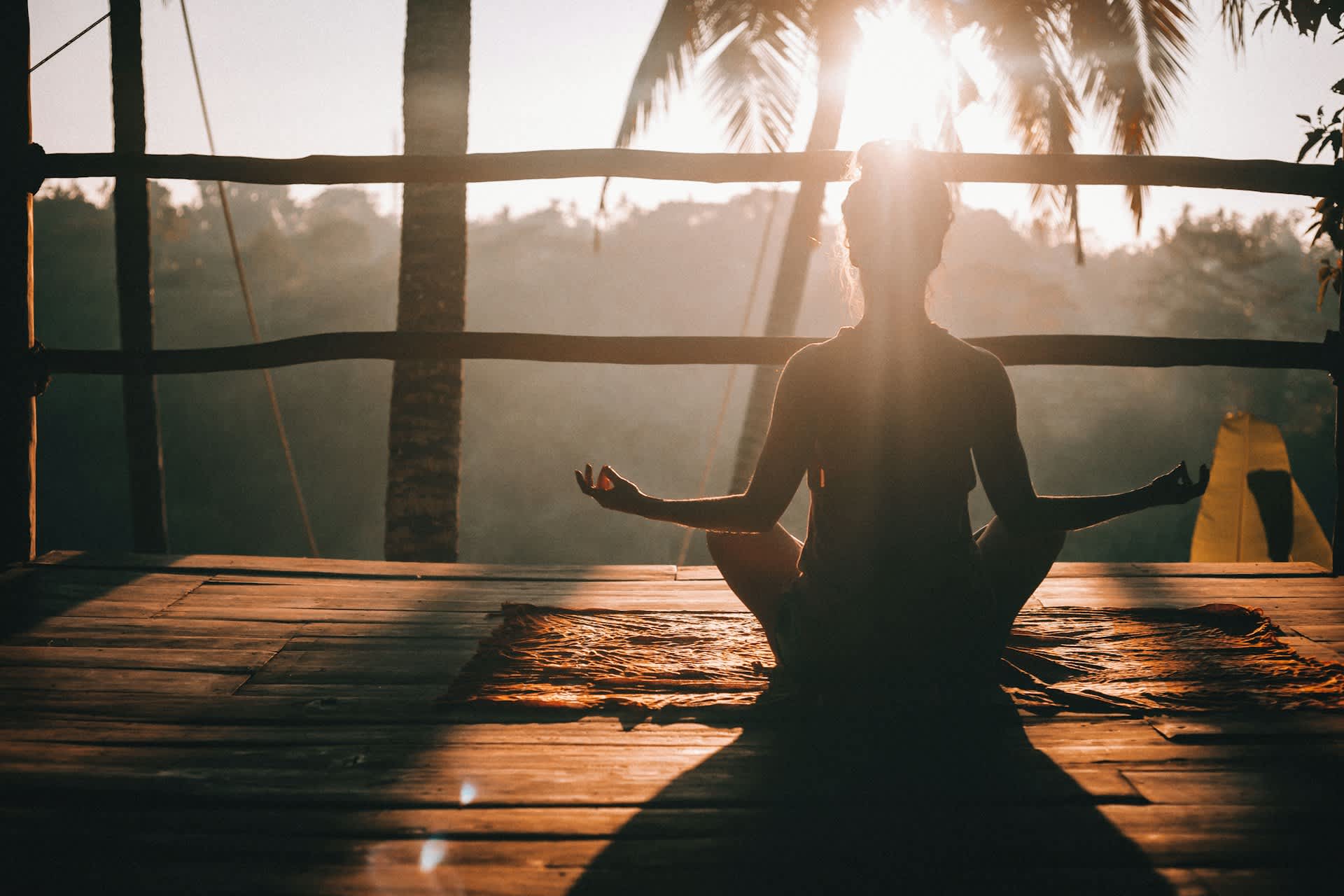
Based in Budhanilkantha, on the quiet northern edge of Kathmandu, Nepal Yoga Institute runs a dedicated Ashtanga Yoga Teacher Training program that explicitly does not require prior yoga experience. It’s built around the Primary Series and the eight-limbed framework behind it, rather than treating asana as an isolated physical workout.
What the program focuses on for beginners specifically:
- A grounding in Sanatan (traditional) yoga philosophy, including the eight limbs, before and alongside the physical postures.
- Progressive, Mysore-style asana instruction, so postures are introduced individually rather than all at once.
- Pranayama and meditation practice, taught as core parts of the curriculum rather than an afterthought.
- Basic anatomy and physiology, so beginners understand why the sequence is built the way it is.
- Yoga Alliance–recognized certification, allowing graduates — including complete beginners at the start of the course — to register as teachers internationally afterward.
For students who want a broader foundation before specializing, Nepal Yoga Institute also offers a 200-Hour Yoga Teacher Training covering multiple yoga styles, which some beginners choose as a first step before committing to an Ashtanga-focused track. You can read more about the school’s teaching approach on its About Us page, and its blog post on Ashtanga Yoga covers additional background on the style’s philosophy and technique.
What a Beginner’s Training Day Looks Like
| Time | Activity |
|---|---|
| Early morning | Mysore-style Primary Series practice, paced individually and guided by a teacher |
| Mid-morning | Breakfast and rest |
| Late morning | Philosophy, anatomy, or teaching-methodology session |
| Afternoon | Pranayama and meditation practice |
| Evening | Optional led class, chanting, or self-study; dinner |
The early wake time and repeated daily rhythm are themselves part of the traditional method — not an arbitrary schedule choice — and most beginners find the structure easier to sustain than they expect, precisely because there’s no daily decision-making about what to practice.
How to Choose a Beginner-Friendly Ashtanga Program
A few questions reliably separate a program that will actually teach you the Ashtanga series properly from one that’s mostly marketing:
- Does the course explicitly welcome complete beginners, or does it assume prior experience that will leave you lost in week one?
- Is the certification Yoga Alliance–recognized (or an equivalent internationally accepted body), so it’s actually usable if you want to teach afterward?
- Is teaching done Mysore-style, with individual correction, rather than as a single group-paced flow class regardless of level?
- What is the teacher’s own training lineage — who did they study Ashtanga under, and for how long? This is a completely normal, expected question in the Ashtanga community.
- Does the curriculum cover philosophy and anatomy, not just physical postures? A beginner who only learns asana without any of the surrounding eight-limb context is getting an incomplete introduction to Ashtanga.
- What’s the student-to-teacher ratio during practice sessions, since individualized Mysore correction is difficult to deliver well in an oversized group?
Preparing for Your First Ashtanga Training
- Best season in Nepal: Autumn (late September–November) and spring (March–May) offer the clearest skies and most comfortable temperatures; monsoon season (June–August) brings heavy rain, and winter mornings (December–February) can be quite cold, which matters for an early-start practice.
- Physical preparation: You don’t need flexibility to start — that develops through practice — but building basic cardiovascular fitness in the weeks beforehand makes the first fortnight considerably easier.
- What to bring: A yoga mat and towel (confirm whether your school provides one), layered clothing for cool mornings and warm afternoons, and modest clothing for anything outside the practice room, in line with local cultural norms.
- Disclose health information upfront. Reputable programs ask about injuries, medications, and conditions during enrollment specifically so a teacher can plan modifications before your first class, not improvise mid-practice.
- Expect real fatigue in the first two weeks. New postures, an unfamiliar climate, and an early wake time compound quickly; most well-structured trainings build at least one rest day per week into the schedule for this reason.
- Practice on an empty stomach, ideally first thing in the morning — a full stomach makes twists, forward bends, and inversions genuinely uncomfortable.
Food and Recovery During a Beginner Training
- Meals are typically simple and largely vegetarian at Nepali yoga schools, in keeping with traditional yogic dietary guidance — worth mentioning during enrollment if you have specific dietary needs.
- Rehydrate and eat after practice, not during it — Ashtanga is traditionally practiced without water breaks, so a proper breakfast and fluids afterward matter more than sipping mid-sequence.
- Sleep is part of the curriculum, not downtime. The early Mysore start only works if you’re also going to bed early; treat your evenings during a training as seriously as your mornings.
- One rest day per week is standard in most well-structured multi-week trainings. This mirrors the traditional Mysore custom, in which Ashtanga is practiced daily except on Saturdays and on new and full moon days (“moon days”), regardless of how many days into a training you are.
Continuing Your Practice After a Beginner Training
Finishing a beginner Ashtanga training is a starting line, not a finish line, and what you do in the following months matters more than the training itself for how much of it actually sticks:
- Find a Mysore-style shala near home, if one exists, so you can continue receiving individual correction rather than practicing entirely from memory.
- Keep a modest daily or near-daily rhythm rather than trying to recreate the intensity of a full-time training schedule alongside a job or studies — a shorter, consistent home practice beats an ambitious one that collapses after two weeks.
- Revisit your notes on philosophy and anatomy, not just the physical sequence — the parts of a training that don’t show up in your body immediately are often the parts that matter most a year later.
- Stay in touch with your training teacher if possible. Many schools, including smaller ones in Nepal, welcome follow-up questions from graduates who are building an independent home practice.
- Consider a refresher or Intermediate-focused training later, once your Primary Series has genuinely stabilized over months of consistent practice, rather than returning too soon out of eagerness.
Frequently Asked Questions about Ashtanga Series for Beginners
1. What does the word “Ashtanga” actually mean? It means “eight limbs” in Sanskrit, referring to Patanjali’s eightfold philosophical path in the Yoga Sutras, of which physical postures (asana) are only one part.
2. Is Ashtanga Yoga suitable for complete beginners? Yes. No prior experience is required to start the Primary Series, though it is physically demanding regardless of fitness level, and postures are introduced gradually.
3. How many Ashtanga series are there? Six: the Primary Series, the Intermediate Series, and four Advanced series (A, B, C, and D), each building on the one before it.
4. Do I have to move through all six series eventually? No. Most Ashtanga practitioners, including many long-term teachers, practice within the Primary and Intermediate series for their entire yoga lives and never move into the Advanced series.
5. What’s the difference between the Primary and Intermediate series? The Primary Series (Yoga Chikitsa) focuses on forward bends, twists, and hip openers to align and detoxify the body; the Intermediate Series (Nadi Shodhana) introduces deeper backbends and leg-behind-head postures aimed at the nervous system.
6. Can I choose to skip ahead to a series I find more interesting? Not in the traditional method. A Mysore-style teacher introduces new postures and series based on a student’s readiness, which protects against injury from progressing faster than the body adapts.
7. What’s the difference between Mysore style and a led class? Mysore style is self-paced with individual correction from the teacher; a led class has the teacher calling the full breath count aloud for the whole group to follow together.
8. How long does a beginner’s Primary Series practice take? Beginners typically start with a shortened version lasting 30–45 minutes, gradually building toward the full 75–120 minute sequence as more postures are added.
9. Is Ashtanga safe if I have an existing injury? It can be, with full disclosure to your teacher and appropriate modification — Ashtanga’s repetitive structure means existing injuries need individualized adaptation rather than being pushed through.
10. What are the eight limbs of Ashtanga Yoga? Yama (ethics), niyama (personal discipline), asana (postures), pranayama (breath control), pratyahara (sense withdrawal), dharana (concentration), dhyana (meditation), and samadhi (absorption).
11. Will I get a recognized certification after a beginner Ashtanga training in Nepal? Reputable schools, including Nepal Yoga Institute, offer Yoga Alliance–recognized certification, allowing graduates to register as teachers internationally.
12. What’s the best time of year to train in Nepal? Autumn (late September–November) and spring (March–May) offer the most comfortable weather; monsoon season brings heavy rain, and winter mornings can be cold.
13. How is Ashtanga different from general Vinyasa or Hatha classes? Ashtanga follows one fixed sequence practiced in the same order every time, while Vinyasa classes typically vary daily and Hatha usually moves more slowly with longer holds and less continuous linking between postures.
14. Do I need to be able to touch my toes before I start? No. Flexibility is a result of consistent practice, not a prerequisite for beginning — the sequence is specifically designed to build it gradually from wherever your body currently is.
Final Thoughts on Ashtanga Series for Beginners
“Ashtanga” describes both a philosophy and a physical practice, and understanding that dual meaning is genuinely useful before you ever step onto a mat — it reframes the sweaty, demanding sequence you’re about to learn as one limb of a much older, more complete system, rather than an arbitrary workout. As a beginner, your entire job is the Primary Series: learning it patiently, one posture at a time, in the traditional Mysore method, under a teacher who won’t rush you toward the next series before your body is ready.
That single focus is, in a strange way, the most reassuring thing about starting Ashtanga. You don’t need to research six series, memorize dozens of Sanskrit names, or worry about which advanced arm balance you’ll eventually attempt. You need a mat, a willingness to show up daily for a few weeks, and a teacher who introduces the sequence to you gradually. Everything else — the flexibility, the strength, the calmer mind people talk about — tends to arrive as a byproduct of that consistency rather than something you have to chase directly.
Training that foundation in Nepal adds a setting few home studios can offer — a slower pace of life, a genuinely spiritual backdrop, and a Himalayan morning to take your first Surya Namaskaras in. If you’re ready to start, Nepal Yoga Institute’s Ashtanga Yoga Teacher Training welcomes complete beginners, and you can book a place to begin.