Introduction to Monastery Nepal
There is a moment, usually just after sunrise, when the sound of a monastery changes. The low drone of chanting settles into the hum of a few hundred voices, a horn clears its throat somewhere in the courtyard, and then everything goes quiet. Nothing is performed for you. You are simply standing inside a place whose whole purpose is to help a human mind grow still.
That is what a monastery in Nepal offers, and it is why people come from every continent to sit in prayer halls they cannot fully understand. This guide covers the monasteries worth knowing, from the white dome of Boudhanath to the Everest trail, what each one is actually like, how to visit respectfully, and how to decide between a monastery visit, a monastery course and a different kind of retreat altogether. It also explains where Nepal Yoga Institute fits in, because it is not a monastery and shouldn’t pretend to be.
What “Monastery” Means in Nepal
In Nepal you will hear the words gompa, vihara and monastery used almost interchangeably. A gompa is a Tibetan Buddhist monastery or meditation place, usually with a prayer hall, a teaching space, and living quarters for monks or nuns. The country holds several Buddhist traditions side by side. Tibetan Buddhism dominates the Kathmandu Valley and the high Himalaya. In Lumbini, the Buddha’s birthplace, monasteries built by many nations sit in two zones: the east for the Theravada tradition, the west for Mahayana and Vajrayana.
Most Tibetan Buddhist monasteries in Nepal exist because of history. After the 1959 Tibetan uprising, large numbers of refugees settled around Boudhanath, and over fifty gompas now stand around that one stupa. A monastery here is rarely a museum. It is a working school, a place of ritual, and a home.
The Monasteries at a Glance
| Monastery / site | Where | Tradition | What visitors can expect |
|---|---|---|---|
| Boudhanath and its 50+ gompas | Kathmandu | Tibetan Buddhist | Circumambulating the stupa, visiting open monasteries |
| Swayambhunath | Kathmandu (hilltop, west) | Buddhist (Vajrayana, with Newar elements) | Hilltop stupa complex, a Tibetan monastery on site |
| Kopan Monastery | Kathmandu (north of Boudhanath) | Gelug | Meditation and Buddhism courses, hilltop views |
| Shechen Monastery | Boudhanath | Nyingma | Public events, courtyard, adjacent guest house |
| Thrangu Tashi Yangtse | Namo Buddha, Kavre | Kagyu | Hilltop monastery with a nearby stupa |
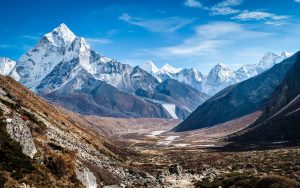
| Tengboche | Khumbu, 3,867 m | Nyingma | Everest trail stop, Mani Rimdu festival |
| Lumbini Monastic Zone | Lumbini | Theravada (east), Mahayana and Vajrayana (west) | Monasteries of many nations near the Buddha’s birthplace |
Boudhanath: A Stupa Ringed by Monasteries
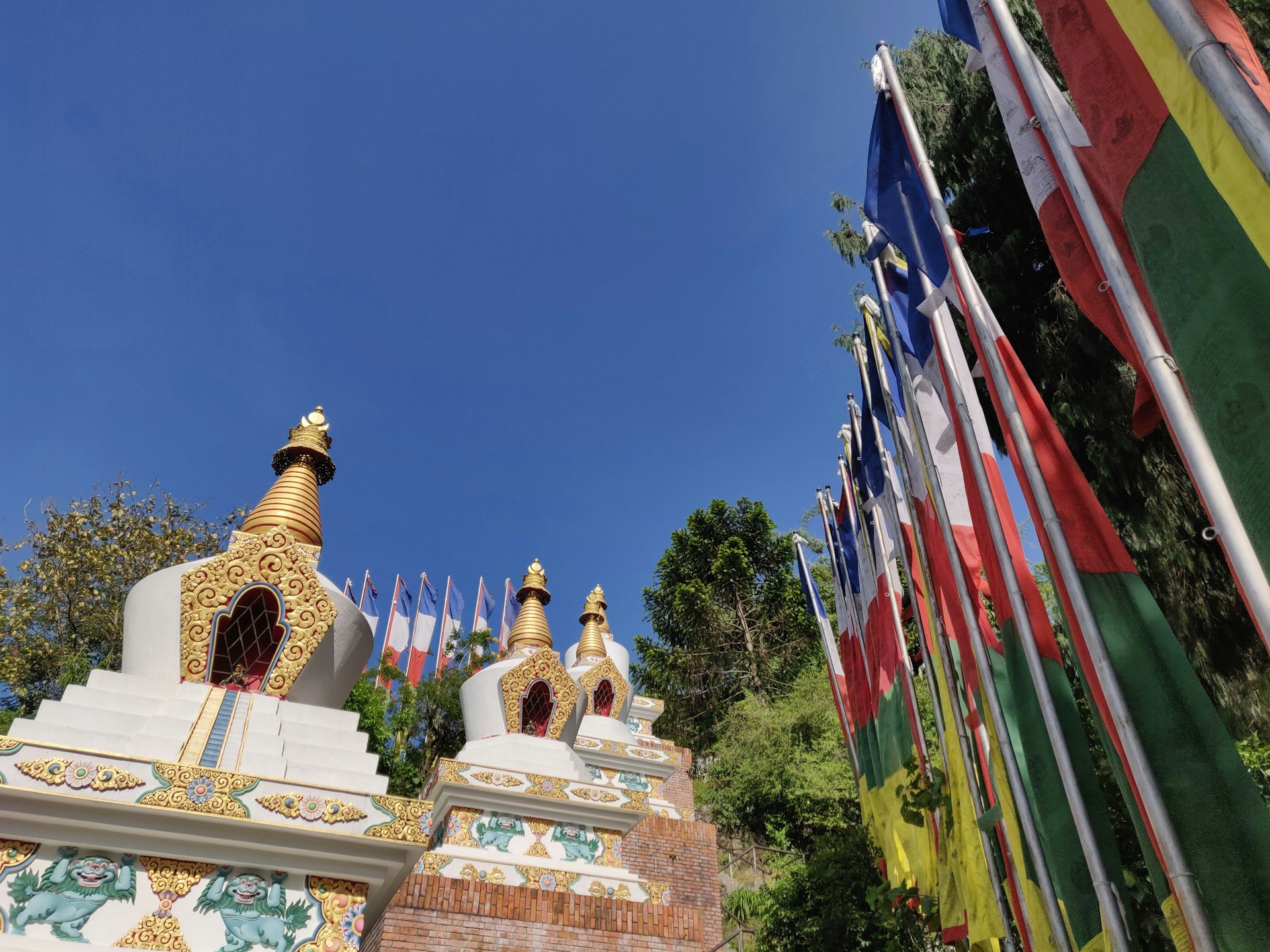
Boudhanath sits about 11 km from central Kathmandu and ranks among the largest spherical stupas in the world. Tradition holds that it enshrines relics linked to the Buddha Kassapa, and it stands on the ancient trade route that came down from Tibet through the village of Sankhu. UNESCO inscribed it in 1979 as part of the Kathmandu Valley World Heritage property, which you can read about on UNESCO’s Kathmandu Valley page.
The 2015 earthquake badly damaged the stupa’s spire, and the stupa reopened in November 2016 after restoration. Visitors still walk around the dome clockwise, spinning prayer wheels and murmuring mantras, and the rhythm of that circular walk is the quickest way to feel what a monastery town is like. Many of the surrounding gompas are open to respectful visitors during daytime hours, and some host public chanting or teachings. Go at dawn if you can. The light is gentle and the crowds are mostly pilgrims.
Two monasteries near Boudhanath are worth knowing by name. Shechen Monastery belongs to the Nyingma school. Dilgo Khyentse Rinpoche began building it in 1980 to carry on the traditions of the original Shechen, which was destroyed in Tibet. Its own website notes that visitors cannot stay at the monastery and that it does not run retreats for visitors, though a guest house stands next to it. Ka-Nying Shedrub Ling, founded by Tulku Urgyen Rinpoche and led by Chokyi Nyima Rinpoche, is known for balancing traditional scholarship with meditation practice. These are details worth having before you arrive, because “visit” and “stay” mean different things at different gompas.
Swayambhunath: The Hilltop Complex
Swayambhunath rises on a wooded hill west of the city and became a UNESCO site in 1979, as part of the Kathmandu Valley property. Its whitewashed dome and painted eyes are among the most recognized images in Nepal. The eastern stairway has 365 steps, the hill is famous for its resident monkeys, and the complex also includes a Tibetan monastery, a museum and a library. The 2015 earthquake damaged parts of the site, and restoration continued for years afterward.
Come here for the view and the atmosphere of a living pilgrimage site, not for quiet. It is busy. Pilgrims climb at dawn, and the sound of bells and mantras carries across the whole hill.
Kopan: The Monastery Where Foreigners Come to Learn
Of all the monasteries in Nepal, Kopan has the strongest reputation for welcoming people who want to study and meditate, not only visit. It sits on a hilltop north of Boudhanath and follows the Gelug tradition of Tibetan Buddhism. It is affiliated with the Foundation for the Preservation of the Mahayana Tradition (FPMT), which was founded by the monastery’s founders, Lama Thubten Yeshe and Lama Zopa Rinpoche.
The history is worth getting right. The two lamas established Kopan in 1969, when they bought the property from Nepal’s royal astrologer. The first month-long meditation course took place in 1971, and the first temple was built in 1971 to 1972. That November course grew into an annual tradition. A nunnery, Khachoe Ghakyil Ling, was established nearby in 1979. You can explore the current programs on Kopan Monastery’s official website.
What a Kopan Course Looks Like
Kopan’s published details for its Introduction to Buddhism course (4 to 11 October 2026) show how a monastery-based course is structured:
| Detail | What Kopan’s course page states |
|---|---|
| Length | 7 days, ending with a one-day silent meditation retreat |
| Flat fee (dorm) | US$140, including all meals, dormitory accommodation and a free book |
| Other rooms | Single, double and triple rooms available at an extra daily charge |
| Daily timing | Begins at 6:45 am and finishes at 9 pm |
| Silence | Kept from 9 pm until after lunch the next day |
| Attendance | All sessions are compulsory |
| Phones | Mobile phones and internet devices are checked in at reception for the course |
| Dress | A strict dress code applies |
| Content | Teachings, meditation types and discussion groups, described as suitable for beginners |
Courses and fees change from season to season, so always confirm on Kopan’s site before planning. But the pattern is instructive: monastery courses are structured, early, quiet and affordable, and they ask you to give up your phone and a good deal of your autonomy. For the right person, that is exactly the point.
Namo Buddha: A Day Out From the Valley
Namo Buddha lies in Kavre District, roughly 40 km from Kathmandu, and most people reach it in about an hour and a half to two hours by road. The hilltop sits at around 1,750 m and is one of the best-known Buddhist pilgrimage sites near the capital. Its monastery, Thrangu Tashi Yangtse, stands beside a stupa associated with a Jataka story in which the Buddha, in a former life, offered his body to a hungry tigress. Prayer flags cover the hillside, and the contrast with Kathmandu’s traffic is striking.
It makes an easy day trip, or a gentle overnight if you want a slower pace. Combine it with the old Newar town of Panauti and you have a day that mixes culture, a short hike and a real monastery atmosphere.
Tengboche: A Monastery on the Everest Trail
Tengboche sits at 3,867 m in the Khumbu region and is the largest gompa in the area. Lama Gulu founded it in 1916 in the Nyingma tradition. An earthquake destroyed it in 1934, a fire destroyed the rebuilt monastery in 1989, and it was rebuilt again with donations from around the world and formally consecrated in 1993.
Most people reach Tengboche on the Everest Base Camp trek, usually after several days of walking from Lukla through Namche Bazaar. Its biggest annual event is Mani Rimdu, held in the tenth month of the Tibetan lunar calendar, typically October or November. The exact public days change each year, so confirm them locally if you want to time a trek around the festival. Because this is a high-altitude monastery, treat it as a trekking destination first, and plan acclimatization and travel insurance accordingly.
Lumbini: Monasteries Around the Buddha’s Birthplace
Lumbini, in the southern plains, is where Siddhartha Gautama was born according to Buddhist tradition. UNESCO inscribed it in 1997, and you can read about it on UNESCO’s Lumbini page. The Maya Devi Temple marks the traditional birthplace, and the Ashokan pillar stands nearby. The surrounding Monastic Zone is reserved for monasteries only, with no shops, hotels or restaurants inside it. The east zone holds Theravada monasteries and the west holds Mahayana and Vajrayana ones, laid out on either side of a long canal and walkway.
It feels very different from the Kathmandu Valley: flatter, hotter, quieter and more international, with monasteries built in styles from many countries. Rent a bicycle and visit a handful rather than rushing through all of them.
Visiting a Monastery vs. Staying in One
People often assume a Nepal monastery trip means living inside one. In practice there are three quite different experiences.
| Visiting for a day | A monastery course | A yoga and meditation retreat | |
|---|---|---|---|
| Example | Boudhanath’s gompas, Swayambhunath | Kopan’s Introduction to Buddhism | Nepal Yoga Institute’s five-day retreat |
| Focus | Atmosphere, ritual, culture | Buddhist teachings and meditation | Yoga, pranayama, meditation, rest |
| Structure | Self-guided | Strict, compulsory sessions | Structured but flexible |
| Phones | Yours to keep | Checked in at reception (Kopan) | Not used during class time |
| Belief required | None | Interest in the teachings | None |
Neither is better. A monastery course gives you philosophy, community and a monastic rhythm. A yoga retreat gives you physical practice and a more flexible shape. Choose by what you want to feel at the end.
Etiquette: How to Be a Good Guest
Monasteries are places of worship first and sights second. A few habits go a long way.
- Dress modestly. Cover shoulders and knees. Kopan states outright that it enforces a strict dress code.
- Walk clockwise around stupas, prayer wheels and shrines.
- Remove your shoes before entering a prayer hall, and follow the lead of those around you.
- Ask before photographing. Many halls prohibit it, especially during ceremonies.
- Keep your voice low, switch your phone to silent, and don’t step between monks and an altar.
- Treat donations as part of the visit. Monasteries run on them.
If the idea of structured quiet appeals to you, the Nepal Yoga Institute code of conduct shows a similar ethos in a yoga setting: respect for others, punctuality, silence in the studio before and after class, and a non-judgmental attitude.
Planning Your Trip
Autumn and spring are generally the most comfortable seasons for travel in Nepal, with clearer skies in autumn and warmer, greener conditions in spring. For Kathmandu Valley monasteries, season matters less than timing within the day: dawn and late afternoon are the best hours. For Tengboche, season matters a great deal because of altitude, snow and trail conditions. Confirm opening hours and any course dates directly with each monastery, and book residential courses early, since places fill.
Three practical suggestions: carry a scarf or light jacket for dress-code situations, bring small notes for donations, and give yourself at least one slow morning with no schedule. Monasteries reward patience.
Silence as the Real Journey
It is easy to treat monasteries as sights, ticking Boudhanath off between lunch and the airport. But the places that stay with people are rarely the monuments. They are the quiet half-hours: a kora around the stupa at dawn, ten minutes of sitting in a prayer hall, a night of silence at a course where your phone is locked away.
Silence is uncomfortable at first. The mind gets loud before it gets quiet, which is exactly why structure helps. If you want to explore meditation before committing to a monastery stay, the Nepal Yoga Institute blog has a helpful piece on yoga teacher training and meditation practice in Nepal, and an article on singing bowls in Nepal that separates the genuine craft tradition from the souvenir-shop mythology.
Where Nepal Yoga Institute Fits In
Nepal Yoga Institute and Retreat is not a monastery. It is a yoga school and retreat center in Budhanilkantha, Kathmandu, and it is registered with Yoga Alliance USA. But it shares a few qualities that people seeking monasteries often look for: quiet surroundings, a disciplined daily rhythm, simple vegetarian food, and teachers who care about the inner side of practice.
The institute sits below Shivapuri National Park, at the foothills of the Manichud Hills, about 22 km from Tribhuvan International Airport and 24 km from Thamel. Its listed address is Budhanilkantha-11, the same municipality and ward number Kopan uses, so the two share a landscape even though their traditions differ. Residential training takes place at Maitri Sewa Ashram, run by J.P. Foundation, which supports senior citizens, organic farming and cow husbandry. Students can take part in karma yoga there if they wish, but the institute is clear that no service is mandatory.
Programs for People Seeking Stillness
| Program | Key facts from the site |
|---|---|
| Five-day yoga retreat | Check-in at 12:00 on day one; daily mantra, pranayama, asana, Ayurveda oil massage and sauna, and a yoga and meditation session; prices calculated on request according to group size |
| Long-term / short-term retreat package | Duration can be increased or decreased as needed; a sattvic diet and balanced practice schedule; prices calculated on request depending on duration and group size |
| Five-day stress management package | Day one includes a stress-level and resilience assessment; later days include stress-management sessions, pranayama and yoga nidra; prices calculated on request according to group size |
| 200-hour yoga teacher training | $1,400 complete cost; 22 days; starts on the 15th of every month; up to 14 students; $200 non-refundable advance deposit, with the balance due on orientation day in Nepal |
The 200-hour course follows a disciplined schedule that will feel familiar if you have ever read a monastery timetable: satkarma, chanting and pranayama from 6:30 in the morning, theory and meditation through the day, and self-study and sadhana until 9:30 at night, with one day off a week. The school asks students to keep to a vegetarian community table with no alcohol, smoking or drugs, and mobile devices are not permitted during class time.
For a gentle first step, the yoga retreat for beginners page explains what to expect if you have never been on a retreat before.
Who Might Prefer a Yoga School to a Monastery
A yoga school suits you better if you want physical practice alongside meditation, if you’d rather not follow a specific religious tradition, or if you want a program shaped around your dates and group size. A monastery suits you better if you want Buddhist teachings, a monastic community and the experience of living inside a tradition. Plenty of people do both, starting with a course at Kopan and following it with a yoga retreat, or the other way around.
Sample Itineraries
| Length | Plan |
|---|---|
| 1 day | Dawn kora at Boudhanath, a visit to Shechen or another open gompa, afternoon at Swayambhunath |
| 3 days | Day 1 as above; Day 2 Namo Buddha with a stop in Panauti; Day 3 a quiet morning of meditation at a yoga retreat or hotel |
| 7 days | A beginners’ course at Kopan (check current dates and fee), with Boudhanath and Swayambhunath before or after |
| 7+ days with trekking | Kathmandu monasteries, then a flight to Lukla and the Everest trail through Tengboche, timed around Mani Rimdu if you wish |
| Retreat-focused | Monastery day visits followed by a five-day yoga retreat or stress-management package in Budhanilkantha |
Frequently Asked Questions About Monasteries in Nepal
1. Can tourists visit monasteries in Nepal?
Yes. Many Tibetan Buddhist monasteries, especially around Boudhanath, welcome respectful visitors during daytime hours. Always check opening times, dress modestly and ask before taking photos.
2. Can I stay overnight at a monastery in Nepal?
It depends on the monastery. Kopan accommodates participants on its courses, while Shechen’s own site states that visitors cannot stay at the monastery and that it does not run retreats for visitors. Always confirm before you plan.
3. How much does a monastery course cost?
It varies by course and season. For example, Kopan’s 7-day Introduction to Buddhism course (4 to 11 October 2026) listed a flat dorm fee of US$140 including meals, accommodation and a book. Check the monastery’s website for current figures.
4. Do I need to be Buddhist to attend a course?
Kopan describes its introductory course as perfect for beginners and open to anyone interested in Buddhism or in working with stress and strong emotions. No requirement to hold a particular belief is stated on the course page.
5. What is the best monastery in Nepal for beginners?
Kopan is the best-known choice for structured beginner courses. For simple visiting, the gompas around Boudhanath and the hilltop at Swayambhunath are the most accessible.
6. What time does the day start at a monastery course?
At Kopan, the daily schedule begins at 6:45 am and finishes at 9 pm, with silence kept from 9 pm until after lunch the next day.
7. Will I have to give up my phone?
At Kopan, mobile phones and other internet-connected devices are checked in at reception for the duration of the course. Other monasteries have their own rules.
8. What should I wear to a monastery in Nepal?
Modest clothing that covers shoulders and knees. Kopan enforces a strict dress code, and similar expectations apply at most active monasteries.
9. Is Boudhanath a monastery?
Boudhanath is a stupa, and over fifty monasteries (gompas) surround it. It is a UNESCO World Heritage Site, inscribed in 1979 as part of the Kathmandu Valley property.
10. When is the Mani Rimdu festival at Tengboche?
It is held in the tenth lunar month of the Tibetan calendar, usually October or November. The public days shift each year, so confirm locally before planning a trek around it.
11. How high is Tengboche Monastery?
It sits at 3,867 metres in the Khumbu region, so altitude acclimatization matters if you are trekking there.
12. Can I stay inside the Lumbini Monastic Zone?
The zone is reserved for monasteries, with no shops, hotels or restaurants inside it, so most visitors stay in the nearby town and visit during the day.
13. What is the difference between a monastery and a yoga retreat?
A monastery course centers on Buddhist teachings and a monastic routine, while a yoga retreat centers on asana, pranayama and meditation with a flexible structure and no required belief.
14. Is Nepal Yoga Institute a monastery?
No. It is a yoga school and retreat center in Budhanilkantha, registered with Yoga Alliance USA. It offers a disciplined, quiet setting and meditation within its programs, but it is not a Buddhist monastery.
15. How much does the 200-hour course at Nepal Yoga Institute cost, and how long is it?
The complete cost is $1,400 for a 22-day course that starts on the 15th of every month, with up to 14 students per course. A $200 non-refundable deposit is paid in advance, and the balance is due on orientation day in Nepal.
Ready for a Quieter Kind of Journey?
If you are weighing a monastery course against a yoga retreat, or want to combine the two, the easiest next step is a conversation. Tell our team your dates, your experience level and what you hope to feel when you leave, and a teacher will point you toward the right program, whether that is a five-day reset, a longer stay or the full 200-hour training.
Chat with our yoga teacher on WhatsApp: +977 9860480478
You can also explore every program at Nepal Yoga Institute and Retreat and use the booking form there once you are ready.