
Introduction to Singing Bowls Nepal
Walk through Thamel or the lanes around Boudhanath in Kathmandu and you’ll hear them before you see them — a low, rolling hum drifting out of a shop doorway, usually followed by someone inside running a wooden mallet around the rim of a metal bowl for a curious tourist. Singing bowls are everywhere in Nepal, sold as souvenirs, used in yoga studios, and marketed online as ancient tools for chakra alignment and cellular healing. Somewhere between the shop-window sales pitch and the genuine, centuries-old metalworking tradition behind these objects, a lot of the real story gets lost.
This guide is built to recover that story — what singing bowls actually are, where they really come from (which is more contested and more interesting than most souvenir shop plaques let on), what they’re made of, how the sound is produced, what legitimate research actually says about their effects, and how to tell a well-made, honestly represented bowl from a mass-produced tourist-market piece dressed up in “ancient Tibetan” language. Whether you’re planning to buy one in Kathmandu, curious about incorporating sound into a meditation practice, or just trying to separate fact from marketing before your trip, this covers it properly.
Quick Answer: Singing Bowls Nepal at a Glance
| What it is | A metal bowl-shaped instrument that produces a sustained, resonant tone when struck or when a mallet is circled around its rim |
| Material | Predominantly bronze — an alloy of copper and tin — despite popular claims of a “sacred seven metals” mixture, which testing has not substantiated |
| Where made | Primarily Nepal today, especially in and around the Kathmandu Valley (Patan and Bhaktapur have long-standing metalworking traditions); also historically associated with Tibet |
| Origins | Genuinely uncertain and debated — likely rooted in the pre-Buddhist Bön tradition of the Himalayas and/or originally used as utilitarian household vessels, later adopted into ritual and meditative use |
| Sound healing use | A modern wellness practice, popularized mainly from the mid-to-late 20th century onward, distinct from the bowls’ older, less documented traditional uses |
| Scientific evidence | Limited but growing — a handful of small studies suggest short-term relaxation and mood benefits; nothing supports specific medical or “cellular healing” claims |
| Typical price in Nepal | Roughly $15–$40 for a small tourist-market bowl; genuinely hand-hammered, good-quality bowls typically run $60–$300+ depending on size and craftsmanship |
| Where to hear one properly | Meditation and yoga centers, dedicated sound healing sessions, and workshops in the Kathmandu Valley and Pokhara |
What Exactly Is a Singing Bowl?
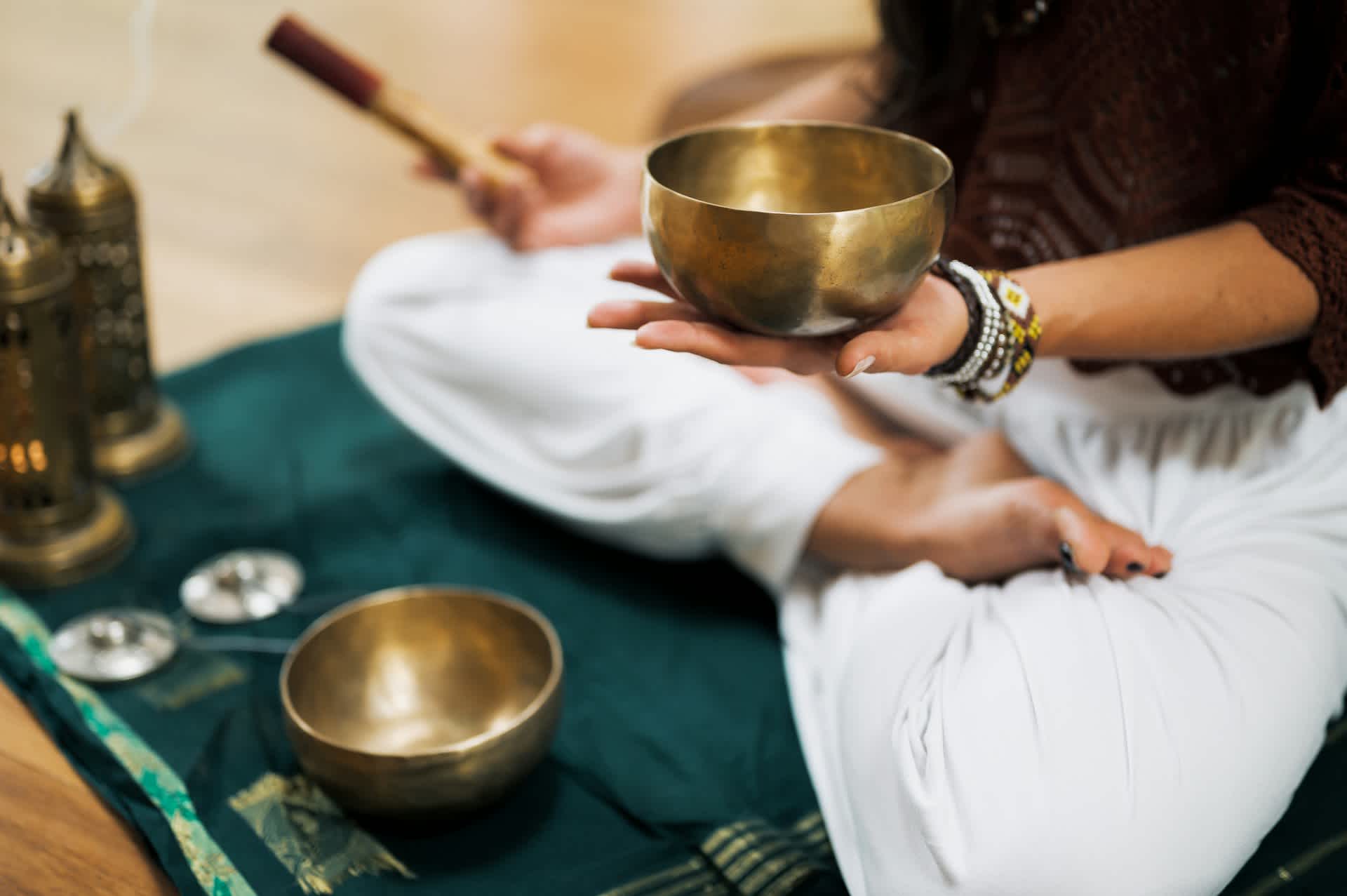
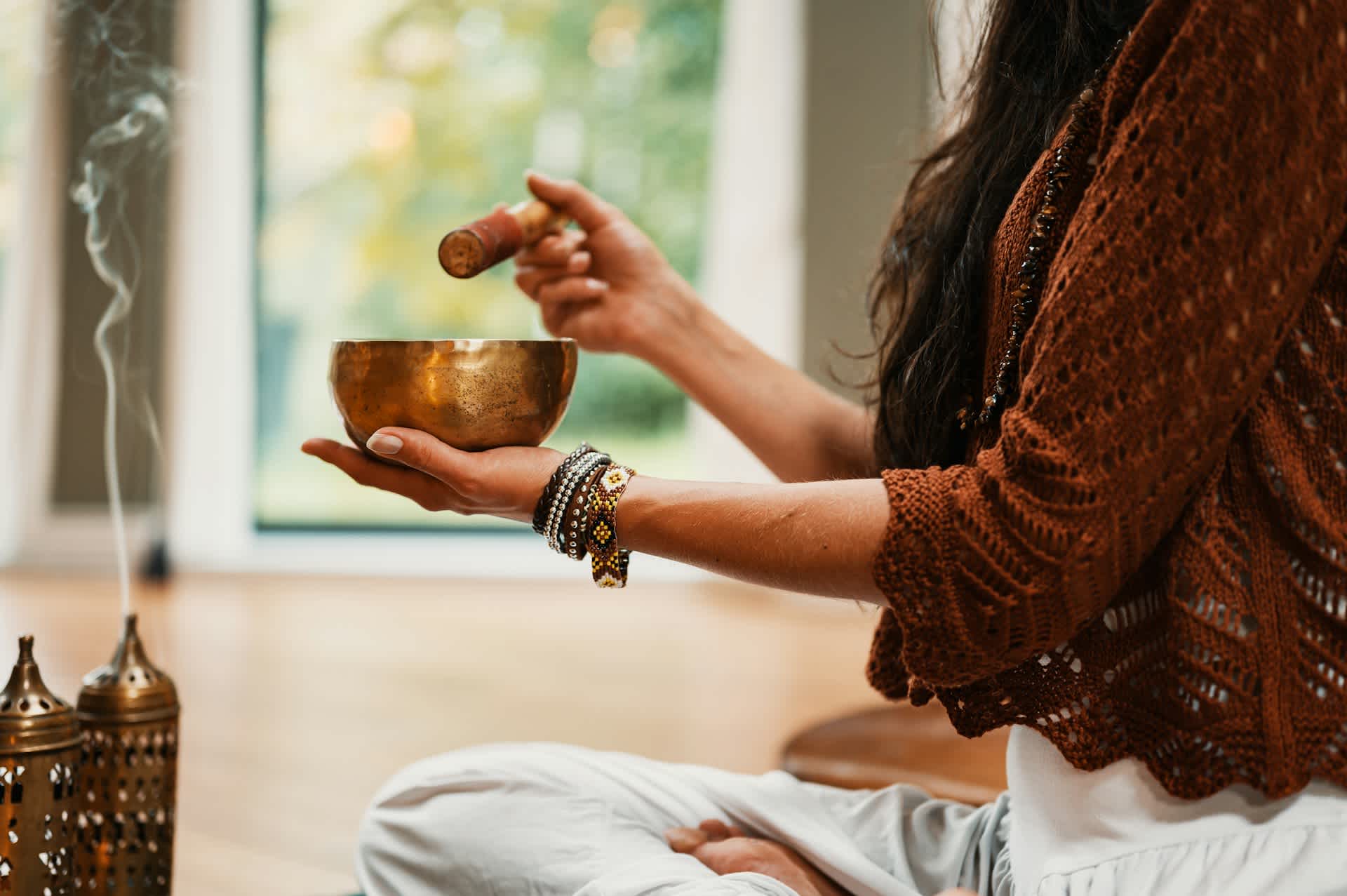
A singing bowl is a type of standing bell — technically classified as an idiophone, an instrument that produces sound primarily through the vibration of the instrument’s own body rather than strings or a membrane (learn more on Wikipedia’s overview of singing bowls). Unlike a bell that hangs and is struck from outside, a singing bowl rests open-side-up, either on a cushion or in the palm of a hand, and is played in one of two ways: striking the rim or side with a padded or wooden mallet to produce a single resonant tone, or running the mallet around the outer rim in a continuous circular motion to build a sustained, often layered hum through friction — the same basic physics behind running a wet finger around the rim of a wine glass, just at a much richer and lower register.
The sound isn’t a single pure note. A well-made bowl produces a fundamental tone plus a series of overtones — additional frequencies vibrating simultaneously above the base pitch — which is what gives a good singing bowl its distinctive, complex, almost chord-like quality rather than a flat single tone. The size, wall thickness, shape, and metal composition of the bowl all affect exactly which overtones come through and how long the sound sustains.
Where Singing Bowls Actually Come From (It’s More Contested Than the Souvenir Shops Say)
This is the part where honesty actually matters more than a tidy origin story. Despite the confident “ancient Tibetan artifact, thousands of years old” language attached to nearly every bowl sold to tourists, the real historical record is considerably murkier — and being upfront about that uncertainty is more respectful of the actual tradition than repeating an inflated legend.
The documented gap. Unlike other Tibetan Buddhist ritual instruments — bells, drums, horns — whose use is described in the Tibetan Buddhist canon, there is little to no textual documentation of singing bowls as a distinct ritual or meditative instrument in historical Buddhist scripture. When early Western researchers and collectors asked Tibetan practitioners directly about the bowls, many described them simply as everyday metal vessels rather than sacred ritual objects.
A more likely, more grounded story. The stronger historical thread connects singing bowls to the broader tradition of bronze and bell-metal vessel-making across the Himalayan region and neighboring areas, going back centuries, with household bowls used for cooking, eating, serving food (including tsampa, roasted barley flour, a Tibetan staple), and even measuring grain. Some scholars and researchers also trace roots to the pre-Buddhist Bön religion of the Himalayas, and to broader Asian bronze-vessel and bell-making traditions with cultural exchange across the region over centuries — but a single, clean, unbroken lineage back to one specific ancient ritual use isn’t well supported by the historical record.
The sound-healing framing is largely a modern development. What’s much better documented is that the specific practice of using singing bowls deliberately for meditation, relaxation, and “sound healing” in the way it’s marketed today gained real traction in the West from roughly the 1970s and 1980s onward, as global interest in Himalayan Buddhism, meditation, and alternative wellness practices grew. That doesn’t make the modern practice illegitimate — plenty of contemplative practices are recent applications of older objects and techniques — but it does mean the specific “ancient healing ritual, unchanged for millennia” pitch often heard in tourist shops overstates what’s actually documented.
None of this diminishes the bowls themselves, which are genuinely beautiful, skillfully made objects with real craft history behind them. It just means the honest version of that history is a little more uncertain, and a little more interesting, than the marketing plaque version.
What Singing Bowls Are Actually Made Of: The Seven Metals Myth
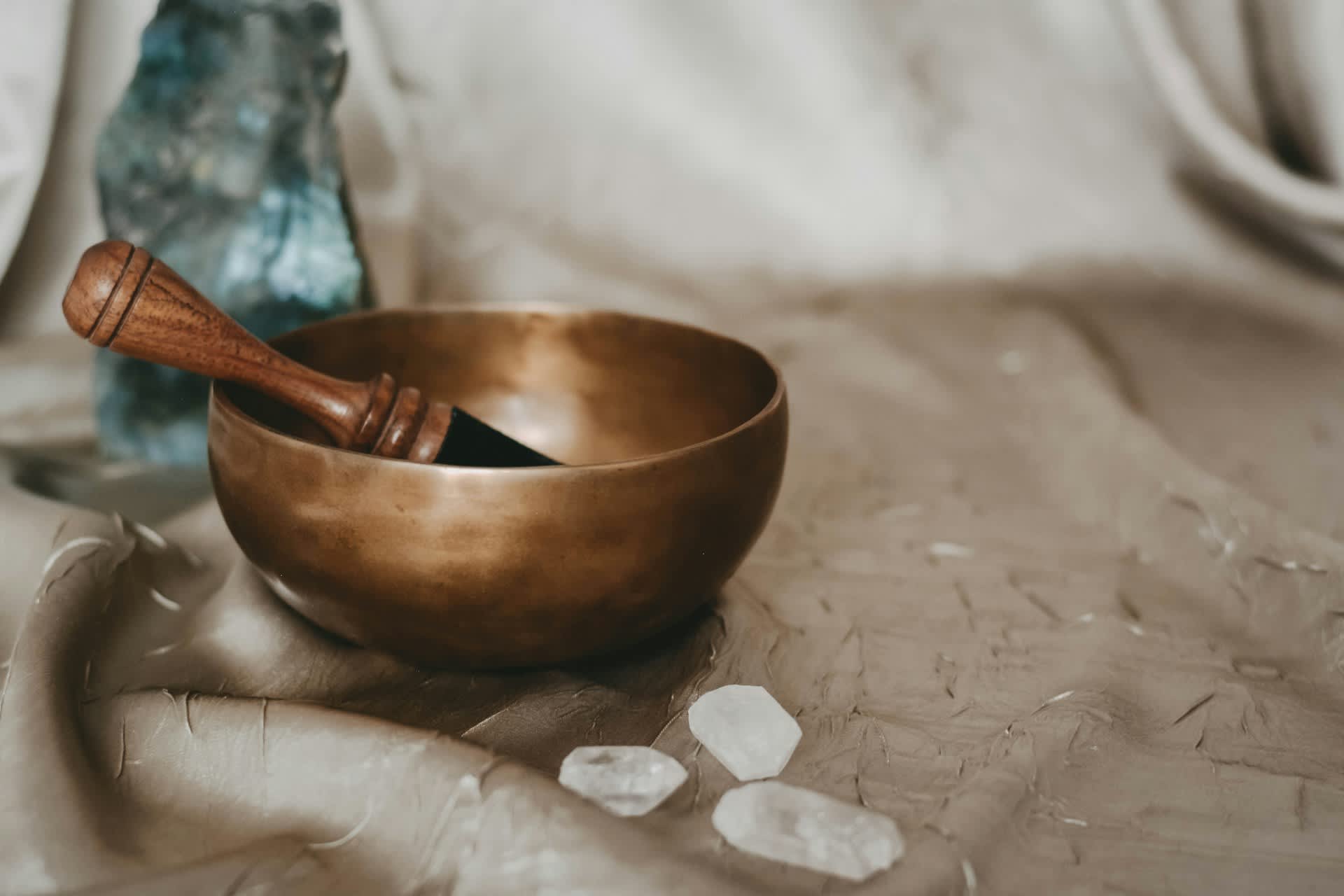
If you buy a singing bowl in Kathmandu, you will almost certainly be told it’s made from seven sacred metals — usually listed as gold, silver, mercury, copper, iron, tin, and lead, each one corresponding to one of the seven classically known celestial bodies (sun, moon, and the five visible planets). It’s one of the most widely repeated claims in the entire singing bowl market.
It’s also not well supported by actual material testing. Independent metallurgical analysis of both antique and modern singing bowls has repeatedly found that the vast majority are made from bronze — a copper-tin alloy — sometimes with brass (copper-zinc) used for lower-cost or more modern pieces, rather than a seven-metal mixture. Mercury and lead in particular are not resonant metals and would be a strange, even risky, choice for an instrument prized for its clear tone — mercury is toxic and volatile, and there’s no clear acoustic reason either metal would improve the sound. The seven-metals story appears to be a later, largely symbolic and marketing-driven addition to the bowls’ mystique rather than a documented traditional manufacturing formula.
This doesn’t make bronze somehow less special. Bronze (and its close relative, the bell-metal alloys used in bells and gongs across many cultures) is prized specifically because it’s genuinely excellent at producing sustained, resonant tones — that’s a real, well-understood acoustic property, not a marketing claim. A good bronze singing bowl’s sound comes from centuries of genuine craft knowledge about alloy ratios, hammering technique, and shaping — which is a more grounded, and arguably more impressive, story than an unverifiable seven-metal formula.
How Nepali Singing Bowls Are Actually Made
Nepal is today one of the primary global centers of singing bowl production, and the Kathmandu Valley in particular — historically home to the Newar people, renowned across South Asia for metalworking, sculpture, and bronze casting — has deep, genuine roots in this kind of craft. Patan (Lalitpur) and Bhaktapur, both ancient Newar cities within the valley, have long-standing traditions of bronze and copper metalwork used for religious statues, ritual objects, and household vessels, and this same base of craft skill extends into modern singing bowl production.
Broadly, bowls fall into two production categories worth knowing about as a buyer:
Hand-hammered bowls are shaped from a single disc of metal, heated and beaten into form over an extended process, often by a small team of craftspeople working in sequence. This traditional method produces bowls with slightly irregular walls, visible hammer marks, and — most importantly for sound quality — a rich blend of overtones that comes specifically from the subtle thickness variations hand-hammering creates.
Machine-made or cast bowls, increasingly common in the lower-cost tourist market, are pressed or cast to a uniform, symmetrical shape. These are typically faster and cheaper to produce, tend to have a flatter, simpler, less resonant tone, and are the type most commonly sold in bulk to souvenir shops at low prices, often finished with painted or etched decorative designs rather than relying on the metal’s natural sound quality.
Neither category is inherently fraudulent — a decorative, machine-made bowl bought as an affordable souvenir is exactly what it claims to be as long as it isn’t dishonestly sold as an antique or hand-forged piece. The problem arises specifically when a mass-produced bowl is marketed with invented “ancient” or “antique” language to justify a higher price.
Common Bowl Types You’ll Encounter (By Trade Name)
The antique and singing bowl trade uses a set of informal shape-based names that are worth knowing, though it’s worth being clear that these are commercial classification terms used by dealers and collectors rather than an ancient, formally documented taxonomy.
| Trade Name | General Shape | Typical Character |
|---|---|---|
| Thadobati | Straight, relatively vertical sides, flat-ish base | Often bright, clear tone |
| Jambati | Wide, rounded, generously curved profile | Deeper, richer tone; among the most sought-after shapes for sound quality |
| Manipuri | Distinct, slightly angular rim profile | Named after a regional style association rather than confirmed Manipur, India origin |
| Naga | Bowls featuring a snake or serpent-related decorative motif | Valued more for decorative and symbolic significance than a distinct acoustic profile |
| Remuna | Bowls with a distinctive lip or collar shape near the rim | Comparatively rare in the general market |
Treat these names as a useful shorthand for shape and general tonal tendency when shopping, not as a guarantee of age or authenticity — a Thadobati or Jambati shape can be either a genuine older hand-hammered piece or a new bowl deliberately made in that traditional shape.
The Physics of the Sound: How a Singing Bowl Actually Produces Its Tone
There’s nothing mystical about how the sound itself is generated, even if the experience of listening to it can feel that way. When a mallet is run around the rim of the bowl, friction causes the metal to vibrate at its natural resonant frequencies. Because the bowl isn’t a perfectly simple shape, it doesn’t produce just one pure tone — it produces a fundamental frequency plus a series of overtones (harmonics), all vibrating simultaneously. This is the same basic acoustic principle behind why a cello and a flute playing the exact same written note still sound distinctly different — the mix of overtones layered on top of the fundamental pitch is what gives an instrument its particular tonal character, or timbre.
A well-made, well-balanced bowl sustains this vibration for an unusually long time compared to many other instruments, which is part of what creates the sense of an enveloping, continuous sound rather than a single struck note that quickly fades. Larger bowls generally produce lower-pitched, longer-sustaining tones; smaller bowls tend toward higher, brighter pitches with a shorter natural sustain.
What the Research Actually Shows About Sound Healing Benefits
This deserves the same honest treatment given to any complementary wellness practice: neither dismissive nor overstated.
The most frequently cited piece of research in this specific area is a 2016/2017 observational study by Goldsby and colleagues, published in the peer-reviewed Journal of Evidence-Based Complementary & Alternative Medicine. The study followed 62 participants through a one-hour Tibetan singing bowl sound meditation session and found statistically significant reductions in self-reported tension, anger, fatigue, and depressed mood immediately afterward, along with an increase in reported spiritual well-being — with a particularly notable tension reduction among participants who were new to this kind of meditation (read the full study details via its DOI record). It’s a genuinely useful data point, but it comes with real limitations worth naming directly: it was an observational study with no control group, meaning there’s no comparison against, say, sitting quietly for an hour without any sound at all, or listening to other calming music — so it can’t isolate exactly how much of the effect is specific to singing bowls versus general relaxation, expectation, and the simple act of taking an hour to be still.
More broadly, singing bowl sound meditation sits within the wider category of mind-body practices that the U.S. National Center for Complementary and Integrative Health (NCCIH) — the primary US federal research body for this area — tracks and studies, alongside meditation, yoga, and relaxation techniques generally (see NCCIH’s overview of mind and body practices for the broader evidence context). The honest summary: sound meditation likely works, to the extent it demonstrably does, through mechanisms similar to other relaxation and mindfulness practices — shifting attention, slowing breathing, and engaging the parasympathetic nervous system’s relaxation response — rather than through anything specific and unique to metal composition or “vibrational frequency healing” in the more elaborate sense sometimes claimed in marketing.
What Singing Bowls Can Realistically Offer — And What They Can’t
| Reasonably Supported | Not Supported by Current Evidence |
|---|---|
| Short-term relaxation and reduced self-reported tension | Curing or treating any diagnosed medical condition |
| A useful focal point for meditation and mindfulness practice | Precisely “recalibrating” cell function or DNA, as sometimes claimed in marketing |
| A calming addition to a broader wellness or yoga routine | Objectively measurable “energy” or chakra realignment |
| A genuinely rich, culturally rooted craft object worth appreciating on its own terms | A substitute for medical or mental health treatment |
What an Actual Sound Bath or Singing Bowl Session Involves
If you attend a group “sound bath” or singing bowl meditation session in Nepal — increasingly common at retreat centers and yoga studios — the general format tends to be fairly consistent: participants lie down or sit comfortably, often with eyes closed, while a practitioner plays a set of several bowls of different sizes and pitches in sequence or overlapping combination, sometimes alongside other instruments like gongs, bells, or chimes. Sessions commonly run 30 to 60 minutes. There’s typically minimal talking once the sound portion begins, and a short period of quiet afterward before participants are invited to slowly sit up and reorient.
It’s genuinely normal to feel very relaxed, mildly drowsy, or emotionally soft afterward; it’s equally normal to feel more neutral or simply calm without anything dramatic. Neither response indicates the session “worked” or “didn’t work” in any meaningful sense.
Learning to Play a Singing Bowl Yourself
If you buy a bowl and want to actually use it rather than display it, the basic technique is simple enough to pick up quickly, though genuine skill takes longer to develop.
- Rest the bowl on a flat palm or a soft cushion, never directly on a hard surface, which dampens the sound.
- To strike it, tap the outer wall firmly with a padded mallet and let the tone ring out and fade naturally.
- To “sing” it, press the mallet against the outer rim at a slight angle and move it in a smooth, continuous circular motion, maintaining even pressure and speed — too fast or too much pressure produces a screech rather than a tone, while too light a touch produces nothing at all.
- Build the sound gradually. Most people find it easier to start the tone with a firm strike, then transition into the circular rubbing motion once the initial vibration is already established, rather than trying to start the sound purely from friction.
- Practice on one bowl before buying a full set. Different bowls respond differently to angle and pressure, and getting a feel for one instrument first makes it much easier to adapt to others.
Buying a Genuine, Well-Made Singing Bowl in Nepal
Since so much of the market blends honest craft with inflated marketing claims, here’s a practical checklist for buying with your eyes open, whether you’re shopping in Kathmandu’s tourist districts or at a more specialized dealer.
Listen before you buy, always. Ask the seller to play the bowl both by striking and by the rim-friction method, and listen for a clear, sustained tone with audible overtones rather than a dull, short thud. This single test tells you more about quality than any certificate or claimed provenance.
Ask directly what metal it’s made from, and be skeptical of an instant “seven metals” answer with no hesitation. A knowledgeable seller working with genuinely older or higher-quality pieces will often be more measured and specific (bronze, bell-metal, or a stated approximate copper-tin ratio) rather than reciting the seven-metals script immediately.
Check for hammer marks if a “hand-hammered” or “antique” claim is made. Genuine hand-hammered bowls typically show subtle irregularities and hammer-mark texture on close inspection; a perfectly smooth, symmetrical surface is more consistent with machine production, regardless of what the seller claims.
Be skeptical of very specific age claims (“500 years old,” “300-year-old Tibetan antique”) without any supporting provenance — these are extremely difficult to verify and are among the most commonly exaggerated claims in the tourist market.
Compare weight and price across a few shops before committing, particularly in dense tourist areas like Thamel, where prices for similar-looking bowls can vary significantly between neighboring stalls.
Consider buying from a workshop or dealer connected to Patan or Bhaktapur’s metalworking tradition specifically, where you’re more likely to see the actual production process and speak with people connected to the craft itself, rather than only a retail shopfront.
Cultural and Ethical Considerations
Since singing bowls are genuinely tied to Himalayan Buddhist and Bön religious and cultural life — even if the specific “ancient ritual instrument” marketing overstates the historical documentation — it’s worth engaging with a degree of respect. A few things worth being mindful of: avoid assuming every claim made by a tourist-market seller is historically accurate, since inflated origin stories are extremely common and don’t reflect malice so much as an established sales pattern; be thoughtful about photographing or handling bowls inside active monasteries or religious sites, where different etiquette applies than in a shop; and where possible, support workshops and sellers who are transparent about whether a bowl is a modern piece or a genuine older object, since that transparency also supports honest pricing within the craft community itself.
Incorporating Singing Bowls Into a Yoga or Meditation Practice
Sound is a natural complement to the kind of structured meditation and pranayama work that’s already central to most yoga practice, and many retreat and training programs in Nepal build some form of sound element into their meditation sessions rather than treating it as a separate, standalone activity. If you’re interested in experiencing this as part of a broader, guided program rather than a one-off purchase or drop-in session, Nepal Yoga Institute and Retreat incorporates meditation practice throughout its offerings from its base in Budhanilkantha, on the quiet northern edge of Kathmandu.
Our Five Days Yoga Retreat Program combines daily asana, pranayama, and meditation with a calm, natural hillside setting, while the more flexible Long Term/Short Term Yoga Retreat Package can be adjusted in length and pace for travelers wanting a more extended or personalized experience. If unwinding and stress relief are your main goal rather than a full retreat, it’s also worth asking the center about their Five Days Stress Management Package, which focuses specifically on relaxation-oriented practice.
For anyone specifically drawn to the meditative and reflective side of practice — where a sound-based session would most naturally fit — it’s worth mentioning directly to the center what you’re hoping to include when you book. If your main interest is deepening a foundational understanding of meditation, pranayama, and yogic philosophy more formally, our school’s 200 Hours Yoga Teacher Training covers these as core, structured curriculum components rather than a single session.
Singing Bowls vs. Other Himalayan Sound Instruments
Singing bowls are often lumped together with other traditional Himalayan sound-making objects, but they’re genuinely distinct instruments with different origins, construction, and use. Knowing the difference is useful both for shopping accurately and for understanding what you’re actually hearing in a session.
| Instrument | Construction | Typical Use | How It’s Played |
|---|---|---|---|
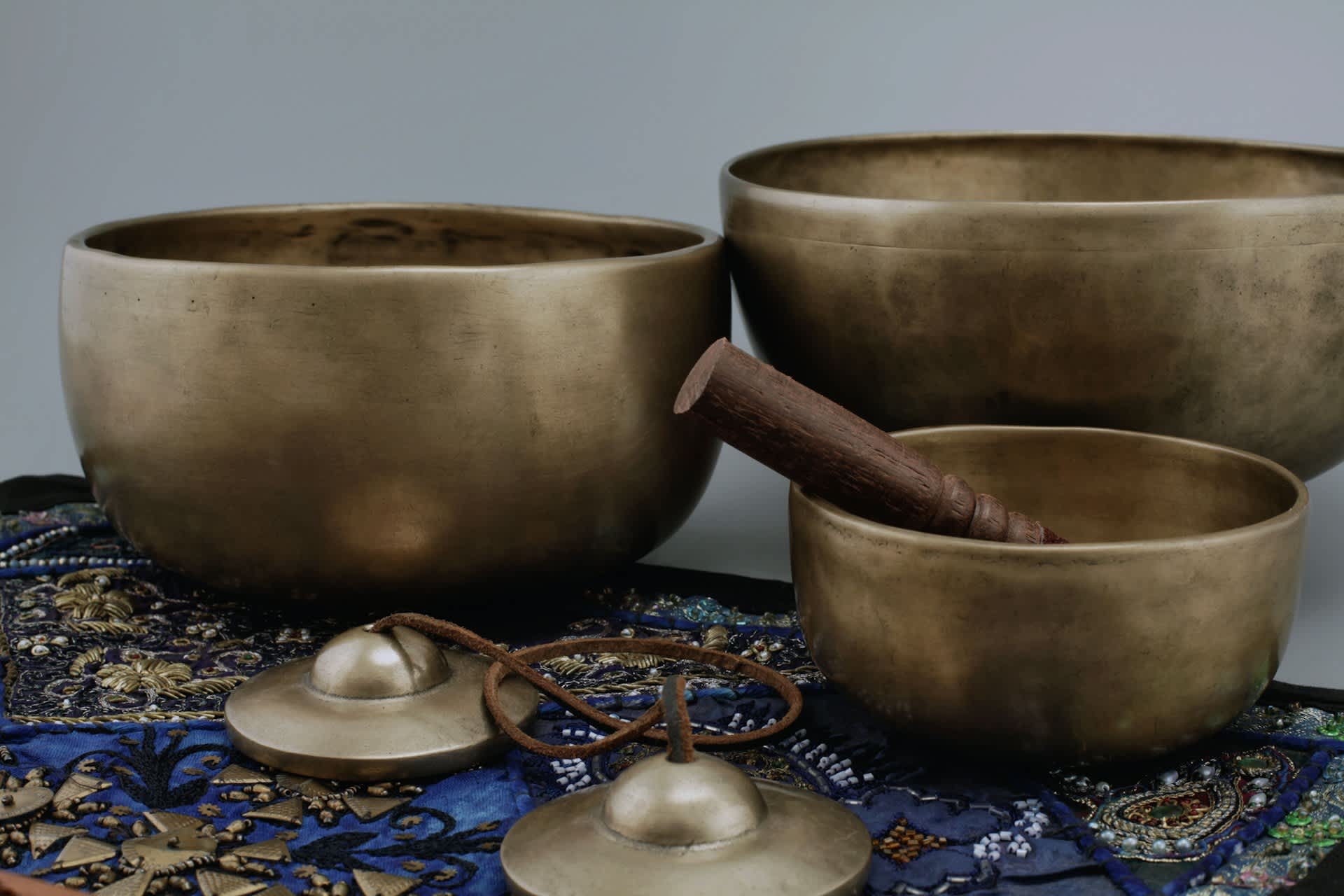
| Singing bowl | Cast or hammered bronze bowl | Meditation, sound baths, decorative/ritual use | Struck or rim-rubbed with a mallet |
| Tingsha (cymbals) | A small pair of linked bronze cymbals | Marking the start/end of meditation, ritual timing | Struck together edge-to-edge |
| Dorje bell (ghanta) | A handled ritual bell, often paired with a dorje (ritual scepter) | Tantric Buddhist ritual practice | Rung by hand, held during specific ceremonies |
| Tibetan horn (dungchen) | Long metal horn | Monastic ceremony and ritual announcement | Blown, producing a deep, sustained drone |
| Gong | Large flat or curved metal disc | Sound baths, ceremonial use, theatrical announcement | Struck with a soft mallet |
Tingsha and the dorje bell in particular have a much better-documented ritual history within Tibetan Buddhist practice than singing bowls do, which is part of why researchers find the singing bowl’s specific origin story harder to pin down by comparison — it doesn’t appear in the same textual and ceremonial record as its more clearly ritual counterparts.
The Newar Metalworking Tradition Behind the Craft
It’s worth understanding the broader craft context these bowls come out of, since it’s a genuinely significant, living tradition in its own right, independent of the wellness marketing that surrounds singing bowls specifically. The Newar people of the Kathmandu Valley have a documented metalworking and bronze-casting tradition stretching back many centuries, closely tied to Buddhist and Hindu religious art — the valley’s cities, particularly Patan (also known as Lalitpur), are famous for intricate bronze and copper religious statuary, much of it made using lost-wax casting, a technique requiring significant skill to execute well. This same base of craft knowledge — working bronze and copper alloys, understanding how alloy composition and thickness affect the finished object — underlies the valley’s singing bowl production today, whether or not any individual workshop markets itself using that specific historical connection.
Patan Durbar Square and the surrounding old city remain active centers of this craft, with workshops where visitors can sometimes see metalworkers at various stages of the casting and hammering process. Bhaktapur, another of the valley’s historic Newar cities, has its own strong metalworking and pottery traditions as well. Visiting either city with an interest in the craft itself, rather than only the finished souvenir, tends to give a considerably richer sense of what’s actually involved in making a well-made bowl than a quick purchase in a Thamel tourist shop.
Bringing a Singing Bowl Home: Practical Considerations
A few practical points worth knowing if you’re planning to buy a bowl in Nepal and take it home rather than have it shipped.
- Weight and packing. Larger bowls are heavier than they look — a substantial Jambati-style bowl can weigh several kilograms. Wrap it well in clothing or a dedicated padded case within checked luggage rather than risking it in a carry-on where space and weight limits are tighter.
- Customs declarations. Bronze singing bowls are generally treated as ordinary handicraft items for customs purposes in most countries, not restricted antiquities, as long as they aren’t misrepresented as protected cultural artifacts. If a seller claims genuine significant antiquity (a claimed centuries-old museum-grade piece), ask about export documentation specifically, since genuinely old cultural artifacts can fall under different export rules than contemporary handicrafts.
- Get a receipt with a description. A simple dated receipt noting the item as a “handicraft, bronze singing bowl” is useful both for customs purposes and for your own records of what you paid, particularly for a higher-value piece.
- Test the tone one more time before you pack it. It’s much easier to renegotiate or ask questions about the sound quality in the shop than to discover a disappointing tone once you’re home.
Common Misconceptions Worth Clearing Up
- “Singing bowls are thousands of years old and unchanged since ancient Tibet.” The craft tradition of Himalayan bronze vessel-making genuinely runs deep, but the specific practice of using bowls deliberately for sound meditation as marketed today is a comparatively recent development, and the bowls’ original historical function is genuinely uncertain and debated.
- “All singing bowls contain seven sacred metals.” Independent testing consistently finds bronze (copper-tin alloy) as the actual dominant material, not a seven-metal mixture.
- “A more expensive bowl is automatically more authentic.” Price correlates loosely with genuine hand-hammered craftsmanship and bowl size, but it’s not a reliable stand-alone indicator — the listening and inspection checklist above matters more than price alone.
- “Sound healing can treat physical illness.” No credible research supports this claim. The genuine, evidence-backed benefits are around short-term relaxation and mood, not treatment of medical conditions.
- “Every bowl sold in Kathmandu is handmade by a monk.” The overwhelming majority of bowls in the tourist market, including many attractively marketed ones, are produced by lay craftspeople and metalworkers, not monastics — which takes nothing away from the genuine skill involved, but is a more accurate description than the romanticized version often used in marketing.
Frequently Asked Questions about Singing Bowls Nepal
1. What is a singing bowl exactly? A metal bowl-shaped instrument, technically an idiophone, that produces a sustained resonant tone when struck or when a mallet is moved in a circular motion around its rim.
2. Are singing bowls from Nepal or Tibet? Both regions have historical association with these bowls, and today the majority of production happens in Nepal, particularly in the Kathmandu Valley’s Newar metalworking communities. The bowls’ exact historical origin is genuinely debated among researchers rather than definitively settled.
3. Are singing bowls really made of seven metals? This is a widely repeated but poorly substantiated claim. Independent material testing has consistently found that most singing bowls, antique and modern, are primarily bronze (a copper-tin alloy), not a seven-metal mixture.
4. Is there scientific evidence that singing bowls have health benefits? There’s limited but real evidence for short-term relaxation and mood benefits, most notably a 2016/2017 observational study showing reduced tension, anger, fatigue, and depressed mood after a one-hour session. This evidence is preliminary and doesn’t support claims about treating medical conditions.
5. How much does a good quality singing bowl cost in Nepal? Basic tourist-market bowls typically run $15-$40. Genuinely hand-hammered, higher-quality bowls usually cost $60-$300 or more, depending on size and craftsmanship.
6. How can I tell if a singing bowl is genuinely hand-hammered? Look and feel for subtle surface irregularities and visible hammer-mark texture. A perfectly smooth, symmetrical bowl is more likely machine-made. Listening to the tone quality is also a reliable indicator — hand-hammered bowls tend to produce richer, more layered overtones.
7. What’s the difference between striking and “singing” a bowl? Striking involves tapping the bowl with a mallet to produce a single ringing tone that fades naturally. “Singing” involves running the mallet around the outer rim in a continuous circular motion to build a sustained, continuous hum through friction.
8. Can singing bowls actually align my chakras? This is a spiritual and traditional framing without independent scientific verification — chakras themselves are a traditional, symbolic system rather than a physically measured anatomical structure, so claims about precisely “aligning” them with sound aren’t something current science can confirm or deny in a literal sense.
9. Is it disrespectful for a tourist to buy or use a singing bowl? Generally no, as long as it’s done with a reasonable degree of respect and honesty — buying from transparent sellers, not assuming every marketing claim is historically accurate, and being mindful of appropriate behavior at actual religious sites.
10. What size singing bowl should a beginner buy? A mid-sized bowl (roughly 5-7 inches / 12-18 cm in diameter) tends to be the most practical and versatile starting point — large enough to produce a rich, sustained tone, small enough to handle comfortably while learning the rim technique.
11. Do singing bowls need to be tuned to a specific musical note to be effective? Claims linking specific notes to specific chakras or effects are part of the traditional and New Age framework rather than an established acoustic or medical standard. Practically, choose a bowl based on the tone you personally find pleasant and calming rather than chasing a specific claimed frequency.
12. Can singing bowls help with sleep? Some people use gentle singing bowl sounds as part of a wind-down or sleep routine, similarly to other calming ambient sound. This falls within the same general relaxation-response category as other mind-body practices rather than being a specifically proven sleep treatment.
13. Are antique singing bowls better than new ones? Not necessarily — a well-made new bowl can sound as rich as an older one, and “antique” claims in tourist markets are frequently exaggerated or unverifiable. Sound quality and craftsmanship matter more than age alone.
14. How do I clean and care for a singing bowl? Wipe with a soft, dry cloth after use; avoid harsh chemical cleaners, which can affect the metal’s surface and tone over time. Store it away from extreme humidity, and handle it by the base or sides rather than the rim when possible to avoid affecting its resonance.
15. Can a singing bowl “break” or lose its sound quality over time? Metal fatigue and dents from mishandling can affect tone quality, but with reasonable care, a well-made bronze singing bowl is a genuinely durable object that can last for generations.
16. Do I need training to use a singing bowl for meditation? No formal training is required for personal use, though attending a guided session or workshop can help you learn technique more quickly and understand different ways to incorporate the sound into a meditation practice.
17. What’s a “sound bath,” and is it different from a singing bowl session? A sound bath typically refers to a longer, more immersive group session, often combining singing bowls with other instruments like gongs, chimes, or tuning forks, usually with participants lying down. A standalone singing bowl session may be shorter and more focused on the bowls alone.
18. Is it true that singing bowls were traditionally used to measure grain, not for meditation? Some historical accounts do describe similar bronze bowls being used as utilitarian household vessels, including for measuring or serving food, which supports the view that their meditative and ritual use may be a later or additional application rather than their sole original purpose — though the full historical picture remains genuinely uncertain.
19. Can singing bowls be used safely by people with epilepsy or sound sensitivity? Anyone with a known sensitivity to sound, certain neurological conditions, or a history of sound-triggered symptoms should consult a doctor before participating in an extended sound-based session, since sustained resonant sound at close range is a real sensory stimulus, not a neutral background element.
20. Where in Nepal can I see how singing bowls are actually made? Workshops connected to the Newar metalworking traditions of Patan and Bhaktapur, within the Kathmandu Valley, offer the most direct connection to the genuine craft process, as opposed to purely retail shopfronts in more tourist-dense areas.
21. Are all singing bowls sold in Kathmandu made in Nepal? Not necessarily — some stock sold in tourist shops may be imported from elsewhere or mass-produced, despite being marketed as authentically local. Asking directly about the specific origin, and favoring dealers connected to known local workshops, is a reasonable way to get a more accurate answer.
22. How long does a typical sound healing session last? Most singing bowl meditation or sound bath sessions run 30 to 60 minutes, though shorter or longer formats exist depending on the setting and practitioner.
23. Why do some bowls have painted or carved designs while others are plain metal? Decorative etching, painting, or carving is largely an aesthetic and commercial choice rather than a functional one — it doesn’t meaningfully affect the tone, though heavy decoration can sometimes indicate a bowl aimed more at the decorative souvenir market than at serious sound quality, since detailed painting is faster and cheaper to apply to a machine-made surface than to achieve on a traditionally hand-hammered one.
24. Is it worth buying a matched “set” of singing bowls, or is one enough? A single well-chosen bowl is a completely reasonable starting point, and many people use just one for years. A matched set, tuned to different pitches, becomes more relevant if you’re specifically interested in layering tones together, such as for a more elaborate personal sound bath practice, but it’s an upgrade to consider later rather than a requirement to start.
Conclusion on Singing Bowls Nepal
A singing bowl doesn’t need an inflated origin story or an unverifiable seven-metal formula to be worth owning or experiencing — the real story, a genuine Himalayan metalworking tradition producing an object capable of a remarkably rich, sustained tone through nothing more exotic than skillfully worked bronze, is compelling enough on its own terms. Approached that way — as a beautiful, well-crafted object with a real but still partly uncertain history, offering a documented, if modest, relaxation benefit rather than a medical cure — a singing bowl earns its place in a meditation practice or a traveler’s luggage honestly, without needing the embellishment so many shopfronts reach for. Listen before you buy, ask real questions, and let the tone itself — not the sales pitch — be what convinces you.
If there’s one habit worth taking home from all of this, it’s a simple one: treat every confident historical claim attached to a beautiful object with the same curiosity you’d bring to the object itself. The genuine craft, the genuine relaxation, and the genuine cultural depth of the Kathmandu Valley’s metalworking tradition don’t need embellishment to be worth your attention — and knowing the difference between what’s documented and what’s decorative marketing only makes the real story more interesting, not less.


