Introduction to Yoga Retreat Nepal for Beginners
If you’ve never done a single sun salutation and the phrase “yoga retreat” conjures up images of pretzel-bodied strangers judging your downward dog, you’re not the audience this industry usually writes for — most retreat copy is aimed at people who already own three types of leggings. This guide is aimed at you instead: someone curious about a yoga retreat in Nepal, a little intimidated, not sure what actually happens day to day, and mostly wondering one thing — will I be completely out of place?
Short answer: no, and we’ll explain exactly why, plus everything else you need to actually plan this trip with confidence — what a retreat really is (and how it’s different from the “yoga teacher training” listings that keep showing up in the same search results), what a beginner-friendly schedule looks like, what it costs, where to go, when to go, and the questions you’re too embarrassed to Google separately.
Quick Answer: Yoga Retreat in Nepal at a Glance
| What it is | A short-to-medium stay (typically 2–14 days) combining daily yoga, meditation, rest, and often local excursions — not a certification program |
| Typical length | 3–7 days for a first retreat; some run 10–14 days or longer |
| Typical cost | US $150–$600 for 3–7 days at a modest guesthouse-style retreat; $600–$2,500+ for longer, more luxurious, or trek-combined programs |
| Experience needed | None. Most Nepal retreats are explicitly designed for mixed groups, with modifications offered for every posture |
| Main locations | Kathmandu Valley (Budhanilkantha, Nagarkot, Dhulikhel, Pharping), Pokhara, Lumbini |
| Best months | March–May and September–November for stable weather and mountain views |
| Visa | Tourist visa on arrival for most nationalities; a 15-day visa (US $30) covers most short retreats |
| Diet | Usually vegetarian or sattvic (a yogic diet built around fresh, simple, plant-based food) |
| Who it suits | Complete beginners, burned-out professionals, solo travelers, and experienced practitioners wanting a reset — genuinely all levels |
Keep this as your reference point. Now let’s go through it properly.
First, What a Yoga Retreat Actually Is (And Isn’t)
This sounds like an obvious place to start, but it’s the single biggest source of confusion when people research this topic, and getting it wrong is how beginners end up booking the wrong trip entirely.
A yoga retreat is a stay — anywhere from a couple of days to a few weeks — built around daily yoga and meditation practice, usually alongside rest, nourishing food, and time in a calming natural setting. The goal is restoration, not qualification. Nobody grades you. Nothing you do needs to be demonstrated to a standard. You show up, practice at whatever level you’re at, eat well, sleep, maybe hike or get a massage, and go home more rested than you arrived.
A yoga teacher training (YTT), by contrast — the “200 Hour Yoga Teacher Training” listings you may have also come across — is a structured educational program, typically 21-25 days, built around meeting a specific curriculum standard (commonly set by Yoga Alliance, an international nonprofit registry) so that graduates can register as certified teachers. It includes exams, practicum teaching, anatomy study, and a genuine academic workload. It is not designed primarily as a relaxing getaway, even though it happens in the same beautiful settings.
Here’s the distinction that actually matters for you as a beginner: a retreat asks nothing of your yoga experience level. A teacher training does. If what you want is to dip a toe into yoga, decompress, and see the Himalayas without homework, you want a retreat. If you’re already practicing regularly and want a credential to teach, that’s a different trip and a different article — you can read our companion guide to 200-Hour Yoga Teacher Training in Nepal if that’s actually what you’re after.
Retreat vs. Teacher Training, Side by Side
| Yoga Retreat | 200-Hour Yoga Teacher Training | |
|---|---|---|
| Purpose | Rest, reset, gentle practice | Certification to teach |
| Typical length | 2–14 days | 21–25 days |
| Daily structure | Flexible, usually 2 yoga/meditation sessions a day | Intensive, 6–8 structured hours a day |
| Experience needed | None | Some regular practice strongly recommended |
| Assessment | None | Practicum, written/practical evaluation |
| Outcome | Rest and renewed practice motivation | Yoga Alliance-eligible RYT 200 certification |
| Best for | Beginners, burned-out professionals, curious travelers | Committed practitioners pursuing teaching |
Why Beginners Specifically Do Well in Nepal
There’s a reason “all levels welcome” isn’t just marketing copy here. A few structural things about how Nepali retreat culture works make it genuinely easier to walk in as a total novice than it is in more commercialized yoga destinations.
- Classes are built around modification, not performance. Traditional Hatha yoga — the style most Nepal-based retreats center their practice on — is built on holding foundational postures with correct alignment rather than moving quickly through athletic sequences. It’s inherently more forgiving for a first-timer than a fast-paced Vinyasa flow class, where keeping pace with the room can feel intimidating if you don’t already know the poses.
- Groups tend to be genuinely mixed. Because Nepal draws a broad range of travelers — trekkers taking a break, digital nomads, solo travelers in their 50s and 60s, honeymooners, burned-out professionals — retreat groups are rarely a room of identical, hyper-fit 25-year-olds. Teachers who run these programs repeatedly are used to a wide spread of ability in the same room and structure sessions accordingly.
- The philosophy component doesn’t require flexibility. A meaningful part of most retreats — chanting, breathwork (pranayama), guided meditation, philosophy discussion — asks nothing of your physical fitness at all. If the idea of an hour of asana intimidates you, know that a well-run retreat day typically balances that with practices where a beginner and a twenty-year practitioner are on exactly equal footing.
- Nobody is there to critique you. Unlike a studio class back home where you might feel eyes on your form, a retreat group is made up of people who, by definition, chose to travel across the world specifically to slow down. The social pressure that keeps a lot of beginners out of their local yoga studio simply isn’t present in the same way.
Types of Yoga Retreats You’ll Find in Nepal
“Yoga retreat” covers a genuinely wide range of formats, and knowing which type you’re actually looking at before you book saves a lot of mismatched expectations.
| Retreat Type | Typical Length | What to Expect |
|---|---|---|
| Weekend/short escape | 2–3 days | Light yoga, one or two excursions, mostly rest — a good low-commitment first taste |
| Standard wellness retreat | 5–7 days | Twice-daily yoga/meditation, sattvic meals, massage or spa elements, one day for sightseeing or hiking |
| Detox/Ayurveda retreat | 5–8 days | Structured toward cleansing — lighter or restricted meals, herbal treatments, oil massage, steam or sauna sessions alongside yoga |
| Silent/meditation-focused retreat | 3–10 days | Extended periods of silence, minimal talking, deep meditation and pranayama emphasis, lighter on dynamic asana |
| Retreat + trekking combo | 5–12 days | Yoga sessions combined with guided hiking, often in the Annapurna or Kathmandu Valley hill regions |
| Long-term/custom retreat | 2 weeks+ | Personalized schedule and pace, often for people wanting an extended reset or working remotely alongside their practice |
If you’re a complete beginner, a standard 5-7 day wellness retreat is usually the easiest entry point — long enough to feel a genuine shift, short enough not to be overwhelming, and structured enough that you’re not left designing your own schedule.
What Beginners Actually Get Out of a Retreat
It’s worth being specific about this rather than just saying “you’ll feel great,” because the actual benefits are more concrete than that and worth knowing before you book.
A genuine, extended break from decision fatigue. One of the more underrated things a structured retreat does is remove the constant stream of small daily decisions — what to eat, when, what to do next — for several days straight. Most people don’t realize how much of their everyday stress is decision fatigue until it’s gone.
An introduction to breathwork, not just stretching. Beginners often arrive expecting “yoga” to mean physical postures and are surprised by how much of a well-run retreat is built around pranayama (breath control) and meditation. For a lot of first-timers, this is the part that has the most immediate, noticeable effect — steadier breathing under stress is a skill that travels home with you in a way a single week of improved hamstring flexibility doesn’t.
A realistic, low-pressure entry point into a home practice. A retreat won’t turn you into an advanced yogi in five days, and it shouldn’t try to. What it reliably does is give beginners enough hands-on instruction — correct alignment, safe modifications, breathing technique — to walk away able to do a short, safe practice on their own afterward, rather than guessing from a video.
Perspective, from simply being somewhere else. This is less measurable but consistently reported by first-time retreat-goers: distance from your regular environment, combined with early mornings, quiet, and time without your usual routine, tends to create space for reflection that’s hard to manufacture at home, whatever your yoga experience level.
None of this requires flexibility, prior practice, or any particular fitness level to access — which is really the core case for why beginners specifically benefit from this kind of trip rather than needing to “get in shape first” before trying it.
A Short Glossary: Terms You’ll See on Every Retreat Page
Retreat listings use a fair amount of Sanskrit and yogic terminology that can be confusing if you’re new to this. Here’s a quick reference so nothing on a retreat’s itinerary catches you off guard:
| Term | What It Means |
|---|---|
| Asana | A physical yoga posture (e.g., a specific pose like downward dog) |
| Pranayama | Breath control practices — techniques for regulating and directing the breath |
| Sattvic diet | A yogic dietary approach favoring fresh, simple, plant-based food believed to support mental clarity and calm |
| Sadhana | Personal daily spiritual or meditation practice, often done individually rather than in a group session |
| Satsang | A group gathering, often involving discussion, chanting, or shared reflection |
| Karma yoga | The practice of selfless service or action, sometimes built into a retreat as a community-service component |
| Mantra | A word, sound, or short phrase repeated during chanting or meditation |
| Hatha yoga | A slower, foundational yoga style emphasizing held postures and alignment — the most common beginner starting point |
| Ayurveda | A traditional South Asian system of medicine and wellness, often incorporated into retreats through diet, massage, or herbal treatments |
| Yamas and niyamas | The ethical guidelines of classical yoga philosophy — restraints and observances that shape yogic conduct, sometimes covered in retreat discussion sessions |
| Shavasana | The final resting pose at the end of a yoga session, lying flat and still |
| Guru | A teacher or spiritual guide — used respectfully in yogic tradition, distinct from its more casual use in everyday English |
Where to Go: The Main Retreat Regions
Nepal’s retreat centers cluster around a handful of areas, each with a distinct character.
Kathmandu Valley (Budhanilkantha, Pharping, Nagarkot, Dhulikhel) — This is where most established, longer-running retreat and yoga schools are based. Budhanilkantha, on the valley’s northern edge near Shivapuri National Park, and Pharping, to the south, both offer genuine quiet without a long journey from Tribhuvan International Airport. Nagarkot and Dhulikhel, both hilltop towns roughly 90 minutes from central Kathmandu, are popular for sunrise Himalayan views and a cooler climate.
Pokhara — Nepal’s second-largest city, set beside Phewa Lake with the Annapurna range as a backdrop. Pokhara has a larger concentration of retreat centers than anywhere outside Kathmandu, partly because it also functions as the gateway to the Annapurna trekking region, making yoga-plus-trekking combination retreats especially common here.
Lumbini — The birthplace of the Buddha, in Nepal’s southern Terai plains. Retreats here lean more explicitly toward Buddhist meditation practice and pilgrimage than the more general Hatha-and-Himalayas format found around Kathmandu and Pokhara, and it draws a different, often more contemplative crowd.
Choosing Between Them
| Region | Best For | Trade-off |
|---|---|---|
| Kathmandu Valley (Budhanilkantha/Pharping) | First-timers wanting quiet, easy airport access, cultural sightseeing on days off | Less dramatic mountain scenery than Pokhara |
| Nagarkot/Dhulikhel | Sunrise Himalayan views without traveling far | Cooler, can be chilly outside peak season |
| Pokhara | Combining yoga with trekking or lake scenery | Busier tourist infrastructure than Kathmandu’s quieter suburbs |
| Lumbini | Meditation-focused, Buddhist-philosophy retreats | Hot in summer; fewer general “yoga vacation” style options |
What an Average Retreat Day Feels Like
Every retreat runs slightly differently, but the underlying rhythm across most well-run Nepal programs follows a similar logic, borrowed from the traditional structure of ashram life: start early and gently, build toward a more active practice, rest through the heat of midday, and wind down with something quiet in the evening.
A typical shape looks like this:
- Early morning (6:00–8:00 AM): A warm drink or herbal tea, sometimes a light cleansing practice, followed by pranayama (breathwork) and a gentle asana session while the air is still cool
- Breakfast (around 8:30–9:30 AM): Simple, nourishing food — porridge, fruit, herbal tea
- Late morning: Free time, a workshop, a massage or spa treatment, or a short excursion, depending on the retreat’s focus
- Lunch (early-to-mid afternoon): The main meal of the day at most sattvic-diet retreats
- Afternoon: Rest, optional treatments (Ayurvedic massage, steam, sauna), or a guided walk
- Late afternoon/early evening: A second, often more active yoga session, followed by meditation
- Dinner and evening: A lighter meal, sometimes a group discussion, chanting, or simply free time before an early night
That’s a general template rather than any single retreat’s exact timetable — schedules vary by center and by day, and they should always be confirmed directly with whichever retreat you book. Nepal Yoga Institute, for instance, publishes the day-by-day structure for its own Five Days Yoga Retreat Program and its flexible Long Term/Short Term Yoga Retreat Package directly on those pages, which is the place to check exact timings before booking.
What It Costs, and What “Included” Usually Means
Retreat pricing in Nepal spans a wide range, largely driven by length, location, room type (shared vs. private), and how much spa/treatment content is built in.
| Retreat Length | Typical Price Range (USD) | What Usually Drives the Range |
|---|---|---|
| 2–3 days | $150 – $350 | Guesthouse-style vs. resort-style accommodation |
| 5–7 days | $350 – $900 | Room privacy, number of massages/treatments, meal quality |
| 8–12 days | $700 – $1,800 | Whether trekking or extended excursions are included |
| 14+ days / custom | $1,200 – $2,500+ | Fully personalized pacing, private accommodation, longer treatment lists |
What’s typically included in that price: accommodation, all meals (usually vegetarian or sattvic), daily yoga and meditation sessions, and often one or two treatments like an Ayurvedic massage or a guided hike. What’s typically not included: your international flights, the Nepal visa fee, travel insurance, and personal extras like additional spa treatments, souvenirs, or alcohol (many retreat centers don’t serve it at all, in keeping with a sattvic approach to diet).
A number of Nepal-based centers — including Nepal Yoga Institute’s longer-format retreat packages — price on a request basis tied to your specific dates, group size, and room preference rather than publishing a single fixed rate, since a solo traveler in a shared room and a group of six booking private rooms have genuinely different costs. If a center’s price isn’t published, that’s normal for this kind of program — email or message them directly with your dates and group size for an accurate quote.
Is Nepal Really Beginner-Friendly Compared to Other Destinations?
It’s a fair question, since Bali and Rishikesh both market themselves aggressively toward first-time yogis too. Here’s an honest comparison rather than a sales pitch.
Versus Bali: Bali’s retreat scene is larger and more Instagram-polished, with a strong wellness-tourism infrastructure built specifically around beginners and social-media-friendly settings. Nepal’s retreats tend to be smaller-scale, less curated for photography, and rooted more directly in a living Hindu-Buddhist practice tradition rather than a Western wellness-industry aesthetic — which some beginners find more grounding and others find less immediately “comfortable” if they’re expecting resort-level polish.
Versus Rishikesh, India: Rishikesh has a denser concentration of ashrams and yoga schools than anywhere else in the region, with a strongly devotional, Ganges-centered atmosphere. Nepal offers a comparatively quieter, less crowded alternative with a broader blend of Hindu and Buddhist influence, and — for many nationalities — an easier visa process via visa-on-arrival rather than a mandatory advance e-Visa.
Neither is objectively “more beginner-friendly” in the abstract. What actually determines your experience as a beginner is the individual retreat’s structure and teaching style, not the country’s general reputation — which is exactly why the vetting checklist below matters more than the destination-level marketing.
How to Choose a Beginner-Friendly Retreat
Look for the words “all levels” or “beginners welcome” explicitly, not just implied. A retreat that lists specific beginner accommodations — modified poses offered, no prior experience assumed — is telling you something a vaguer listing isn’t.
Ask about group size. Small groups (roughly 6-14 people) mean the teacher can actually see and correct you. A retreat that doesn’t cap numbers is one where a beginner is more likely to get lost in the room.
Confirm the yoga style. Ask specifically whether the daily practice is Hatha, Vinyasa, Ashtanga, or a mix. Hatha-centered programs are generally the gentler starting point; a retreat built around fast-paced Vinyasa or Ashtanga sequences will be a harder entry for a total beginner, even if the marketing says “all levels.”
Check what happens if you can’t do a pose. A good sign: the retreat’s own description mentions modifications, props, or rest options. A retreat that only shows photos of advanced postures (deep backbends, arm balances) in its marketing is telling you, indirectly, who they’re actually picturing as their guest.
Read independent reviews, not just testimonials on the retreat’s own site. Cross-check on TripAdvisor or Google Reviews specifically for mentions of how beginners were treated, not just overall star ratings.
Ask about the teacher’s background. A teacher who has spent years teaching complete beginners is a different experience from one whose main background is training already-serious practitioners. It’s a completely fair, non-awkward question to ask directly before booking.
Clarify the silence and structure expectations. If a retreat leans heavily toward silent meditation, that’s a very different (and sometimes more demanding, in its own way) experience for a first-timer than a lighter wellness-format retreat. Make sure you know which one you’re signing up for.
Solo Travel and Safety Considerations
A large share of yoga retreat travelers — beginners especially — are solo, and Nepal is, broadly, a well-established and welcoming destination for solo travelers, including solo women, with retreat culture in particular drawing heavily on solo bookings. A few practical points specific to doing this solo:
- Confirm airport pickup is included or can be arranged, so your arrival isn’t the most stressful part of the trip
- Ask whether the retreat has hosted solo travelers before (most well-established ones have, extensively — it’s usually a majority of their guests, not an exception)
- Choose a retreat with a shared communal dining setup if meeting other travelers matters to you; some smaller, quieter retreats are more solitary by design, which suits some people and disappoints others
- Standard travel-safety practices apply as they would anywhere: share your itinerary with someone at home, keep a copy of your passport separately from the original, and get travel insurance that covers the activities you’ll actually be doing (hiking in particular, if your retreat includes it)
Best Time of Year for a Retreat
Nepal’s seasons matter more for a retreat than you might expect, since so much of the experience — hiking on a day off, morning views, outdoor practice spaces — depends on the weather.
| Season | Months | What to Expect |
|---|---|---|
| Spring | March – May | Mild, generally clear, rhododendrons blooming at higher elevations — one of the two best windows |
| Monsoon | June – August | Hot, humid, frequent afternoon rain, especially in Kathmandu and Pokhara; indoor practice unaffected, outdoor excursions less reliable |
| Autumn | September – November | Widely considered the best season overall — clear skies, comfortable temperatures, best mountain visibility, coincides with major festivals |
| Winter | December – February | Cold mornings, especially at higher elevations; check whether your retreat’s accommodation is properly heated before booking |
If you want the best odds of clear Himalayan views on a hike or sunrise session, aim for autumn first, spring second.
Visa and Getting There
Most nationalities can get a Nepal tourist visa on arrival at Tribhuvan International Airport (Kathmandu) or at land borders. Current published on-arrival fees are US $30 for 15 days, $50 for 30 days, and $125 for 90 days, payable in cash or via online prepayment before landing. For a standard 5-7 day retreat, the 15-day visa comfortably covers your trip; for a longer or custom retreat, size up accordingly. A small number of nationalities are not eligible for visa on arrival and need to arrange a visa through a Nepali embassy beforehand, so check your specific passport’s status before you travel.
Fill out the online arrival form in advance through Nepal’s official immigration portal to skip the airport queue — note it’s only valid for 15 days from submission, so don’t complete it too far ahead of your flight. If your retreat is in the Kathmandu Valley, you’ll fly directly into Tribhuvan International Airport; if it’s in Pokhara, expect either a roughly 25-minute domestic flight or a 6-8 hour overland journey from Kathmandu.
What to Pack
- Comfortable, breathable layers — mornings and evenings are cool even outside winter, especially at higher elevations like Nagarkot, Dhulikhel, or Budhanilkantha
- A yoga mat, if you have one — many retreats provide mats, but check in advance if you have a strong preference or specific needs
- A light rain layer, particularly if traveling during or near monsoon season
- Sun protection — Kathmandu Valley sits at over 1,300 meters, and UV exposure is stronger at altitude than it looks on an overcast day
- A journal or notebook, since many retreats include guided reflection or philosophy discussion
- Basic personal medication, since pharmacies can be inconsistent outside central tourist areas
- An open mind about food — expect mostly vegetarian, often sattvic meals; flag any dietary restrictions with the retreat well before you arrive
- Modest, comfortable clothing for temple or monastery visits, if your retreat includes sightseeing — shoulders and knees covered is the general expectation at religious sites
Food and Accommodation: What to Actually Expect
Most Nepal retreat centers serve a sattvic diet — vegetarian, often plant-based, cooked to be light, easy to digest, and mentally calming rather than heavy or overly spiced. Dal bhat (lentils and rice, Nepal’s staple), seasonal vegetables, herbal teas, and fresh fruit are standard. Garlic and onion are sometimes limited at more traditional centers, since yogic dietary philosophy treats them as overly stimulating for meditation — if that matters to you, ask in advance.
Accommodation ranges from simple shared guesthouse-style rooms to private rooms with attached bathrooms, depending on the center and package. Expect modest, comfortable rather than luxury-resort standard at most traditional retreat centers — the emphasis is generally on a calm, homely environment over five-star amenities, though more upscale options exist at a higher price point if that’s specifically what you want.
Combining a Retreat With Trekking
If you’re already planning to see Nepal’s mountains, pairing a retreat with light trekking is one of the more popular formats, especially around Pokhara. A typical structure combines several days of yoga and meditation with a guided hike — commonly toward areas like Ghorepani-Poonhill or the Chandragiri hills near Kathmandu — rather than a full multi-week Himalayan trek. This suits beginners well specifically because the trekking component is usually moderate (day hikes rather than high-altitude multi-day treks), while still delivering genuine mountain views and a sense of adventure alongside the rest and restoration side of the trip.
What Your First Day Actually Feels Like
If the abstract reassurance isn’t quite landing, here’s a more concrete picture of what arriving as a total beginner tends to look like in practice, based on how most well-run programs structure a check-in day.
You typically arrive sometime in the afternoon, often with pickup arranged from the airport if you’ve booked it. There’s usually a welcome drink — herbal tea is common — and a short orientation covering the schedule, meal times, and house norms rather than anything intensive. Most centers deliberately keep the first evening light: dinner, maybe a gentle introductory session or a walk around the grounds, and an early night, since the following morning is when the real routine begins.
The first actual practice session is where beginners brace themselves the most, and where the gap between expectation and reality tends to be biggest. A well-run introductory class typically opens with breathing and gentle movement well before anything resembling a challenging posture, and a good teacher will spend real time in those first sessions observing the room and quietly adjusting pace and difficulty to match who’s actually there — rather than running a fixed, one-size-fits-all class regardless of who showed up. By the second or third day, most beginners report the self-consciousness fading considerably, partly because everyone in the room is visibly at a different stage, and partly because the emphasis shifts from “getting the pose right” toward how the practice actually feels in your own body.
None of this means it won’t be physically or mentally demanding at points — early mornings and a full daily structure are, by design, a departure from an ordinary vacation. But “demanding” and “unwelcoming to beginners” are different things, and it’s worth not conflating the two when you’re deciding whether you’re “ready” for this. You are, in the sense that matters: nobody is expecting you to arrive already capable.
Common Mistakes First-Time Retreat-Goers Make
- Booking a retreat built around an advanced style without checking first. If you don’t ask specifically about the yoga style, you might land in a fast-paced Ashtanga-focused program when you wanted something gentler.
- Assuming “retreat” means “vacation with a yoga class.” Many retreats have a genuine daily structure and early mornings — read the schedule before you book if you’re expecting maximum flexibility and late sleep-ins.
- Not asking about silence expectations. Some retreats include extended silent periods that catch beginners off guard if they weren’t clearly flagged beforehand.
- Underestimating altitude and sun. Kathmandu Valley’s elevation and Nepal’s strong daytime sun surprise a lot of first-time visitors, even on a relatively gentle retreat.
- Skipping travel insurance. Especially relevant if any trekking, hiking, or spa treatments (massage, steam, sauna) are part of your package.
- Not clarifying what’s excluded from the price. Flights, visa fees, and optional extras are almost always separate — confirm this before you book so there are no surprises on arrival.
A Retreat Option Worth Knowing: Nepal Yoga Institute and Retreat
If you’re looking specifically in the Kathmandu Valley, Nepal Yoga Institute and Retreat runs two retreat formats from its base in Budhanilkantha, on the quieter northern edge of Kathmandu near Shivapuri National Park — roughly 22 km from Tribhuvan International Airport and about 24 km from the central Thamel tourist district.
Their Five Days Yoga Retreat Program is built as a fixed-length option combining daily asana and pranayama practice, meditation, Ayurvedic massage, and time to rest in a natural, hillside setting. For travelers who want a different length or a more personalized pace, their Long Term/Short Term Yoga Retreat Package can be adjusted in duration and structured around your group size, with pricing calculated on request for your specific dates.
Both are run from the same Yoga Alliance USA-registered campus behind their 200-hour teacher training program, with sattvic meals and a home-style, unhurried atmosphere that fits well with the “quiet hills over city bustle” case this guide has made throughout. For exact current schedules, availability, and pricing, reach out directly through either program page above.
FAQs about Yoga Retreat Nepal for Beginners
1. Do I need any yoga experience to join a retreat in Nepal? No. Most retreats, including beginner-focused programs, are designed for people with zero prior experience. Look for listings that explicitly say “all levels” and confirm the teaching style is Hatha or a gentle blend rather than fast-paced Vinyasa or Ashtanga.
2. What’s the difference between a yoga retreat and a yoga teacher training? A retreat is focused on rest, gentle practice, and restoration, typically 2-14 days with no assessment. A teacher training (commonly 200 hours over 21-25 days) is an educational program leading to a teaching certification, with a structured curriculum and evaluation.
3. How long should my first retreat be? Most beginners do well starting with a 5-7 day retreat — long enough to feel a genuine shift in energy and habits, short enough not to feel overwhelming or require a huge time commitment.
4. How much does a yoga retreat in Nepal cost? Typically $150-$350 for a short 2-3 day retreat, $350-$900 for a standard 5-7 day program, and upward of $1,200 for longer or fully customized retreats, depending on accommodation privacy and included treatments.
5. Is Nepal safe for solo travelers doing a yoga retreat? Yes, broadly. Nepal is a well-established destination for solo travelers, and retreat centers in particular host a large proportion of solo guests. Choose a reputable, reviewed center, confirm airport pickup, and follow standard solo-travel safety practices.
6. What visa do I need? Most nationalities can get a Nepal tourist visa on arrival — a 15-day visa costs US $30, which covers most short retreats. Confirm your specific nationality’s eligibility before traveling, since a small number of countries are excluded from visa-on-arrival.
7. What’s the best time of year to do a retreat? September-November and March-May offer the most stable weather and best mountain visibility. Monsoon season (June-August) is hot and wet; winter (December-February) is cold, especially in the mornings.
8. Will I be able to keep up if I’m not flexible? Yes — flexibility is a result of consistent practice, not a prerequisite for starting. A well-run beginner-friendly retreat offers modifications for every posture and doesn’t expect deep flexibility from day one.
9. Is the food vegetarian? Almost always, yes. Most retreat centers serve a sattvic, largely plant-based diet built around simple, nourishing meals. Flag any allergies or dietary restrictions with the retreat before you arrive.
10. Can I do a retreat if I have an injury or health condition? Many retreats can accommodate injuries or health conditions with modified practice, but you should disclose any relevant condition to the retreat directly before booking so teachers can plan appropriately — and consult your doctor before undertaking any new physical activity, especially if you have a cardiovascular, joint, or respiratory condition.
11. Do retreats include sightseeing, or is it all yoga? Most standard-length retreats build in at least one excursion — a hike, temple visit, or cultural site — alongside the core yoga and meditation schedule, though the balance varies by program. Confirm what’s included before booking if sightseeing matters to you.
12. What should I wear during practice? Comfortable, breathable, non-restrictive clothing — leggings or loose pants and a fitted top are standard. Modest coverage (shoulders and knees) is expected if your retreat includes visits to temples or monasteries.
13. Is alcohol available at retreat centers? Often not, or only in limited settings — many centers follow a sattvic approach to diet and lifestyle that excludes alcohol on-site. Confirm with your specific retreat if this matters to you.
14. How many people are usually in a retreat group? This varies, but smaller retreats generally run somewhere between 6 and 20 participants. Smaller groups typically mean more individual attention, which especially benefits beginners.
15. Can couples or friends book a retreat together? Yes, most retreats accommodate couples, friends, and small groups, often with the option of a shared or private room depending on preference and budget.
16. Do I need to be vegetarian to enjoy the food? No — most retreat-goers aren’t vegetarian in daily life but find the sattvic meals part of the appeal, and the food is generally designed to be flavorful and satisfying rather than restrictive-feeling, even for meat-eaters used to a different diet.
17. What if I can’t sit cross-legged for meditation? Chairs, cushions, or bolsters are standard accommodations at any well-run retreat — meditation posture is adapted to the person, not the other way around.
18. Is Wi-Fi available if I need to stay connected? Most Nepal retreat centers offer Wi-Fi, though connectivity can be inconsistent, especially at more remote hillside locations. If a fully offline experience matters to you (or the opposite — reliable connectivity for work), confirm this specifically before booking.
19. How far in advance should I book? For popular dates, especially during peak autumn and spring seasons, booking 4-8 weeks ahead is a reasonable buffer, though many centers can accommodate shorter notice, particularly for custom or flexible-length packages.
20. Can I extend my trip after the retreat to travel around Nepal? Yes — many retreat-goers add extra days before or after for sightseeing or a short trek. Just make sure your visa duration covers your full stay, and extend it at a Nepal immigration office if needed.
21. What’s the altitude like, and will it affect a beginner? Kathmandu Valley sits at roughly 1,300-1,400 meters and Pokhara at around 800 meters — both well below altitudes where altitude sickness is a concern for most healthy travelers. If your retreat includes trekking to significantly higher elevations, ask specifically about the maximum altitude reached.
22. Do I need travel insurance? It’s strongly recommended, particularly if your retreat includes hiking, massage treatments, or any physical activity beyond gentle yoga, and simply as sound practice for any international trip.
Before You Book the Yoga Retreat Nepal for Beginners
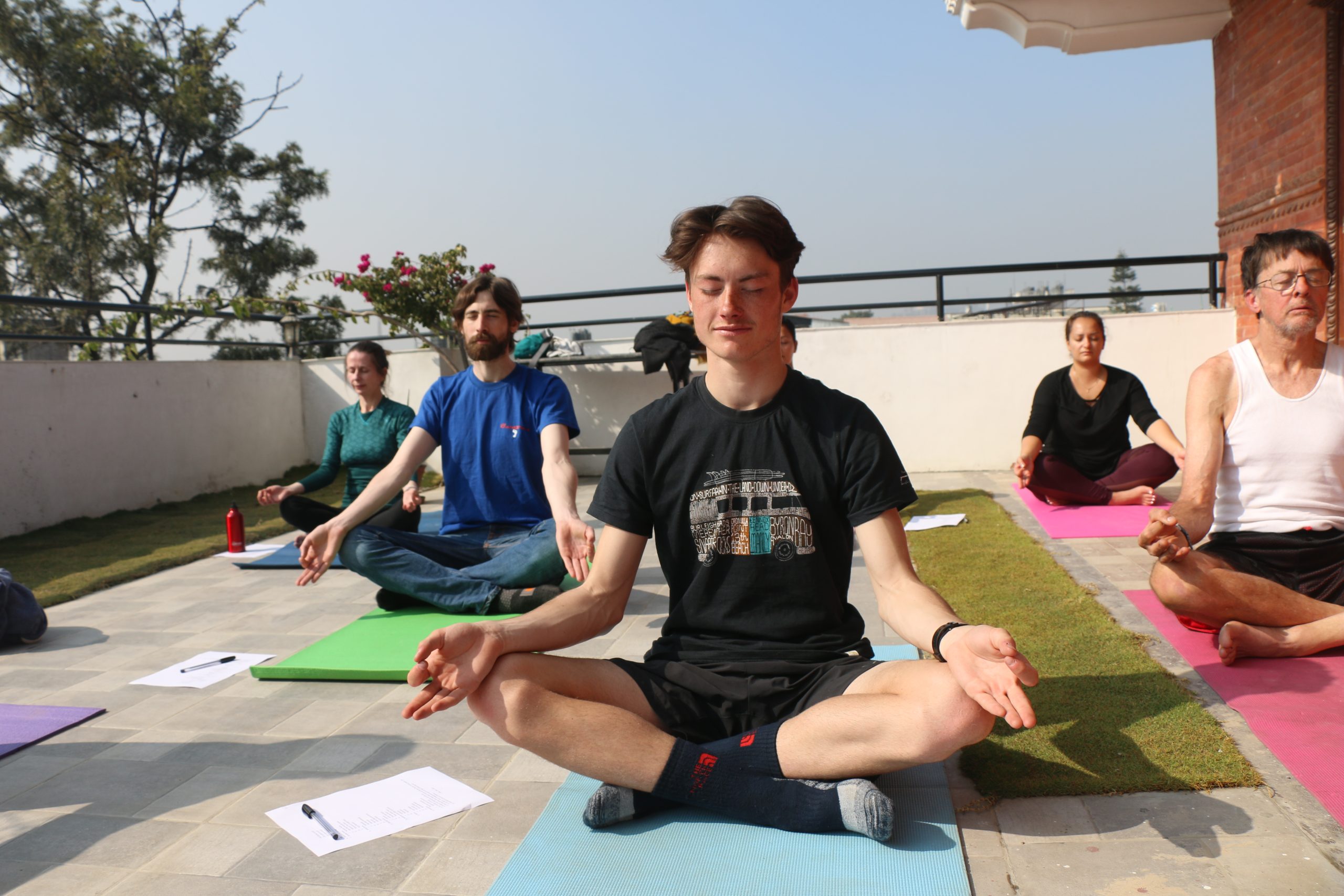
A yoga retreat in Nepal, done well, is one of the more accessible ways to try something you’ve been curious about without needing to already be “good” at it — which is exactly the point. The country’s blend of quiet, Himalayan scenery, deep-rooted spiritual tradition, and genuinely mixed-ability retreat culture makes it a legitimately strong choice for a first-timer, not just an intermediate destination you’re not quite ready for yet.
Use the vetting checklist above, confirm the actual daily structure and yoga style before you book, and choose a retreat — wherever it ends up being — because it matches how you actually want to spend your days, not because the photos looked peaceful.