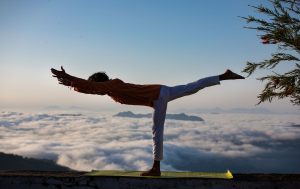
Introduction to Advanced Yoga Teacher Training in Nepal
You finished your first teacher training. You have taught some classes, perhaps to friends, perhaps in a studio, perhaps online. And somewhere along the way you noticed the edges of what you know: a student asks about a shoulder injury and you freeze, a philosophy question goes deeper than your notes, a sequence that looked sensible on paper falls apart in a real room. That moment is usually when people start searching for advanced yoga teacher training in Nepal.
The search makes sense. Nepal is a country where yoga sits close to daily life, where the surrounding culture of temples, chanting and mountain stillness supports the practice, and where residential trainings let you step away from ordinary routines for weeks at a time. But “advanced” is a loose word in the yoga world, and it is easy to be misled by it. Some schools use it as marketing. Some use it for a genuine second-level programme. And some use it to describe a course that is simply a foundation course taught with intensity.
This guide cuts through that. It explains what advanced teacher training actually means under the international credentialing system most schools follow, who it suits, what a serious advanced programme should contain, how to compare schools, and what to ask before paying a deposit.
Advanced Yoga Teacher Training in Nepal at a Glance
| Question | Short answer |
|---|---|
| What does “advanced” usually mean? | A second-level programme of 300 hours, taken after a 200-hour foundation, which together make up the 500-hour level |
| Is there a separate “advanced” credential name? | Under Yoga Alliance’s published credential standards, the 300-hour training appears as part of the RYT 500 and E-RYT 500 paths |
| Who is it for? | Teachers who have completed a 200-hour training and want deeper study, teaching skill and specialisation |
| What does Nepal Yoga Institute publish? | A 200-hour programme page and a 250-plus-hours programme page, both listing $1,400, plus Ashtanga and Hatha teacher training pages |
| Does the institute publish a separate 300-hour price? | No. Its 250-plus-hours page says a 300-hour course is available for booking but gives no separate price, dates or syllabus |
| Published deposit | $200, non-refundable, with the balance due on orientation day in Nepal |
| Where is it? | Budhanilkantha-11, Kathmandu, about 22 km from the airport and 24 km from Thamel |
| Best way to confirm details | Ask the institute in writing before you book |
What “Advanced” Actually Means in Teacher Training
The Yoga Alliance ladder
Most international yoga schools, including those in Nepal, organise their trainings around Yoga Alliance, a nonprofit registry that sets minimum standards for teacher training programmes. Yoga Alliance’s own pages describe the 200-hour training as the foundational level that provides a strong base in yoga techniques, philosophy, anatomy and ethics, and note that most new teachers begin there. They describe the 500-hour level as a comprehensive training for those who want to deepen their expertise in teaching methodology, sequencing and advanced practices. You can read the registry’s overview on its training options page.
The part that confuses many people is where the 300-hour programme fits. Yoga Alliance’s credential standards describe two ways to reach the RYT 500 credential: complete a single 500-hour programme at a school registered at that level, or complete a 200-hour training and then 300 additional hours at a school registered as an RYS 300. In other words, what travellers call “advanced yoga teacher training” is usually the 300-hour programme that you take after your 200-hour foundation, and the two together reach 500 hours. The registry’s published standards for registered yoga teachers lay out those paths, and they are worth reading directly rather than relying on a school’s summary.
Experience requirements
Registration is not only about hours in a classroom. The same standards say that, for RYT 500, a teacher needs at least 100 hours of teaching experience since completing training with a 200-hour or 500-hour school. For the “experienced” tier, E-RYT 200 requires a single 200-hour programme, at least two years of teaching afterwards and 1,000 teaching hours. E-RYT 500 requires a 500-hour training, at least four years of teaching and 2,000 teaching hours, of which at least 1,500 must come after the 200-hour or 500-hour training and the remaining 500 after the 300-hour or 500-hour training.
Why does this matter if you are choosing a school? Because it shows what “advanced” is meant to be: not a harder version of the first course, but a stage that follows real teaching. A good advanced programme assumes you have been in front of students.
What “advanced” does not mean
It does not mean harder poses. A school that sells an advanced course primarily as a contortion programme is selling something different from a second-level teacher training. It does not guarantee that you can teach better, because registration confirms that a school meets a minimum curriculum standard, not the quality of any individual teacher. And it does not mean that every school using the word is registered at the 300-hour level. Always ask which level a school is registered at and check it directly.
Who Should Consider Advanced Yoga Teacher Training
An advanced programme is a good fit if several of these apply to you:
- You have completed a 200-hour training and have been teaching for some time.
- You feel confident with basic sequencing but struggle with injuries, modifications or mixed-ability classes.
- You want deeper philosophy than a first course can cover, beyond a short introduction to the Yoga Sutras and Hatha Yoga Pradipika.
- You want to move toward the experienced credentials, or you plan to train other teachers someday.
- You want to specialise in a tradition, such as Hatha or Ashtanga, rather than holding a general overview.
It is probably not the right step if you have never taught, if your foundation course was years ago and you have not practised since, or if you are mainly hoping the extra hours will make you a better practitioner without teaching. In those cases, a second look at a foundation course, or simply a longer period of personal practice, may serve you better.
If you are still at the foundation stage, Nepal Yoga Institute’s 200-hour yoga teacher training in Nepal guide walks through what a first training contains, and it is worth reading before you plan the second one.

What a Serious Advanced Programme Should Contain
Schools differ, and Nepal Yoga Institute has not published a separate syllabus for a 300-hour course, so the list below describes what a thoughtful second-level programme generally aims to deepen. Use it as a checklist when you compare any school, including this one.
- Anatomy and physiology applied to teaching. Not just names of muscles, but how bodies differ, how common injuries happen, and when to modify or stop.
- Sequencing and class design. Building classes with a clear intention, working with different levels in the same room, and handling time.
- Philosophy in depth. Moving from definitions to discussion: the Yoga Sutras, Hatha texts and the ethical framework of yoga, applied to daily life and teaching.
- Advanced pranayama and meditation. Longer practices, with guidance on how to teach them safely.
- Teaching practice with feedback. Observed teaching, honest critique and mentoring.
- Adjustments and assists. Clear consent practices, and knowing when verbal cueing is better than touch.
- Specialisation. A chance to go deeper in a chosen method or area.
- Professional ethics. Boundaries, scope of practice, and responsibility to students.
If a school cannot show you a syllabus that covers most of these in writing, treat that as a warning.
What Nepal Yoga Institute Publishes About Its Teacher Training
Nepal Yoga Institute (published on its site as Nepal Yoga Institute and Retreat) is a yoga school and retreat centre at Budhanilkantha-11, Kathmandu. The institute describes its approach as following the classical yoga and retreat method, with a focus on quality service in a spiritual atmosphere, simplicity and an open mind. Its about page also describes the setting as being in the Kathmandu Valley with mountain and heritage views, about 22 km from Tribhuvan International Airport and 24 km from Thamel.
Here is exactly what the website says, and where it stops.
The core teacher training pages
The institute publishes two pages that describe its main teacher training. One is titled the 200-hour yoga teacher training, and the other, the 250-plus-hours teacher training page, describes a longer format. Both list the same price.
| Item | 200-hour page | 250-plus-hours page |
|---|---|---|
| Total cost | $1,400 | $1,400 |
| Advance deposit | $200, non-refundable | $200, non-refundable |
| Balance | Payable on orientation day in Nepal | Payable on orientation day in Nepal |
| Length | 22 days | 25 days |
| Start date | The 15th of every month | The 15th of every month |
| End date | The 7th or 8th of the following month | The 9th or 10th of the following month |
| Class size | Up to 14 students | Up to 14 students |
| Weekly rest | Usually one day off a week, typically Sunday | Usually one day off a week, typically Sunday |
Because the two pages describe different lengths, anyone planning dates and flights should confirm with the institute which programme length applies to their intake before booking. The institute’s own contact details are listed at the end of this guide.
What the $1,400 includes
The 250-plus-hours page lists the following inclusions: unlimited herbal tea, three mostly organic vegetarian or vegan meals a day, shatkarma practice, a yoga textbook and practice copy, shared accommodation for 24 nights (single rooms cost extra), one Ayurvedic massage, 13% VAT and 10% service charge, and a Yoga Alliance certificate. It lists as not included: outside trip costs, airport transfer costs, travel and medical insurance (recommended but not required), and laundry, which carries an extra charge.
The institute’s FAQ page adds that meals are sattvic vegetarian or vegan, that meat, fish and eggs are not served, that special dietary needs can be sent in advance, that free Wi-Fi is available, that mats, blankets, cushions and props are provided, and that solo arrivals are paired with a roommate. See the full FAQ page for travel, payment and packing information.
Payment and booking
The deposit is $200 and is non-refundable, with the balance payable on orientation day in Nepal. According to the FAQ page, applications are processed within three working days and confirmed by email, and accepted payment methods include bank transfer, Western Union, credit card or cash. An invitation letter is available on request, and extra nights before or after the course can be arranged at a rate agreed in advance.
The curriculum as published
The 200-hour page lists the following curriculum areas with hours:
| Area | Published hours |
|---|---|
| Mantra chant and prayer | 5 |
| Philosophy (such as Yoga Sutras, Hatha Yoga Pradipika) | 20 |
| Practice (asana, pranayama, kriyas, mudras, meditation) | 100 |
| Teaching methodology | 15 |
| Anatomy and physiology | 20 |
| Yogic diet, lifestyle and ethics | 10 |
| Practicum | 20 |
| Q&A discussions | 15 |
| Triyoga (karma, bhakti, jnana) | 5 |
The 250-plus-hours page lists topic areas rather than hours: cleansing techniques, asana, pranayama, meditation, mudra and bandha, teaching methodology, business and communication skills, yoga philosophy, and anatomy.
A published sample day
The institute publishes the following approximate daily schedule for its teacher training, noting that it may change by season or student request.
| Time | Activity |
|---|---|
| 06:30–07:00 | Cleansing practice, chanting, pranayama |
| 07:00–07:15 | Tea break |
| 07:15–09:30 | Chanting, asana, pranayama |
| 09:30–10:30 | Breakfast |
| 10:30–13:00 | Theory class and relaxation |
| 13:00–14:00 | Lunch |
| 14:00–15:00 | Self-study |
| 15:00–16:45 | Meditation and workshop |
| 16:45–17:00 | Tea break |
| 17:00–18:30 | Asana practice |
| 18:30–19:30 | Dinner |
| 19:30–21:30 | Self-study and sadhana |
For students who like to know what a full day really feels like, it is roughly eleven hours of structured time from first practice to evening study, with a long midday break. That is a real commitment, and it is one reason the institute’s pages suggest candidates have the physical stamina and mental discipline for the training.
So Does Nepal Yoga Institute Offer Advanced Yoga Teacher Training?
The honest answer is: partly, and with details you should confirm.
What the website states:
- Its teacher training pages say the courses include participants from beginners to advanced levels, with teaching adjusted to each student.
- Its 250-plus-hours page says a 300-hour teacher training course is available for booking, but the page does not publish a price, schedule or syllabus for it.
- Its Ashtanga yoga teacher training and Hatha yoga teacher training pages describe style-focused trainings aiming at Yoga Alliance validated certification to teach those styles globally, and state that no prior experience is required for the Ashtanga course. Both describe the training as intense physically, mentally and spiritually, suited to people with the necessary stamina and discipline. Neither page publishes a price or duration for the style course.
What the website does not state, and where you should ask directly:
- The price, length and start dates of the 300-hour course.
- The syllabus and hours by subject for the 300-hour course.
- Whether the 300-hour course is a continuous programme or a modular one.
- Which Yoga Alliance registration level applies to which programme, and how a graduate’s certificate will be recorded.
- Prerequisites for the 300-hour course, such as proof of a prior 200-hour certificate.
That is not a criticism so much as a practical checklist. A school that publishes a firm price for a foundation course and invites individual enquiry for its second-level course is behaving in a common way, and the right response is to ask for the details in writing before you commit.
The Teachers You Would Study With
An advanced programme is only as good as its teachers. The institute’s yoga teacher page lists the following, and the descriptions below reflect what the site says, which are the teachers’ own published claims rather than independently verified credentials.
| Teacher | Published role and background |
|---|---|
| Dr. Bal Krishna Khanal | Founder and senior yoga teacher; Ph.D. in Yoga and Naturopathy from Nepal Sanskrit University; known for mantra chanting |
| Yogini Indu | Yoga teacher; certified through Yoga Alliance USA; teaches Hatha, Ashtanga, Tantra and yoga philosophy; more than ten years of teaching |
| Dr. Roshan Baskota | Anatomy and physiology teacher; Bachelor of Ayurvedic Medicine and Surgery from Tribhuvan University |
| Madhav Bhattarai | Yoga and meditation teacher; trained at the Patanjali Institute in Haridwar; more than five years of experience; has practised Vipassana meditation |
The institute’s founder page adds more detail about Dr. Khanal’s background, including a diploma in yoga and naturopathy, postgraduate study in psychological counselling, and registered teacher status with Yoga Alliance. As with any school, you can and should ask to speak with the teachers who will lead your programme, and to confirm credentials directly with Yoga Alliance’s public directory.
Advanced Training and the Foundation Path
Because the 300-hour programme is built on top of a 200-hour foundation, many students plan their training as a sequence rather than a single event. A sensible path looks like this.
| Stage | What happens | Notes |
|---|---|---|
| 1. Foundation | Complete a 200-hour training at a registered school | At Nepal Yoga Institute, published at $1,400 with a $200 non-refundable deposit |
| 2. Teach | Teach classes and gather real experience | Yoga Alliance’s RYT 500 standard asks for at least 100 hours of teaching since completing a 200-hour or 500-hour training |
| 3. Reflect | Identify gaps: injuries, sequencing, philosophy, business | Make a list of questions you want a second-level course to answer |
| 4. Advanced training | Take a 300-hour programme at a school registered at that level | Confirm price, schedule, syllabus and registration level in writing |
| 5. Experience | Keep teaching; consider experienced credentials | E-RYT 500 asks for four years of teaching and 2,000 hours per Yoga Alliance’s standards |
This is also why the choice of foundation school matters. A graduate of a foundation course who later returns to the same school often finds that the teachers already know their strengths, and the second-level training can start from where the first one ended.
How to Choose an Advanced Yoga Teacher Training in Nepal
Comparing schools can be overwhelming because websites tend to look alike. These questions help.
1. Which registration level does the school hold, and can you verify it? Ask for the school’s registration details and check them with the registry directly rather than relying on a logo.
2. Is the syllabus written and detailed? A serious school provides hours by subject. Treat vague descriptions with caution.
3. What is the real teacher to student ratio? Smaller groups allow more feedback. Nepal Yoga Institute’s published class size is up to 14 students per course.
4. Who teaches which subject? Specialist teachers for anatomy and philosophy are a good sign.
5. What is included in the price? Read inclusions and exclusions line by line. The institute’s published list is a good model of clarity: it states what is included (meals, shared accommodation, one massage, certificate) and what is not (airport transfer, insurance, laundry, outside trips).
6. What are the payment and refund terms? Know whether the deposit is refundable. The institute states that its $200 deposit is non-refundable.
7. What is the daily schedule? A school that publishes its daily schedule lets you judge whether the pace fits you.
8. What do past students say? Look for specifics in testimonials, not just praise. The institute has a testimonials page, and independent reviews are worth reading too.
9. Is the school honest about what it does not offer? A school that tells you plainly which programmes are published in detail and which require a conversation deserves more trust than one that promises everything.
Why the setting matters for a second-level course
A foundation course teaches you the language of yoga; a second-level course asks you to use it with more nuance, and that nuance is easier to find when daily life is simple. A residential programme removes the usual interruptions of work, messages and commuting, so the hours of theory, practice and self-study can build on one another day after day.
The institute describes its setting as natural, with hills and views, and describes its atmosphere as simple and homely. Whether that setting suits you is a personal question, and if you can, speak with the team about what a typical week feels like before you commit your time and money.
Choosing a Style Focus: Hatha, Ashtanga or Both
Advanced students often ask whether they should deepen one style or stay broad. There is no single right answer, but a few points help you decide.
Hatha is the older, broader family of practices that includes asana, pranayama, cleansing techniques, mudra and bandha. The institute’s Hatha teacher training page lists asanas, pranayama, shatkarma, mudra and bandha as the content. If you like a practice that can be adapted to many bodies and ages, and you value breathing, cleansing and meditation alongside postures, a Hatha emphasis suits you.
Ashtanga, in the sense of Patanjali’s eight limbs, is a wider philosophical structure; in the sense of the dynamic sequence method it is a set series of postures practised in a fixed order. The institute’s Ashtanga page describes the eight limbs and says the course covers breathing techniques, asanas and meditation. If you like structure, repetition and a long, disciplined path, an Ashtanga emphasis suits you.
Many teachers end up blending the two, because the same student may need a gentler Hatha class on Monday and a steadier, more structured session on Friday. The institute’s FAQ says all types of yoga are introduced, with a focus on Ashtanga, Hatha, Mantra and Raja yoga, in a traditional style. If you plan to specialise, ask the school how much of the programme is devoted to your chosen style and who teaches it.
What Happens After You Finish
Finishing a residential programme is not the end of the process; it is the point where the learning becomes your own. Here is what many graduates do next, in a sensible order.
- Rest first. A programme with early mornings and evening self-study is tiring. Give yourself a few days before returning to a full schedule.
- Write up your notes. Within a week, turn your handwritten notes into a reference you can use. You will forget more than you expect.
- Apply for registration if you plan to use it. Registration is a separate step, usually with its own application and fee paid to the registry. Read the registry’s current requirements before you apply.
- Teach consistently. Even a weekly class builds the hours that the credentials require.
- Return to your teachers with questions. A school that offers mentoring or follow-up conversations is valuable. Ask whether the school welcomes questions from graduates.
- Plan your next step carefully. If you are moving toward the experienced credentials, track your teaching hours from day one.
Costs: What to Budget For
The only figures this guide quotes for Nepal Yoga Institute are the ones the institute publishes: $1,400 total for its 200-hour and 250-plus-hours teacher training, with a $200 non-refundable deposit and the balance due on orientation day in Nepal. The institute does not publish a separate price for a 300-hour course, so ask for a written quote.
Beyond tuition, plan for the items the institute lists as not included: airport transfer, travel and medical insurance, laundry, and any outside trips. The institute’s FAQ states that the airport is about 22 km away and that a taxi costs roughly US$20 (about 2,000 rupees), and that airport pickup is offered as an option on the booking form. It also notes that single rooms cost extra and that tipping is optional.
Do not forget flights and visa costs, which depend on your nationality and travel dates. Visa rules change, so check current requirements with official Nepalese government sources before you travel rather than relying on a blog post.
When to Go
Nepal’s seasons shape the training experience. Autumn (roughly September to November) and spring (roughly March to May) are widely favoured for comfortable temperatures and clearer skies. Monsoon runs roughly from June to August, which brings rain and humidity but also green hills and fewer visitors. Winter (roughly December to February) can be cold, especially in early mornings, so pack warm layers.
The institute’s FAQ states that courses run every month of the year, so the best month depends on your schedule and your tolerance for weather. For packing guidance, including clothing for winter and summer, see the institute’s article on things to prepare for your yoga teacher training.
Certified Training: What the Certificate Does and Does Not Do
A certificate from a registered school allows you to apply for registration with the registry, and most studios and employers recognise it as evidence of training. But it is worth being clear about its limits.
- Registration confirms that a school meets a minimum curriculum standard. It does not guarantee teaching quality.
- You usually apply to the registry separately after completing your training, and the registry may charge its own fees.
- The 300-hour training is not a licence. Teaching yoga is not government-regulated in most places.
- Your reputation is built by teaching, not by the hours on a certificate.
For a broader look at how certification works and how to avoid common red flags, read Nepal Yoga Institute’s guide to certified yoga in Nepal.
Common Mistakes When Choosing an Advanced Programme
- Choosing by price alone. A cheap course can be a good value, but check what is included and who teaches.
- Assuming “advanced” means the same everywhere. Ask for a syllabus.
- Skipping the teaching phase. A second-level course works best when you have real classroom experience.
- Ignoring the daily schedule. A full day from early morning to late evening is demanding. Be honest with yourself about stamina.
- Not confirming dates. Where a school publishes more than one programme length, confirm which one applies to your intake.
- Overlooking practical details. Airport transfer, insurance and laundry add up.
- Expecting transformation without effort. Advanced training is intense, and the benefit depends on how much you bring.
Preparing for an Advanced Training
Preparation makes the difference between surviving a residential training and getting the most from it.
- Practise daily for at least a month beforehand. Even a modest routine of asana, pranayama and meditation prepares your body for early starts.
- Review your foundation notes. Brush up on anatomy basics and philosophy texts.
- Write down your teaching questions. Bring a list of real situations from your classes.
- Prepare to be a student again. Residential training requires humility and openness.
- Pack well. The institute’s FAQ recommends comfortable yoga clothing, a flashlight, mosquito repellent, a hat, trekking shoes for forest walks, warm clothing in winter and light clothing with rain gear in summer. Mats and props are provided.
- Arrange insurance. The institute strongly recommends travel insurance.
Frequently Asked Questions about Advanced Yoga Teacher Training in Nepal
1. What is advanced yoga teacher training?
It usually means a 300-hour programme taken after a 200-hour foundation. Together the two reach the 500-hour level in Yoga Alliance’s credential system.
2. Is there an official credential called “advanced” in Yoga Alliance?
Yoga Alliance’s published credential standards describe the 300-hour training as part of the RYT 500 and E-RYT 500 paths. They describe two ways to reach RYT 500: a single 500-hour programme, or a 200-hour training plus 300 additional hours at a school registered at that level.
3. Does Nepal Yoga Institute offer advanced yoga teacher training in Nepal?
Its website says its teacher training courses include participants from beginners to advanced levels, and its 250-plus-hours page says a 300-hour course is available for booking. It does not publish a separate price, schedule or syllabus for that course, so ask the institute directly for details.
4. How much does teacher training cost at Nepal Yoga Institute?
The institute publishes $1,400 total on both its 200-hour and 250-plus-hours pages. A $200 deposit is non-refundable and the balance is payable on orientation day in Nepal. No separate 300-hour price is published.
5. How long is the course?
The 200-hour page lists 22 days, ending on the 7th or 8th of the following month. The 250-plus-hours page lists 25 days, ending on the 9th or 10th. Confirm which applies to your intake when you book.
6. When do courses start?
The institute’s pages state that courses start on the 15th of every month, and its FAQ notes that courses run every month of the year.
7. How many students are in a class?
The institute’s course pages state up to 14 students.
8. What is included in the price?
According to the 250-plus-hours page: unlimited herbal tea, three mostly organic vegetarian or vegan meals a day, shatkarma practice, a yoga textbook and practice copy, shared accommodation for 24 nights, one Ayurvedic massage, 13% VAT and 10% service charge, and a Yoga Alliance certificate. Single rooms, airport transfer, insurance and laundry are extra.
9. Do I need a 200-hour certificate before advanced training?
In Yoga Alliance’s credential structure, the 300-hour path follows a 200-hour training. If you plan a 300-hour programme, ask the school what proof of prior training it requires.
10. Do I need yoga experience to join the Ashtanga training?
The institute’s Ashtanga page states that you do not require prior experience, but it describes the course as intense and suited to those with physical stamina and mental discipline.
11. Who teaches at Nepal Yoga Institute?
The institute’s yoga teacher page lists Dr. Bal Krishna Khanal, Yogini Indu, Dr. Roshan Baskota and Madhav Bhattarai, with the backgrounds shown above. These are the teachers’ own published details.
12. What does a typical day look like?
The institute publishes an approximate schedule beginning at 06:30 with cleansing practice, chanting and pranayama, and ending at 21:30 with self-study and sadhana. It includes theory, meditation, workshops, asana and meals, with one day off a week, usually Sunday.
13. What food is served?
The FAQ states that meals are organic, sattvic, and vegetarian or vegan. Meat, fish and eggs are not served, and special dietary needs can be sent in advance.
14. How do I book?
Use the institute’s Book Now page to submit the application. The FAQ states applications are processed within three working days and confirmed by email, and you should read the terms and conditions before paying.
Ready to Take the Next Step in Your Teaching Journey?

Advanced yoga teacher training in Nepal is a serious step, and the best way to take it is with clear information. If you are ready to ask about the 300-hour course, the current intake dates, or how your 200-hour certificate fits in, talk to the team directly. Nepal Yoga Institute can confirm the details that its website does not publish, including the 300-hour price, schedule and syllabus, and the programme length that applies to your dates.
- Submit your application on the Book Now page.
- Prefer a conversation? Message the yoga teacher on WhatsApp: +977 9860480478
Nepal Yoga Institute and Retreat, Budhanilkantha-11, Kathmandu 44600, Nepal Phone: +977 9823022196 / +977 9860480478 Email: info@nepalyogainstitute.com