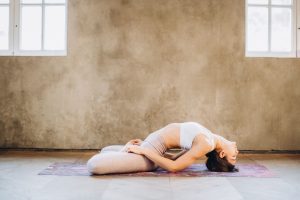
Introduction to Backward Bend Pose
Few shapes in yoga feel as expressive, or as misunderstood, as the backward bend pose. Done well, a backbend opens the front of the body, wakes up the muscles along the spine and leaves you feeling taller and lighter. Done carelessly, it can leave you with a sore lower back and a lasting wariness of the whole family of poses. Between those two outcomes lies a lot of practical knowledge: which backbends to start with, how to move the spine sensibly, how to prepare, how to come out, and when to skip the pose altogether.
This guide covers that knowledge in plain language. It explains what a backbend is, how the spine behaves when you arch it, the main backward bending asanas arranged from gentle to advanced, step-by-step guidance for the key poses, what the benefits really are (and where the evidence is thin), who should be careful, and how to build a safe sequence.
Backward Bend Pose at a Glance
| Question | Short answer |
|---|---|
| What is a backward bend pose? | A posture in which the spine arches backward, in extension, opening the front of the body |
| What are the common names? | Backbend, back-bending asana, backward bending pose |
| Which poses are gentle starters? | Sphinx (a supported form of Cobra), Cobra (Bhujangasana), Locust (Shalabhasana), Bridge (Setu Bandha Sarvangasana) |
| Which are more demanding? | Bow (Dhanurasana), Camel (Ustrasana), Upward Bow or Wheel (Urdhva Dhanurasana), Pigeon (Kapotasana) |
| Main honest benefits | Greater spinal mobility, stronger back muscles, an open chest and hips, and a useful balance to long sitting |
| Main cautions | Overdoing lower-back extension, forcing depth, skipping preparation, and ignoring pain or medical conditions |
| Is it right for everyone? | No. People with back problems, pregnancy or other conditions should get professional advice first |
| How does Nepal Yoga Institute teach asana? | Through its 200-hour teacher training, which publishes 100 hours of practice and 20 hours of anatomy and physiology |
| Published training cost | $1,400 total with a $200 non-refundable deposit |
What Is a Backward Bend Pose?
A backbend is any movement in which the spine arches backward. Reference sources describe it as a move used not only in yoga but in gymnastics, dance and other arts, in which the abdominals, obliques and legs help keep the body steady during the arch. In yoga, the family is large: reference sources note that there are over a dozen variants, with well-known examples including Kapotasana, Ustrasana, Urdhva Dhanurasana and Rajakapotasana. You can read a general overview in the backbend reference article.
The term “backward bend pose” is simply the everyday way to describe these shapes, and it covers a very wide range. A prone Cobra with the elbows bent is a backbend. So is a Bridge lifted from the floor. So is a deep, full Wheel. What they share is spinal extension, and what differs is how much of the spine participates, how much load the arms and legs carry, and how demanding the shape is for the shoulders, hips and front of the body.
How the Spine Moves in a Backbend
You do not need to memorise anatomy to practise safely, but a simple picture helps. The human spine is made of 24 movable vertebrae separated by discs, and it is the movement of those vertebrae, together with the discs’ ability to compress, that gives the spine its flexibility. In practical teaching, the spine is often described in three regions: the neck (cervical), the upper and mid back (thoracic) and the lower back (lumbar).
A common teaching point is that backbends feel best and are safest when the extension is shared across the whole spine rather than concentrated in one spot. The lower back is often described as the region that bends most easily in extension, which is why it can end up doing too much, especially when the upper back and the hips are stiff. The upper back is usually more restricted, partly because of the ribcage, and the front of the hips and thighs can also limit the shape. When those areas are tight, the lower back compensates, and that is when people feel pinching or aching.
Two practical conclusions follow from this. First, a good backbend is built from the whole body: strong legs, active glutes and thighs, an open chest and shoulders, and a lengthened lower back. Second, the aim is not the biggest arch but an even one. Reference sources on yoga even note a common error called “rib thrust,” in which the ribs poke forward rather than the spine extending evenly, and describe it as harmful to good form.
Types of Backward Bend Pose
Backbends are usually grouped by body position, and it helps to know which group a pose belongs to before you try it.
| Group | Examples | Character |
|---|---|---|
| Prone (face down) | Sphinx, Cobra, Locust, Bow | Supported by the floor; good starting point |
| Supine (face up) | Bridge, Fish | The floor supports the back; gentle to moderate |
| Kneeling | Camel, Pigeon (Kapotasana) | Upright, more demanding, load on the thighs and hips |
| Hands-and-feet | Upward Bow or Wheel | Demanding; needs open shoulders, hips and strong legs |
| Seated | King Pigeon (Rajakapotasana) | Advanced hip and spinal flexibility |
Gentle Backbends
Sphinx Pose (Salamba Bhujangasana). A supported version of Cobra in which the forearms rest on the floor. Reference sources describe it as an easier form used in long holds in Yin Yoga and as a preparation for deeper backbends.
Cobra Pose (Bhujangasana). From the Sanskrit bhujanga, meaning snake. You lie face down, place the palms under the shoulders and lift the chest, with the legs stretched out and the backs of the feet on the floor. In the fuller pose the arms straighten and the gaze goes up or slightly back.
Locust Pose (Shalabhasana). From the Sanskrit for grasshopper or locust. You lie face down and lift the legs, arms and head, relying on the back muscles to raise the legs. Reference sources describe it as said to improve flexibility, coordination, back strength and stamina, and a half version lifts one leg and the opposite arm at a time.
Bridge Pose (Setu Bandha Sarvangasana). Often translated “shoulder-supported bridge,” from setu (bridge), bandha (caught or locked), sarva (all), anga (limb) and asana. You can enter it from lying on your back by lifting the hips, which is the gentler route, or from shoulderstand. It is one of the most accessible backbends and is commonly used to prepare for deeper ones.
Fish Pose (Matsyasana). A reclining backbend from matsya (fish). You lie on your back, rise onto the elbows and lift the chest, lengthening the neck. Reference sources note that the crown of the head may touch the floor as the arch deepens, but no weight should rest on it. In the Ashtanga Primary Series it serves as a counterpose to Sarvangasana (shoulderstand).
Moderate Backbends
Bow Pose (Dhanurasana). From dhanura, a bow. Lying face down, you reach back, hold the ankles or feet, and lift the legs and chest so that the body forms a bow with the arms as the bowstring. The Dhanurasana reference article notes that early texts, including the Hatha Yoga Pradipika and the Gheranda Samhita, are ambiguous and may describe a seated pose, and that the prone backbend appears to have become established during the modern revival of postural yoga, popularised in Swami Sivananda’s Yoga Asanas, first published in 1934. Child’s Pose (Balasana) is suggested as a counterpose.
Camel Pose (Ustrasana). From ushtra, a camel. A kneeling backbend, with the hands finally reaching the heels. Options include tucking the toes under for a slightly less strong backbend, placing blocks beside the calves to bring the floor closer to the hands, and Half Camel (Ardha Ustrasana) with the hands on the hips.
Upward-Facing Dog (Urdhva Mukha Svanasana). A variation in which the hips, thighs and knees lift off the floor with the arms straight, familiar from flowing sequences.
Advanced Backbends
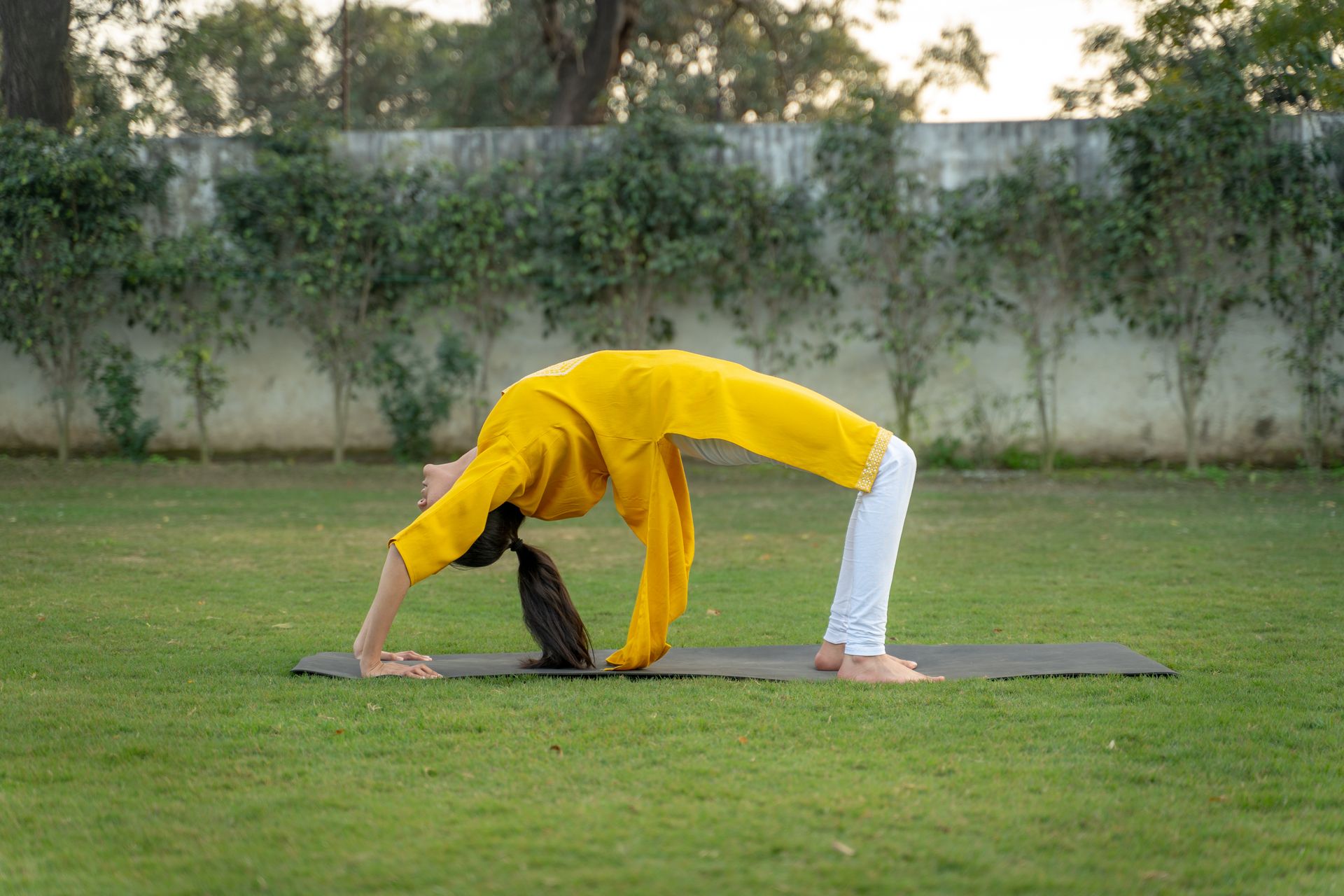
Upward Bow or Wheel Pose (Urdhva Dhanurasana, also Chakrasana). A backbend in which the hands and feet stay on the floor while the abdomen arches upward. It can be entered from lying down or from a gentler backbend such as Bridge. Reference sources list its preparation poses as Locust, Cobra and Sphinx variants, and Bow, and note that people with tight shoulders or hips may be unable to reach the pose and can use blocks or a wall.
Pigeon Pose (Kapotasana). A kneeling backbend in which the shins and forearms rest on the floor while the front of the body lifts, resembling Wheel. It is described as an advanced pose from the Ashtanga tradition that opens the chest and hips, strengthens the back and groin, and stretches the thighs, and bringing the head back to the floor takes considerable flexibility.
King Cobra and the full Bow. Deeper expressions of Cobra and Bow that bring the chest toward horizontal or the legs toward the head. These are specialist shapes and are best approached under a teacher’s guidance.
How to Do Key Backward Bend Poses Step by Step
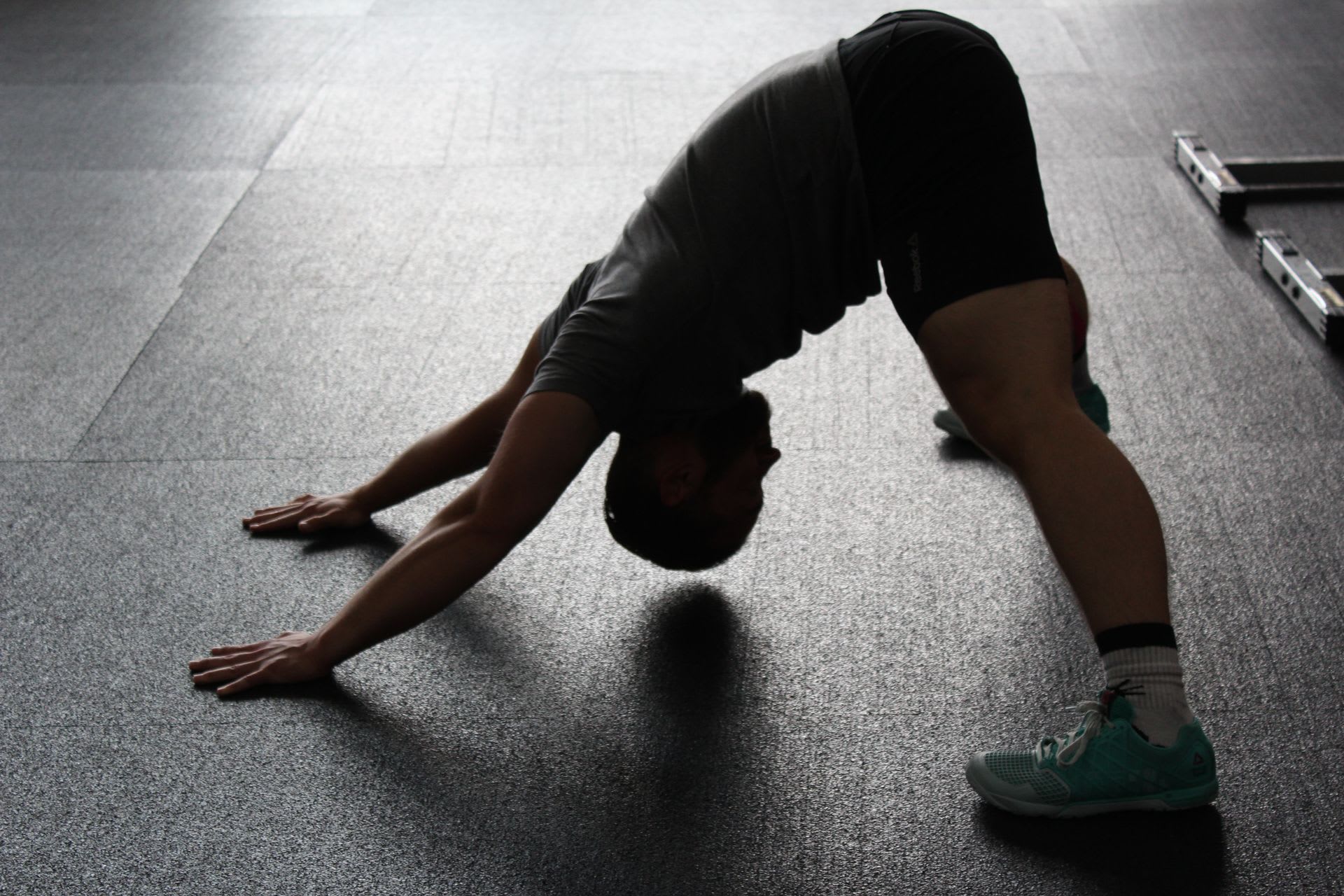
The cues below are general teaching points. Move slowly, stop at any sharp or pinching pain, and learn each pose from a qualified teacher where you can.
Sphinx and Cobra
- Lie face down with the legs together or hip-width apart and the tops of the feet on the floor.
- For Sphinx, place the forearms on the floor with the elbows under the shoulders. For Cobra, place the palms under the shoulders.
- Press the tops of the feet and the pubic bone toward the floor and engage the legs.
- Inhale and lengthen the front of the body, drawing the chest forward and up before you arch.
- Keep the elbows soft and the shoulders away from the ears. In Cobra, the arms may stay slightly bent unless your spine is very flexible.
- Keep the back of the neck long and the gaze forward or slightly up.
- Stay for a few steady breaths, then lower down slowly.
Locust
- Lie face down with the arms along the body or stretched back.
- Inhale and lift the head, chest and arms, then the legs if it feels comfortable.
- Press the pelvis down, reach the legs back and lengthen the spine.
- Hold for a few breaths and lower.
- For a gentler version, lift one leg at a time with the opposite arm.
Bridge
- Lie on your back with the knees bent and the feet hip-width apart, close enough to touch the heels with your fingertips.
- Press the feet and arms into the floor and lift the hips.
- Keep the knees tracking over the feet and the thighs active.
- Let the chest move toward the chin without turning or crushing the neck.
- Lower the spine slowly, one vertebra at a time.
Bow
- Lie face down and bend the knees, reaching back to hold the ankles or feet.
- Inhale and lift the chest and thighs as you press the feet back into the hands.
- Keep the breath moving. Do not hold it.
- Lower down and rest in Child’s Pose.
Camel
- Kneel with the knees hip-width apart and the thighs vertical.
- Place the hands on the lower back, fingers down or up.
- Press the shins and tops of the feet into the floor and lift the chest.
- If it feels good, reach back toward the heels, using blocks if needed or tucking the toes under.
- Keep the neck neutral rather than dropping the head back hard.
- Come up leading with the chest, and rest in Child’s Pose.
Wheel
Wheel is best learned after months of steady practice of gentler backbends and under teacher guidance. The preparation poses named above, a warm body, mobile shoulders and strong legs matter far more than reaching the pose quickly. If you are learning it, using a wall or blocks as described in reference sources is entirely reasonable.
Benefits of the Backward Bend Pose: What Is Reasonable to Expect
Backbends have a large reputation. Some of it is earned and some of it is marketing, so it helps to separate the two.
| Claimed benefit | How well supported | Notes |
|---|---|---|
| Greater range of motion in the spine | Reasonable | Reference sources say backbends done correctly can increase spinal range of motion |
| Stronger back muscles | Reasonable | Poses such as Locust are described as building back strength and stamina |
| Open chest, hips and front of the thighs | Reasonable | Kapotasana is described as opening the chest and hips and stretching the thighs |
| Relief from stiffness after long sitting | Plausible, widely taught | Many teachers use backbends to balance a day of sitting; strong research on this exact effect is limited |
| Help with low back pain | Modest, and not specific to backbends | A US government health source says evidence suggests a slight benefit of yoga for low back pain, with effects similar to other exercise |
| Stress relief | Traditional claim, limited evidence | Posture practices are often linked with calmer states, but strong evidence on specific poses is limited |
| Relief from menstrual cramps | Weak | One reference source says Cobra may help, but cites no clinical evidence |
The honest summary: a backward bend pose is a good way to practise spinal extension, strengthen the muscles along the back and open the front of the body, and it can be a pleasant part of a broader routine. It is not a cure for back pain or a stand-alone treatment for any condition. The National Center for Complementary and Integrative Health, part of the US National Institutes of Health, says that for low back pain the evidence for yoga suggests a slight benefit, and that a 2022 review found yoga slightly better than no exercise but the difference may not be important to patients. Its yoga overview is worth reading before you rely on any health claim.
What Nepal Yoga Institute’s Own Pages Say About Backbends
Nepal Yoga Institute (published on its site as Nepal Yoga Institute and Retreat) is a yoga school and retreat centre at Budhanilkantha-11, Kathmandu. Its blog includes an article on stress management by yoga asana that describes Bhujangasana (Cobra) as a backbend: the student lowers the hips and thighs to the floor, arches the back, pushes the chest forward with the elbows straightened, and tilts the head back, and the arms may stay slightly bent unless the spine is very flexible.
The same article lists Shalabhasana (Locust), in which the legs lift off the floor as the arms press down and the lower back muscles contract. The article presents these within a wider set of postures for stress management and cites no studies for its health claims, so treat those claims as traditional teaching rather than proven results.
The institute’s wider asana content sits inside its Hatha yoga teacher training page, which lists asanas, pranayama, shatkarma, mudra and bandha as the content. If you are curious how a school approaches asana more broadly, the institute’s articles on the Hatha yoga class for beginners and on whether Hatha yoga is hard set out its beginner-friendly approach.
Who Should Be Careful with Backbends
Backbends are not forbidden for most healthy people, but they ask more of the spine than many other shapes. Care is especially important in the following situations.
- Existing back or neck problems. The US National Center for Complementary and Integrative Health lists lumbar spine disease among the conditions that may require modifying yoga. If you have a known spine condition, a history of disc problems, or persistent back or neck pain, talk to your doctor or physiotherapist before practising deep backbends.
- Pregnancy. The same source advises pregnant people to be evaluated by a provider first, and to avoid poses involving long periods of lying on the back. Prone backbends such as Cobra and Locust also need modification as pregnancy progresses; reference sources mention using a blanket under the pelvis in pregnancy for Cobra.
- Other health conditions. The source also lists severe high blood pressure, balance issues, glaucoma, and knee or hip injuries as conditions that may call for modified practice.
- Older adults. The source notes that emergency department visits for yoga injuries are higher among people aged 65 and older.
- Beginners. The source advises beginners to avoid extreme practices, and reports that practising without supervision has been associated with increased risk. Reference sources on yoga also say that strenuous backbends should be approached gently by beginners and people with stiff backs.
- Hot environments. The source notes that hot yoga carries special risks of overheating and dehydration.
Most yoga injuries, according to the same source, are sprains and strains, and serious injuries are rare. That is reassuring, but rare does not mean never. Reference sources also record serious injuries from backbends in extreme or forced contexts, which is a reminder that the spine does not reward force.
Props and Modifications That Make Backbends Kinder
Props are not a sign of weakness. They are how experienced teachers make a shape accessible and safe. A few simple options help with almost every backbend.
| Pose | Helpful modification | Why it helps |
|---|---|---|
| Cobra | Come up onto the forearms (Sphinx) | Reduces the load on the lower back and wrists |
| Locust | Lift one leg and the opposite arm at a time | Smaller range, easier to control |
| Bridge | Keep the lift modest and the feet hip-width apart | Protects the lower back and neck |
| Bow | Hold one foot at a time, or rest in Locust first | Lets the shoulders and thighs open gradually |
| Camel | Tuck the toes under, place blocks beside the calves, or keep the hands on the hips | Brings the floor closer and shortens the lever |
| Wheel | Use a wall or blocks and build up slowly | Reference sources recommend supports for tight shoulders or hips |
| Fish | Place a bolster under the back and a cushion under the knees | Supports the chest and relieves the neck |
The institute’s FAQ states that mats, blankets, cushions and props are provided, which is the kind of support that makes these modifications possible in a group class.
Breath and Awareness in Backbends
A backbend that feels strained is almost always a backbend in which the breath has become short or stopped. Breath is the best gauge of whether a pose is appropriate for you today.
- Inhale to open. Many teachers cue the inhalation as the moment to lengthen and lift the chest, because the ribcage naturally expands.
- Exhale to ground. Use the exhalation to press the legs or feet into the floor and soften the shoulders.
- Stay even. If you cannot breathe smoothly, reduce the depth.
- Notice the front of the body. Awareness of the chest, belly and thighs helps you share the arch across the whole body instead of cramping the lower back.
- Soften the face and jaw. Tension in the face often travels into the neck.
Over time, this attention is what turns a backward bend pose from a physical stunt into a practice. It also connects to the wider Hatha tradition of linking posture with breath, which the institute’s articles on that tradition describe.
A Gentle Ten-Minute Backbend Routine
This short routine is for generally healthy people who want a gentle, sensible sequence. Skip anything that causes pain, and speak with a healthcare provider first if you have a back condition or are pregnant.
- Settle (1 minute). Lie on your back with the knees bent and breathe slowly.
- Bridge (2 minutes). Lift and lower the hips three or four times, then hold for a few breaths.
- Rest and hug the knees (1 minute). A gentle release for the lower back.
- Sphinx (2 minutes). Roll onto your front, come onto the forearms, and breathe.
- Cobra (1 minute). Press up with the elbows soft and lower down.
- Locust (1 minute). One leg at a time, or both if comfortable.
- Child’s Pose (1 minute). Rest and let the back lengthen.
- Gentle twist and rest (1 minute). Release the spine, then lie quietly.
Practise it a few times a week rather than daily at first, and notice how your back feels the next morning. If it feels better, build slowly. If it feels worse, reduce the depth or stop and seek advice.
Common Mistakes in the Backward Bend Pose
- Going straight to the deep shape. Skipping the gentle poses is the fastest route to a sore back.
- Crunching the lower back. If the arch is all in the lumbar spine, the pinch you feel is information. Reduce the depth.
- Rib thrust. Letting the ribs flare forward instead of extending the spine evenly.
- Cranking the neck. Dropping the head back hard compresses the back of the neck. Keep the neck long.
- Holding the breath. If the breath stops, the pose is too strong.
- Ignoring the legs. Weak or passive legs make the back work too hard.
- Forcing depth to look like a photo. Flexibility varies enormously between people, and the right depth is the one you can hold comfortably.
- Skipping the counterpose. Reference sources suggest releasing the spine after backbends with gentle twists or a forward bend.
- Practising in pain. Sharp, pinching or nerve-like pain is a signal to stop.
How to Build a Safe Backbend Sequence
A reliable sequence moves from warm-up through preparation to the main pose, then releases.
| Stage | What to do | Examples |
|---|---|---|
| Warm up | Mobilise the spine, shoulders and hips | Cat-cow movements, gentle shoulder and hip openers |
| Strengthen | Wake up the back and legs | Locust, Bridge |
| Prepare | Move through gentler backbends | Sphinx, Cobra |
| Main pose | One moderate backbend, not several | Bow or Camel |
| Counterpose | Release the spine | Child’s Pose, a gentle twist, a forward bend |
| Rest | Lie still and breathe | Savasana |
A short, well-prepared sequence is far better than a long, aggressive one. If you only have ten minutes, choose Sphinx, Cobra and Bridge, then rest.
Backbends and Everyday Life
Many people first notice the value of a backward bend pose after long hours at a desk or on a phone, where the shoulders round forward and the chest closes. Gentle backbends are a natural counterbalance, and many teachers use them for exactly that reason. The Nepal Yoga Institute article on the ten health benefits of yoga in daily life lists better flexibility and posture among yoga’s benefits, though it does not discuss backbends specifically and cites no studies for that claim. Treat it as a general principle: regular, balanced movement supports comfortable posture, and a backbend is one part of a balanced routine, not a posture fix on its own.
A balanced week might include forward folds and twists as well as backbends, so that the spine moves in all directions. Overloading one direction is rarely wise, however much you enjoy it.
Learning Backbends Properly: Teacher Training at Nepal Yoga Institute
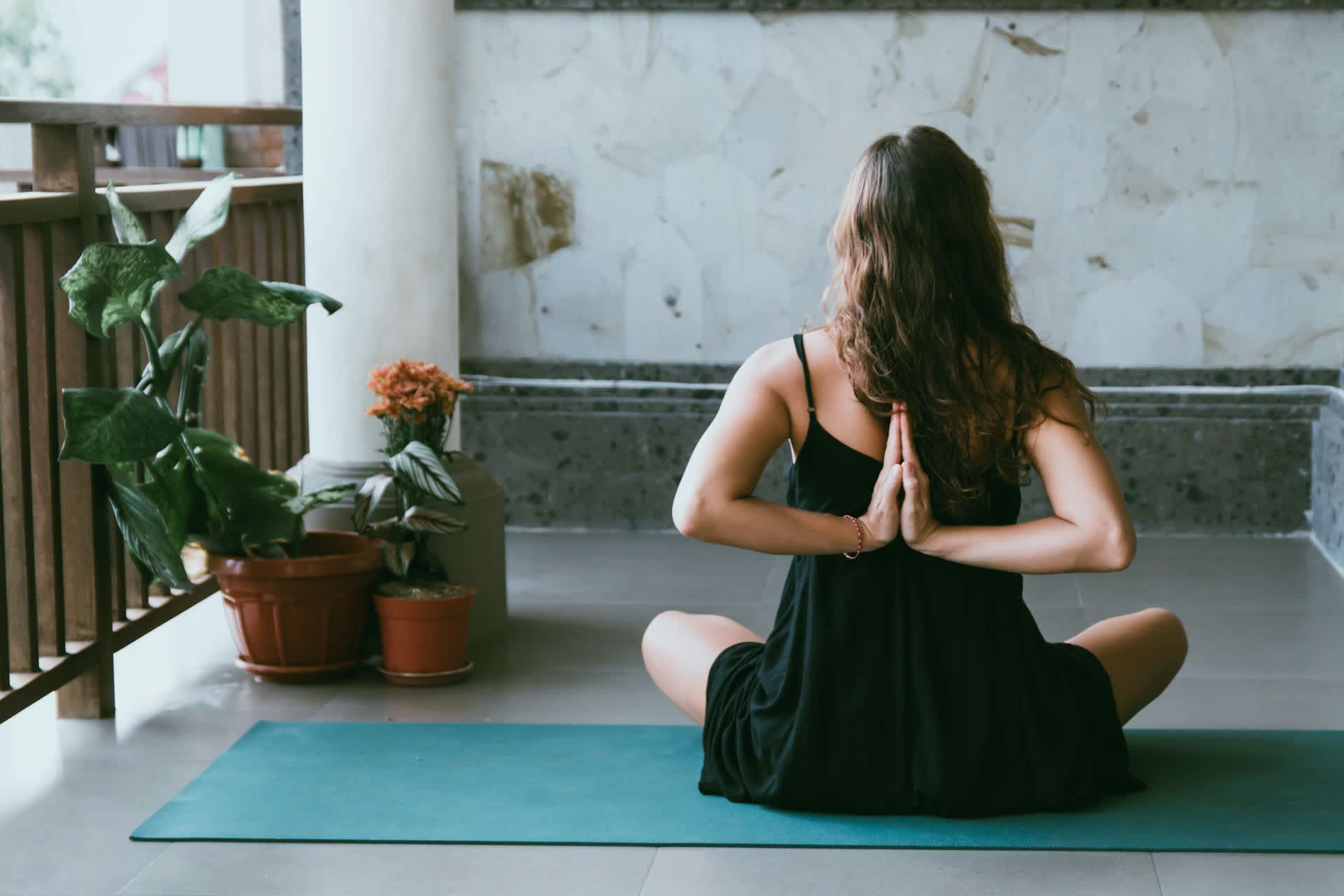
If you want to understand backbends in depth, especially how to teach them safely, a teacher training course is a serious way to do it. Nepal Yoga Institute’s published details are as follows.
| Item | Published detail |
|---|---|
| Programme | 200-hour yoga teacher training |
| Total cost | $1,400 |
| Advance deposit | $200, non-refundable |
| Balance | Payable on orientation day in Nepal |
| Length | 22 days |
| Start date | The 15th of every month |
| End date | The 7th or 8th of the following month |
| Class size | Up to 14 students |
| Weekly rest | Usually one day off a week, typically Sunday |
These details come from the institute’s 200-hour yoga teacher training page. The same page lists curriculum areas with hours, including 100 hours of practice (asanas, pranayama, kriyas, mudras and meditation), 20 hours of anatomy and physiology, 15 hours of teaching methodology and 20 hours of practicum. Those are the parts of a course that matter most for learning to teach backbends safely: how bodies differ, how to cue, and how to modify.
The institute’s FAQ page names the main reference book as Asana, Pranayama, Mudra, Bandha by Swami Satyananda Saraswati of the Bihar School of Yoga and states that students receive a copy along with the institute’s own manual. It also states that mats and props are provided, which matters for backbends because blocks, bolsters and blankets make many shapes safer. Its published daily schedule includes morning asana practice, an evening asana session and a meditation and workshop session in the afternoon. You can read more on the FAQ page.
On the teaching side, the institute’s yoga teacher page lists Dr. Roshan Baskota, who holds a Bachelor of Ayurvedic Medicine and Surgery from Tribhuvan University and teaches anatomy and physiology, and Yogini Indu, who teaches Hatha, Ashtanga, Tantra and yoga philosophy. Those are the teachers’ own published details.
Some pages on the institute’s site, including the 250-plus-hours programme page, list a slightly different course length, so if you plan flights around a course, confirm the dates and length with the institute when you apply.
Backbends in Ashtanga and Hatha
Backward bending asanas appear in many styles. In Hatha classes they often appear as gentle, held poses such as Cobra, Locust, Bow and Bridge, combined with breathing practice. In Ashtanga, reference sources place Kapotasana in the tradition and describe Matsyasana as a counterpose to shoulderstand in the Primary Series. If you are curious about how a structured Ashtanga sequence is organised, the institute’s guide to the Primary Series of Ashtanga explains it in detail.
Behind both styles sits a long philosophical tradition that treats posture as one part of a larger path. The institute’s article on the philosophy of Hatha yoga explains how asana connects to breath, concentration and meditation, which is a helpful reminder that a backbend is not just a flexibility test.
Frequently Asked Questions about Backward Bend Pose
1. What is a backward bend pose?
It is a yoga posture in which the spine arches backward into extension, opening the front of the body. Common examples are Cobra, Locust, Bridge, Bow, Camel and Wheel.
2. What is the easiest backward bend pose for beginners?
Sphinx Pose, a supported form of Cobra with the forearms on the floor, and Bridge Pose are widely used as gentle starting points.
3. What is the difference between Cobra and Upward-Facing Dog?
In Cobra, the legs stay on the floor while the chest lifts. In Upward-Facing Dog, the hips, thighs and knees lift off the floor with the arms straight.
4. What does Bhujangasana mean?
It comes from the Sanskrit bhujanga, meaning snake, and asana, meaning posture or seat.
5. What does Ustrasana mean?
It comes from ushtra, meaning camel, and asana. It is a kneeling backbend, completed with the hands on the heels.
6. Are backbends good for back pain?
Evidence for yoga in general suggests a slight benefit for low back pain, according to a US government health source, but backbends in particular are not proven treatments. If you have back pain, speak with a healthcare provider before trying deep backbends.
7. How long should I hold a backbend?
A few steady breaths is a sensible starting point. Hold only as long as you can breathe smoothly and feel no sharp pain.
8. What should I do after a backbend?
Reference sources suggest releasing the spine with gentle twists or a forward bend. Child’s Pose is a common counterpose for Bow.
9. Why does my lower back hurt in backbends?
Often because the lower back is doing most of the work while the upper back, shoulders, hips or front of the thighs are stiff. Reduce the depth, strengthen the legs, and work on opening the chest and hips.
10. Can I do backbends during pregnancy?
Pregnancy requires modification and professional guidance. A US government health source advises pregnant people to be evaluated by a provider first and to avoid poses with long periods of lying on the back.
11. Do I need to be flexible to do a backward bend pose?
No. Many gentle backbends are suitable for stiff bodies, and props such as blocks and walls can bring the floor closer.
12. Does Nepal Yoga Institute teach backbends?
Its asana content falls within its Hatha and teacher training programmes, and its blog describes Cobra and Locust within a set of postures for stress management. The 200-hour course publishes 100 hours of practice and 20 hours of anatomy and physiology.
13. How much does the teacher training cost?
The institute publishes $1,400 total for its 200-hour training, with a $200 non-refundable deposit and the balance due on orientation day in Nepal.
14. When do courses start?
The institute’s 200-hour page states that courses start on the 15th of every month and run for 22 days, with up to 14 students per course.
15. How do I book?
Use the institute’s Book Now page. The FAQ states that applications are processed within three working days and confirmed by email.
Ready to Learn Yoga the Careful Way?
A backward bend pose is easier, safer and more enjoyable when you learn it step by step from someone who understands the body. If you want to study yoga in depth, or train to teach it, Nepal Yoga Institute can answer your questions about its programmes and dates.
- Explore the 200-hour yoga teacher training or the Hatha yoga teacher training.
- Meet the teachers on the yoga teacher page.
- Ready to apply? Fill in the Book Now form.
- Questions first? Talk to the yoga teacher on WhatsApp: +977 9860480478
Nepal Yoga Institute and Retreat, Budhanilkantha-11, Kathmandu 44600, Nepal Phone: +977 9823022196 / +977 9860480478 Email: info@nepalyogainstitute.com