Introduction to Short Yoga Retreat Budhanilkantha
It is Friday, 5:40 p.m., and your laptop is still open. The week has left you with a stiff neck, a phone that never stops buzzing, and a quiet suspicion that you have forgotten how to rest. A two-week trip is not on the table. A single weekend might be.
That is the gap a short yoga retreat in Budhanilkantha fills. Budhanilkantha sits at the northern edge of the Kathmandu Valley, below Shivapuri Hill, a taxi ride from the city and a different world from its horns and dust. Nepal Yoga Institute is based here, at Budhanilkantha-11, so the journey from airport or hotel to your mat is measured in minutes, not in a lost travel day.
This guide is written for people who are still deciding. It covers what “short” really means, how a retreat day runs hour by hour, what you will actually practise, what the food and Ayurvedic treatments involve, when to come, which paperwork to sort out, and what to ask any retreat, ours included, before you pay. Where something depends on your dates or group size, we say so instead of guessing.
What a Short Yoga Retreat Actually Is (and What It Is Not)
A short yoga retreat is a residential stay, usually somewhere between two and seven days, where the schedule is built around yoga, breathing practice, meditation, rest and simple food. You sleep where you practise. Decisions are made for you: when to wake, when to move, when to eat, when to do nothing.
It is not a spa weekend with a yoga class bolted on, and it is not a teacher training course in miniature. Nobody expects you to master a pose. The aim is smaller and more realistic: to interrupt your usual rhythm long enough to feel the difference.
Here is the snapshot of our setup, taken from what we publish for guests.
| Detail | What to expect |
|---|---|
| Location | Budhanilkantha-11, Kathmandu, Nepal |
| Open | Seven days a week, 6:00 to 21:00; contact line open 24 hours |
| Published short program | Five days, with a day-by-day schedule |
| Flexible option | A short-term or long-term package whose length can be shortened or extended |
| Daily rhythm | Morning breath and mantra, asana, rest, Ayurvedic oil massage and sauna, evening yoga and meditation |
| Food | Healthy, organic, sattvic-style meals |
| Pricing | Calculated on request, based on duration and group size |
Our five-day yoga retreat program lays out every day in full, and the long-term and short-term retreat package is the route to take if you want something shorter, longer or shaped around a group.
Why Budhanilkantha, Not Thamel or Pokhara
Most travellers sleep in Thamel, and most retreat searches drift toward Pokhara or Rishikesh. Budhanilkantha is the quieter answer that sits inside the Kathmandu Valley itself.
It is close. The temple at its centre is roughly 9 km from Thamel and about 10 km from Tribhuvan International Airport. Travel time swings with traffic, which in Kathmandu is the only honest variable, but you are not facing a domestic flight or a long highway day to reach it. For a weekend, that matters more than any view.
It has a natural edge. Budhanilkantha is a gateway to Shivapuri Nagarjun National Park, a forest reserve of about 159 square kilometres whose highest point, Shivapuri Peak, reaches 2,732 metres. Kathmandu itself sits near 1,350 metres, so the hills above are noticeably greener and calmer than the streets below.
It has a living spiritual anchor. The Budhanilkantha Temple houses a reclining figure of Vishnu, carved from black basalt, about five metres long and resting in a pond of roughly thirteen metres. Tradition places the carving in the Licchavi period, around the seventh century, and it is widely described as the largest stone carving in Nepal. It is an open-air temple, and Hindus and many Buddhists revere it in different ways. You can read more about its history and legends on Wikipedia’s Budhanilkantha Temple entry.
| Reference point | Approximate distance from Budhanilkantha |
|---|---|
| Thamel | About 9 km |
| Tribhuvan International Airport | About 10 km |
| Shivapuri Nagarjun National Park gate | Just north of the temple area |
Distances are approximate. Ask us for the best route on your arrival day, because road works and festival crowds change the picture.
How Short Is “Short”? Two, Three, Five or Seven Days
People searching for a weekend getaway usually assume the choice is binary: two days or a week. In practice, there are four useful lengths, and each gives something different.
| Length | What it realistically gives you | The trade-off |
|---|---|---|
| 2 days | One full practice day, a taste of the routine, a real break from screens | You are just settling in when you leave |
| 3 days | Two full days, enough for the body to stop bracing | Still compressed for Ayurvedic treatments and deeper breathwork |
| 5 days | Matches our published program: an arrival afternoon, three full days and a final morning | Needs more leave from work |
| 7 days and beyond | Time for habits to change and for the mind to go quiet | Best planned with the long-term package |
An honest note: our website publishes a five-day retreat and a flexible package whose duration “can be increased or decreased as per need.” If you want a two-night or three-night stay, send us your dates and we will tell you what can be arranged. We would rather confirm than promise a fixed weekend package that you then find does not exist.
If you are unsure, three days is the sweet spot for most first-timers. It is long enough to move past the first-day restlessness and short enough to fit around a work week.
What a Three-Day Stay Can Look Like
If you only have a long weekend, the most useful way to picture it is as a trimmed version of the five-day structure. The shape below is an illustration built from our published schedule, not a fixed package, so confirm the details when you request your dates.
| Day | Shape of the day |
|---|---|
| Day 1: Arrival | Check-in around midday with herbal tea, a Nepalese lunch, rest, yogic relaxation, an Ayurvedic massage, an optional steam bath, evening yoga and meditation, then dinner |
| Day 2: Full day | The complete rhythm: ushapan, breath and mantra, asana, breakfast, rest, oil massage, sauna, lunch, rest, two hours of evening practice, dinner |
| Day 3: Morning and departure | Warm water, optional nasal rinse, mantra and pranayama, asana, breakfast and a final period of rest before you leave |
Notice what the middle day gives you: one uninterrupted cycle from dawn to dinner. That single full day is where most people feel the shift, because it is the first time the schedule carries you instead of you carrying the schedule. Arrival and departure days are shorter by design, so a three-day stay is really one deep day framed by two gentle ones.
The more full days you add, the more the effect compounds. By the second full day, the early start stops feeling like effort, sitting still gets easier, and the afternoon rest actually becomes rest. That is why we nudge first-timers toward three nights over two when their calendar allows it.
A Day at Nepal Yoga Institute, Hour by Hour
Retreat days are usually described in vague language. Here is the real rhythm from our published schedule for the full days of the five-day program.
| Time | Activity |
|---|---|
| 6:00 to 7:00 | Ushapan: lukewarm water with honey and lemon |
| 7:00 to 7:15 | Jala neti nasal cleanse (optional) and tea |
| 7:15 to 8:00 | Mantra singing and pranayama |
| 8:00 to 9:00 | Asana practice |
| 9:00 to 10:00 | Healthy breakfast |
| 10:00 to 11:30 | Relaxation time |
| 11:30 to 12:30 | Ayurveda oil massage |
| 12:30 to 13:30 | Ayurveda sauna |
| 13:30 to 14:30 | Lunch |
| 14:30 to 16:00 | Relaxation time |
| 16:00 to 18:00 | Yoga and meditation |
| 18:00 to 19:00 | Dinner |
Read that again and notice what is missing: there is no 90-minute class at dawn followed by another at noon. The practice is concentrated in two windows, early morning and late afternoon, with a long, deliberate stretch of rest between them. For many people who arrive exhausted, the rest is the point.
The first hour is gentle on purpose. Warm water with honey and lemon before anything else sounds like a small ritual, and it is. It teaches the body that the day is starting slowly.
The middle of the day is for absorbing. Massage, sauna, lunch and unscheduled time are not filler. After morning movement and breathwork, the nervous system needs space to settle, and a retreat that crams the afternoon misses that.
The evening session is the longest. Two hours of yoga and meditation before dinner lets you go deeper than the morning class, because by then the body is warm and the day’s noise has dropped.
Why Rest Sits Between the Sessions
The schedule puts asana at 8:00, before breakfast at 9:00, and the long practice block at 16:00 to 18:00, before dinner at 6:00. Practising on a light stomach is the traditional approach in most yoga schools, because twisting, bending and breath practice feel uncomfortable after a heavy meal. The meals then arrive as a reward and a reset instead of an interruption.
The long gaps are just as deliberate. Between breakfast and the massage there is an hour and a half of unscheduled time, and between lunch and the evening practice there is another hour and a half. If you are used to filling every free minute, this can feel strange on the first day. Use that time for reading, journaling, a slow walk around the grounds, or a nap. Resist the urge to turn it into a work session. The people who benefit most from a short retreat are usually the ones who allow the empty hours to stay empty.
Your Arrival Day: What the First Afternoon Looks Like
On the five-day program, day one is built around arriving softly rather than performing. Check-in starts around noon with a welcome of herbal tea, followed by a Nepalese lunch. The afternoon includes time to settle in, yogic relaxation, an Ayurvedic massage, an optional steam bath, then yoga and meditation around 5:30 p.m. and dinner at 6:00.
That structure eases you in. The first day is built around tea, food, rest and a massage before the first evening session, rather than a hard class straight after a flight or a bumpy taxi ride. If you arrive on a late flight, tell us in advance. Our booking form asks for flight details and has an airport pick-up option, which saves you the haggle with taxi drivers at midnight.
A small piece of advice from the way these stays tend to go: put your phone in a drawer on the first evening. The retreat starts working the moment you stop checking it.
What You Will Actually Practise
You do not need to know the vocabulary to come, but knowing it removes the nerves. Here is what the words on the schedule mean in plain language.
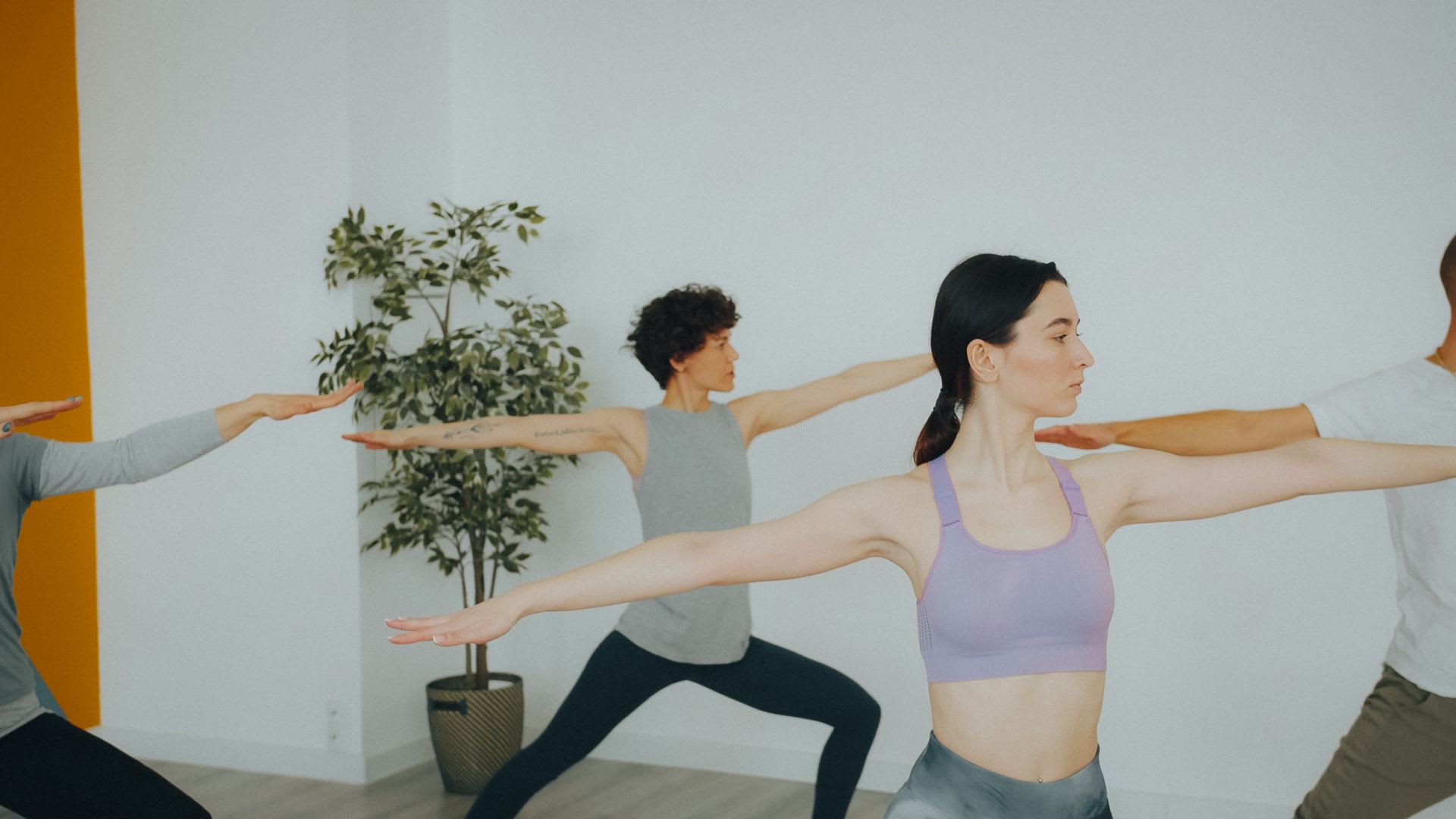
Asana. The physical postures. Expect an hour in the morning. Ask how the class is paced for mixed levels when you book. The goal is steadiness and breath, not flexibility contests. If you have never practised, our guide to Hatha yoga classes for beginners explains the style and pace so you know what you are walking into.
Pranayama. Breathing practices, taught after mantra singing in the early session. Beginners start simple, usually with slow, even breathing. Anything intense should always be learned with a teacher, never copied from a video at home.
Mantra singing. Chanting a short sound or phrase, often with a group. It feels odd for about two minutes and then, for many people, feels like the first time their mind has been quiet all week.
Jala neti. A traditional nasal rinse with lukewarm salted water, offered as optional on our schedule. If it is new to you, you are free to watch first or skip it. Never feel pressured into a cleansing practice.
Yoga and meditation. The two-hour late-afternoon block. If you are new to sitting practice, say so, and ask the teacher to guide you through the first sessions.
Yogic relaxation. Guided rest, usually lying down. It is more demanding than it sounds, because stopping is hard.
Many visitors also ask about sound practices. Singing bowls have a long association with Nepal’s wellness scene, and we have written a separate piece on singing bowls in Nepal if you are curious about how they are used and what to expect from a session.
Common Worries Before Booking
Most hesitation comes from a handful of fears. Here are the honest answers.
“I’ll be the least flexible person in the room.” Almost everyone worries about this, and almost nobody notices. Yoga is about breath and steadiness, not shape. If a posture does not work for your body, adjust it or rest. Tell the teacher about stiff hips, a sore back or a tight neck at the start.
“I won’t be able to switch off.” You probably will not on the first evening, and that is normal. The restlessness usually eases once the routine becomes predictable. Leaving your phone out of reach for the first few hours helps more than any technique.
“I don’t know the Sanskrit.” You do not need to. Terms such as pranayama and ushapan are simple ideas with unfamiliar names, and the plain-language list earlier in this guide covers the ones on the schedule. If anything else is unclear, ask.
“What if the chanting feels awkward?” It often does at first. You can listen without joining, then add your voice when you feel ready. Nobody is graded.
“What if I get bored?” A short retreat has a lot of unstructured time on purpose. Boredom is often the first sign that you have genuinely slowed down. If you want something to do, bring a book or a notebook, and take a short walk nearby.
“I’m not spiritual.” You do not have to be. The schedule is built around movement, breath, rest and food, and you can take as much or as little of the philosophy as suits you. Respect for the setting, including the temple and the people practising around you, is the only expectation.
Ayurvedic Massage, Sauna and Sattvic Food
Two things separate a retreat from a yoga class: the treatments and the food.
Ayurvedic oil massage is scheduled on the full days from 11:30 to 12:30, followed by an Ayurveda sauna from 12:30 to 13:30. The order is deliberate. Oil first, heat second, lunch third. Tell your therapist about any skin sensitivities, injuries or allergies before the session, and mention it again on arrival even if you wrote it on the form.
Sattvic food is the traditional yogic style of eating: simple, fresh, vegetarian, lightly spiced and easy to digest. Our retreat describes its meals as healthy and organic, in a setting designed around that approach. Expect Nepalese-style meals rather than a gourmet tasting menu. If you have a food allergy or intolerance, say so when you book, so we can confirm what can be arranged. A surprise at the table is much harder to fix than a note on the form.
A practical point: do not arrive planning to detox hard. A short stay is not the moment for drastic changes. Eat what is served, drink water, and treat the food as a quiet reset rather than a challenge.
Beyond the Mat: Temple, Forest and Monasteries
One reason people choose Budhanilkantha over a purely rural retreat is how much meaning sits within walking or short-ride distance.
The temple. The Budhanilkantha Temple is open-air and busy with pilgrims. Remove your shoes at the gate and dress modestly. Access to the inner area around the pond is generally limited to Hindus, though visitors can usually watch from the surrounding walkway. Each year in Kartik, typically November, a large fair marks Haribodhini Ekadashi, the day Vishnu is believed to wake from his four-month sleep. In 2026 that observance is expected around 20 to 21 November; confirm the exact day against the Nepali calendar, because the festival draws big crowds and changes the feel of the neighbourhood.
The forest. The entrance to Shivapuri Nagarjun National Park is north of the temple area. Rules, fees and guide requirements for foreign visitors have changed over the years, and different sources report different numbers, so check at the gate on the day or ask us before you go. Even a short walk in the lower forest is a good counterweight to a day of sitting still.
The monasteries. Higher in the park lies Nagi Gompa, a monastery reached by hill trails. If you enjoy contemplative sites, our overview of monasteries in Nepal is a useful starting point for planning an extra half-day.
A word on pace: a short retreat is not a sightseeing tour. Pick one outing, not three. Most guests who try to fit in the temple, a hike and a monastery on a three-day stay come home more tired than they left.
What a Short Retreat Can and Cannot Do
It is worth being clear about expectations, because a retreat sold as a miracle always disappoints.
What it can do. It can break the pattern of a hectic week. It can give you a few days of regular meals, early nights, daily movement and almost no screen time. It can teach you a few simple breathing and relaxation tools you can reuse at home. It can also help you decide whether you want something longer, such as a full week, a stress management programme or even a teacher training course.
What it cannot do. A weekend will not undo years of tension, fix a medical condition or replace professional care. Yoga is a supportive practice, not a treatment, and anyone dealing with persistent pain, anxiety, low mood or a diagnosed illness should keep their doctor or counsellor involved. If something hurts during practice, say so immediately and stop.
The most realistic way to judge success is simple: when you leave, do you feel a little lighter, sleep a little better, and want to keep one or two habits? If the answer is yes, the retreat did its job.
Who a Short Yoga Retreat in Budhanilkantha Suits
First-timers. If you have never done a retreat, a short one is the least risky way to find out whether you like the format. Our guide to yoga retreats in Nepal for beginners covers what to expect before you land.
Burnt-out professionals. If your week is calls, deadlines and screens, the rhythm of rest between two practice windows is exactly what the schedule offers. We also run a five-day stress management package for people whose main goal is stress rather than yoga itself.
Solo travellers. A retreat is one of the easier ways to travel alone in Nepal. Meals, schedule and company are handled, and you are never eating dinner at a table for one with your phone.
Kathmandu residents and expats. You do not need to fly anywhere. A weekend away from your own apartment, inside your own city, is the cheapest escape available.
Small groups and teams. Our pricing is calculated by group size, and we also run corporate programs. If you are planning a friends’ weekend or a team reset, ask for a group quote.
Who should pause and ask first. If you are pregnant, recovering from surgery, managing a heart condition or taking regular medication, speak to your doctor before booking. Our booking form asks about illness and medication for a reason, so answer it honestly.
The Best Time for a Short Yoga Retreat in Kathmandu
Budhanilkantha is open for stays all year, but the seasons change the experience.
| Season | Months (approx.) | What to expect |
|---|---|---|
| Spring | March to May | Warmer days and flowering hills; rhododendrons bloom in the forest |
| Monsoon | June to September | Rain, green hills, humidity and clouds; forest trails can be wet, and leeches are possible |
| Autumn | October to November | Clear skies and the busiest travel season; Dashain and Tihar are followed by the temple fair |
| Winter | December to February | Cold mornings and evenings, sunny afternoons; bring warm layers |
If you want the broadest mix of comfort and clear views, autumn and spring are the usual favourites. If you prefer quiet and do not mind rain, monsoon can be peaceful, since practice happens indoors anyway. Winter suits people who like crisp air and small crowds, as long as they pack for cold mornings.
Retreat Etiquette: Small Habits That Make a Big Difference
A retreat is a shared space, and a few simple habits keep it calm for everyone, including you.
- Arrive on time for the first session. Late entries break concentration, especially during breathwork and meditation.
- Keep phones silent and out of the practice room. Even a vibration is noticeable in a quiet room.
- Stay for the rest periods. Skipping relaxation to check messages defeats the purpose of coming.
- Respect the temple and the forest. Dress modestly, remove shoes where asked, and carry your rubbish out of the park.
- Speak up about discomfort. Pain is a signal to stop, not something to push through.
- Read our code of conduct. We publish it on our website so you know what is expected before you arrive.
None of this is strict. It is simply what makes five quiet days feel quiet.
Planning Your Trip: Getting There, Visa and What to Pack
Getting there. The temple area is roughly 10 km from Tribhuvan International Airport. Our booking form includes an airport pick-up option, so say yes when you book and share your flight number. If you arrive independently, taxis are the simplest route, and buses run toward Budhanilkantha from central Kathmandu. Give the driver our address: Budhanilkantha-11, Kathmandu.
Visa. Most nationalities can get a tourist visa on arrival. Fees listed for 15, 30 and 90 days are USD 30, USD 50 and USD 125 respectively, and tourist stays are capped at 150 days in a visa year. SAARC nationals receive a free 30-day visa on their first visit in a visa year, with an exception for Afghan citizens. Nationals of some countries are not eligible for visa on arrival, so check your own nationality on the Department of Immigration’s online portal before you fly, because fees and rules can change.
What to pack. Keep it light and layered:
- Loose, comfortable clothing for practice, and one warm layer for early mornings
- A shawl or scarf, which doubles as a blanket for relaxation
- Modest clothing for temple visits
- Comfortable walking shoes if you plan a forest walk
- Any regular medication, with enough for your whole stay
- A reusable water bottle and a notebook
Ask us what is provided on site, such as mats and props, so you do not pack things you do not need.
Tell us about your health. Share injuries, medication and allergies on the booking form. That information is for your safety, not for screening you out.
What It Costs and How Pricing Works
You will notice that we do not print a single price on our retreat pages. That is not evasiveness. Our program pages state that prices are calculated on request, depending on the duration of the package and the size of the group, and that the length of the stay can be adjusted.
When you ask for a quote, include:
- Your arrival and departure dates
- How many people are coming
- Whether you need airport pick-up
- Any dietary needs or health notes
- Whether you want the full treatment schedule or a lighter version
Then ask what the quote covers. A good retreat tells you plainly what is included: accommodation, meals, daily practice, treatments, and transfers. If a quote leaves any of those vague, ask before paying.
How to Judge Any Short Yoga Retreat, Including Ours
Retreat marketplaces list dozens of options near Budhanilkantha, from two-day escapes to month-long programs. Before you commit, run through a short checklist:
- Is the schedule published hour by hour? Vague promises of “daily yoga” tell you little.
- Is the location specific? A real address in a real neighbourhood beats “near Kathmandu.”
- Are the teachers named, or at least described? You are trusting them with your body.
- Does the retreat ask about your health? A good one does.
- Is there a rest block built into the day? If every hour is full, it is a boot camp.
- Are prices and inclusions explained clearly?
- Can you check independent reviews? Our listing is on Tripadvisor, and you should read reviews of any retreat you are considering, not only the ones on its own website.
If you are comparing destinations beyond Kathmandu as well, our overview of the best yoga retreats in Nepal walks through the options.
Keeping the Calm After You Go Home
The usual failure after a retreat is trying to carry the whole schedule into normal life. You will not do two hours of evening practice between work and dinner, and that is fine. Keep three things instead:
- Ten minutes in the morning. A few minutes of gentle movement and slow breathing before you check your phone.
- A warm drink before screens. The ushapan idea travels well: lukewarm water with honey and lemon, drunk slowly.
- One long rest each week. Protect one evening or one afternoon with no plan.
Small and repeatable beats ambitious and abandoned. If the retreat felt valuable, consider returning for a longer stay.
Frequently Asked Questions About a Short Yoga Retreat in Budhanilkantha
1. What is a short yoga retreat?
A short yoga retreat is a residential stay, usually two to seven days, with daily yoga, breathing practice, meditation, rest and simple meals planned for you. It is designed to give a meaningful reset without taking weeks away from work.
2. How many days is a short yoga retreat in Budhanilkantha?
Most run from two to seven days. Our published program lasts five days, and our short-term and long-term package can be shortened or extended, so a two- or three-day stay can be discussed when you send your dates.
3. Is Budhanilkantha a good place for a yoga retreat?
Yes, for people who want quiet without leaving Kathmandu. It sits below Shivapuri Hill at the northern edge of the valley, close to a national park and a major temple, yet only about 9 km from Thamel.
4. How far is Budhanilkantha from Kathmandu airport and Thamel?
The temple area is about 10 km from Tribhuvan International Airport and about 9 km from Thamel. Travel time depends on traffic, so allow extra time at rush hour and ask us about airport pick-up.
5. Do I need yoga experience to join?
No. Our booking form asks about previous yoga experience so we can guide you properly, and we run a retreat page written for beginners. Optional elements such as jala neti are listed as optional on our schedule.
6. What does a typical retreat day look like?
Days begin around 6:00 with warm water, then mantra and pranayama, asana, breakfast and rest. Midday brings Ayurvedic massage and sauna, then lunch and rest. The late afternoon holds two hours of yoga and meditation, followed by dinner at 6:00 p.m.
7. What is jala neti, and is it required?
Jala neti is a traditional nasal rinse using lukewarm salted water. It is listed as optional on our schedule. If you are unsure, watch first, ask questions, or skip it entirely.
8. What kind of food is served?
Meals are healthy, organic and sattvic in style: simple, fresh, vegetarian and easy to digest. Tell us about any allergies or intolerances when booking so we can confirm what can be arranged.
9. Is Ayurvedic massage included?
Our published schedule lists Ayurveda oil massage and an Ayurveda sauna on full retreat days, and the first day includes an Ayurvedic massage with an optional steam bath. For a custom short stay, confirm exactly which treatments are included in your quote.
10. How much does a short yoga retreat cost?
Prices are calculated on request, based on duration and group size, because we adjust stays to your needs. Send us your dates, the number of guests and any special requirements, and we will quote you directly.
11. When is the best time to go?
Autumn (October to November) and spring (March to May) are the usual favourites for clearer skies. Monsoon is wetter but quiet, and winter has cold mornings and sunny afternoons. Each season suits a different kind of traveller.
12. What should I pack?
Comfortable layers, modest clothes for temple visits, a warm shawl, walking shoes, regular medication and a water bottle. Ask us what equipment is provided on site before you pack extras.
13. Do I need a visa for Nepal?
Most visitors need a tourist visa, available on arrival. Listed fees are USD 30 for 15 days, USD 50 for 30 days and USD 125 for 90 days, with free 30-day visas for most SAARC nationals. Always confirm current rules on the official immigration portal.
14. Can I join a short retreat alone?
Yes. Many guests come solo. Meals, schedule and company are organised, which makes a retreat one of the easier ways to travel alone in Nepal.
15. Can groups or teams book a short retreat?
Yes. Our pricing is calculated by group size, and we also run corporate positive attitude and stress management programs. Contact us with your group size and dates for a tailored plan.
16. Can I visit the Budhanilkantha Temple during my stay?
Yes, it is nearby. The temple is open-air, you remove shoes at the gate, and access to the inner pond area is generally limited to Hindus, although visitors can usually observe from the surrounding walkway. Expect crowds around the November fair.
17. Is the Shivapuri National Park hike part of the retreat?
Hiking is not part of our published daily schedule. If you would like to walk in the park during your stay, ask us in advance, and check current entry fees and guide rules at the gate, since they have changed over time.
18. Is a yoga retreat good for stress and burnout?
Many people find a quiet, structured break helpful for stress, but a retreat is not medical treatment. If you are struggling with persistent anxiety or low mood, speak to a doctor or counsellor alongside any retreat you take.
19. Are there health conditions I should mention before booking?
Yes. Tell us about injuries, surgery, pregnancy, allergies and regular medication. Our booking form asks about illness and medication so the team can guide you safely, and your doctor should approve a retreat if you have any medical concern.
20. How do I book a short yoga retreat at Nepal Yoga Institute?
Fill in the booking form on our website or message us on WhatsApp with your dates, group size and any health or dietary notes. We will confirm availability, what is included and the price for your stay.
Ready for Your Weekend Reset?
Budhanilkantha is the rare retreat location where you can finish a Friday workday and be breathing slowly by evening. You do not need a perfect schedule, special fitness or a week of leave. You need two or three days, an honest conversation about what you want, and a place that rests you properly.
Here is how to start:
- Check your dates and decide whether you want a weekend, three days or the full five-day program.
- Send us your details through the Nepal Yoga Institute booking page, including arrival time, group size and any health or dietary notes.
- Prefer to talk first? Message us on WhatsApp at +977-9823022196, or use the contact page to reach the team by email.
Tell us when you can get away, and we will tell you what we can arrange.
Nepal Yoga Institute, P.O. Box 1272, Budhanilkantha-11, Kathmandu 44600, Nepal.