Introduction to Luxury Yoga Retreat Nepal
Some trips are about doing more. A luxury yoga retreat is about doing less, and doing it well. It is the promise of mornings without alarms set by anyone but a teacher you trust, of food you do not have to plan, of a room that lets you sleep, and of days with enough space in them that you finally hear your own breathing. For many travellers, that is the real luxury: not marble or gold taps, but time, quiet and care.
That is also why the search for a luxury yoga retreat Nepal can be confusing. The word “luxury” is used loosely. On one website it means a five-star hotel with a spa. On another it means a small, quiet place with a private teacher. On a third it is simply a marketing label stuck onto a standard retreat to justify a higher price. This guide helps you see through the label. It explains what luxury can mean in a yoga setting, what to look for in Nepal, which questions to ask, and what to do if your idea of comfort is more about stillness than service.
Luxury Yoga Retreat Nepal at a Glance
| Question | Short answer |
|---|---|
| What does “luxury” mean in a yoga retreat? | It varies. It can mean comfortable private rooms, spa treatments, high-quality food, small groups, personal teaching and seamless logistics |
| Is there a standard definition? | No. The word is a marketing term, so ask what is actually included |
| Does Nepal Yoga Institute market itself as luxury? | No. Its pages describe a homely, natural setting, organic sattvic food, Ayurvedic massage and a structured yoga schedule |
| What retreats does it publish? | A Five Days Yoga Retreat Program and a Long Term / Short Term Yoga Retreat Package, plus stress management packages |
| Published retreat prices | None. Its retreat pages say prices are calculated on request, depending on duration and group size |
| Published retreat deposit | The FAQ page states retreat packages require a deposit of 20% of the package price, with full payment due on arrival |
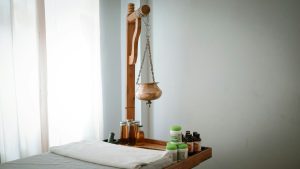
| Treatments published | Ayurvedic oil massage, Ayurvedic sauna and an optional steam bath on the retreat schedules |
| Location | Budhanilkantha-11, Kathmandu, about 22 km from the airport and 24 km from Thamel |
| Best way to confirm details | Request a written quote and an accommodation description before you pay |
What “Luxury” Really Means on a Yoga Retreat
When people say they want a luxury retreat, they usually mean one or more of four different things. Separating them helps you shop with clarity.
1. Physical comfort. This is the most obvious meaning: a private room, a good bed, clean bathrooms, reliable hot water, quiet surroundings and comfortable common areas. In a yoga setting, sleep matters more than design. A plain room where you sleep deeply is worth more than a grand room with noise.
2. Personal attention. Small groups, one-to-one guidance, flexible schedules and teachers who know your name and your injuries. This is a form of luxury that does not depend on a building at all.
3. Care and service. Food prepared for you, laundry handled, transfers arranged, treatments scheduled and every detail taken off your plate. The point is to remove decisions.
4. Space and time. Unhurried days, protected rest, and the freedom not to perform. This is the form of luxury that yoga itself is built around.
Most high-end retreats combine several of these. The honest question to ask any provider is: which of these four do you actually deliver, and how? A retreat that excels at attention and space but offers simple rooms is a different product from a resort retreat with elegant rooms but large classes. Neither is wrong. They suit different people.
Why People Look for Luxury Yoga Retreats in Nepal
Nepal draws wellness travellers for several reasons. The Kathmandu Valley holds an extraordinary concentration of heritage: UNESCO inscribed it as a World Heritage Site in 1979, and its World Heritage listing names seven monument zones, including Hanuman Dhoka, Patan and Bhaktapur Durbar Squares, the stupas at Swayambhu and Bauddhanath, Pashupati and Changu Narayan. A retreat here can be paired with a few unhurried hours among temples and courtyards.
Beyond the valley, Pokhara is the other region many wellness travellers consider. It is a lakeside city about 200 km west of Kathmandu, at roughly 822 metres above sea level, on the shore of Phewa Lake, with views toward the Annapurna range. According to its general overview, the Annapurna range lies within roughly 24 to 56 km of the city, tourism is its main source of income, and it has a wide range of hotels, including two five-star properties. That developed tourism infrastructure is one reason the region features in higher-end travel plans. It does mean a flight or a long drive from Kathmandu, so allow time for the journey.
There is a quieter appeal too. Nepali food is often simple and vegetarian-friendly, and a culture of hospitality suits retreat life. For many travellers, luxury in Nepal is less about opulence than about being looked after in a place that feels unhurried.
The Components of a Luxury Retreat, and What to Ask About Each
Instead of trusting a label, check the components. This table lists what luxury retreats commonly advertise and what to ask.
| Component | What it may mean | Question to ask |
|---|---|---|
| Private room | A single-occupancy room | Is it included in the price or an add-on? Is the bathroom private? |
| Spa and body treatments | Massage, steam, sauna, oil treatments | How many treatments are included? Who performs them and with what training? |
| Chef-prepared food | Healthy, often vegetarian or sattvic meals | Can you describe a sample day’s menu? How are dietary needs handled? |
| Small groups | Fewer participants per teacher | What is the maximum group size? |
| Private or semi-private teaching | One-to-one sessions | Are they included, and how many hours? |
| Transfers | Airport pickup and drop-off | Is it included? What does it cost if not? |
| Flexible schedule | Adaptable practice times | Can I rest instead of attending a session? |
| Quiet setting | Away from traffic and crowds | What is the setting like at night and early morning? |
| Wellness extras | Sound sessions, counselling, guided walks | What is included and what costs extra? |
Walk through this table with any provider you are considering. A good one answers without hesitation, in writing.
Be Wary of the Word “Luxury”
The word is not regulated. A few cautions help.
- Photographs are not a programme. An attractive terrace does not tell you who teaches, how many people are in the class, or what the schedule looks like.
- Price is not proof of quality. A higher price may reflect a higher cost of the building rather than better teaching.
- Look for specifics. “Spa treatments included” is vague. “Two Ayurvedic oil massages of 60 minutes” is specific.
- Check who the teachers are. Luxury surroundings do not compensate for weak instruction.
- Ask about what is not included. Taxes, service charges, transfers, excursions and treatments are common extras.
If a provider will not answer these questions in writing, treat that as information.
Where Nepal Yoga Institute Fits
Nepal Yoga Institute (published on its site as Nepal Yoga Institute and Retreat) is a yoga school and retreat centre at Budhanilkantha-11, Kathmandu. According to its own pages, it sits in the Kathmandu Valley with mountain and heritage views, about 22 km from Tribhuvan International Airport and about 24 km from Thamel. It describes its approach as following the classical yoga and retreat method, with a focus on quality service in a spiritual atmosphere, simplicity and an open mind, and its stated motto is quality education and service in a homely atmosphere.
That wording matters. The institute describes simplicity and a homely atmosphere, not opulence. Its pages do not describe room types, hotel-style amenities or private suites for its retreats. So if you are searching for a luxury yoga retreat Nepal in the sense of a high-end resort, this is not that product, and it is better to say so plainly. If, instead, you mean the third and fourth kinds of luxury described above, which are personal care, good food, treatments and unhurried time, the institute’s published programmes are worth a look.
The Five Days Yoga Retreat Program
The Five Days Yoga Retreat Program is a fixed five-day programme that combines yoga, pranayama, mantra singing, meditation, Ayurvedic massage and rest in a natural setting with hills and views. The institute publishes a day-by-day structure. On the first day:
| Time | Activity (as published) |
|---|---|
| 12:00–12:30 | Check-in and welcome with herbal tea |
| 12:30–13:00 | Nepalese lunch |
| 13:00–14:00 | Relaxation in the home environment and nature |
| 14:00–15:00 | Yogic relaxation |
| 15:00–16:00 | Ayurvedic massage |
| 16:00–17:00 | Steam bath (optional) |
| 17:30–18:00 | Yoga and meditation |
| 18:00–19:00 | Dinner and relaxation |
On the middle days, the published routine is:
| Time | Activity (as published) |
|---|---|
| 06:00–07:00 | Ushapan: lukewarm water with honey and lemon |
| 07:00–07:15 | Optional jalaneti nasal cleansing and tea |
| 07:15–08:00 | Mantra singing and pranayama |
| 08:00–09:00 | Asana practice |
| 09:00–10:00 | Healthy breakfast |
| 10:00–11:30 | Relaxation time |
| 11:30–12:30 | Ayurvedic oil massage |
| 12:30–13:30 | Ayurvedic sauna |
| 13:30–14:30 | Lunch |
| 14:30–16:00 | Relaxation time |
| 16:00–18:00 | Yoga and meditation |
| 18:00–19:00 | Dinner |
Notice how much of the day is protected rest and care: two long relaxation blocks, daily oil massage and sauna, and a welcome with herbal tea. That structure delivers a kind of luxury, the luxury of being looked after and not hurried, even without a resort setting. The page lists only the morning of the fifth day, so confirm departure arrangements with the institute. It also notes that airport pickup can be requested on the booking form.
The Long Term / Short Term Yoga Retreat Package
For a stay of a different length, the Long Term / Short Term Yoga Retreat Package is designed to be flexible. The institute states that the length can be increased or decreased as needed, and that prices are calculated on request depending on the duration and the size of the group. Its published sample day follows the same rhythm as the five-day programme and describes a sattvic diet and a balanced yoga schedule.
Stress Management Packages
If your idea of renewal is mainly about stress, the institute publishes a Five Days Stress Management Package and a Long Term / Short Term Stress Management Package. These keep the same early routine but replace the massage and sauna blocks with a stress level and resilience assessment, stress management sessions, pranayama and yoga nidra. Like the other retreat pages, they publish no fixed price and say prices are calculated on request according to group size.
Food
Food is a large part of any retreat’s comfort. According to the institute’s FAQ page, meals are organic, sattvic and vegetarian or vegan, and meat, fish and eggs are not served. Special dietary needs can be sent in advance. The retreat pages mention herbal tea on arrival, a Nepalese lunch, healthy breakfasts and dinners, and the site describes its food as organic. The FAQ also states that the institute provides purified water and hygienic food.
Facilities
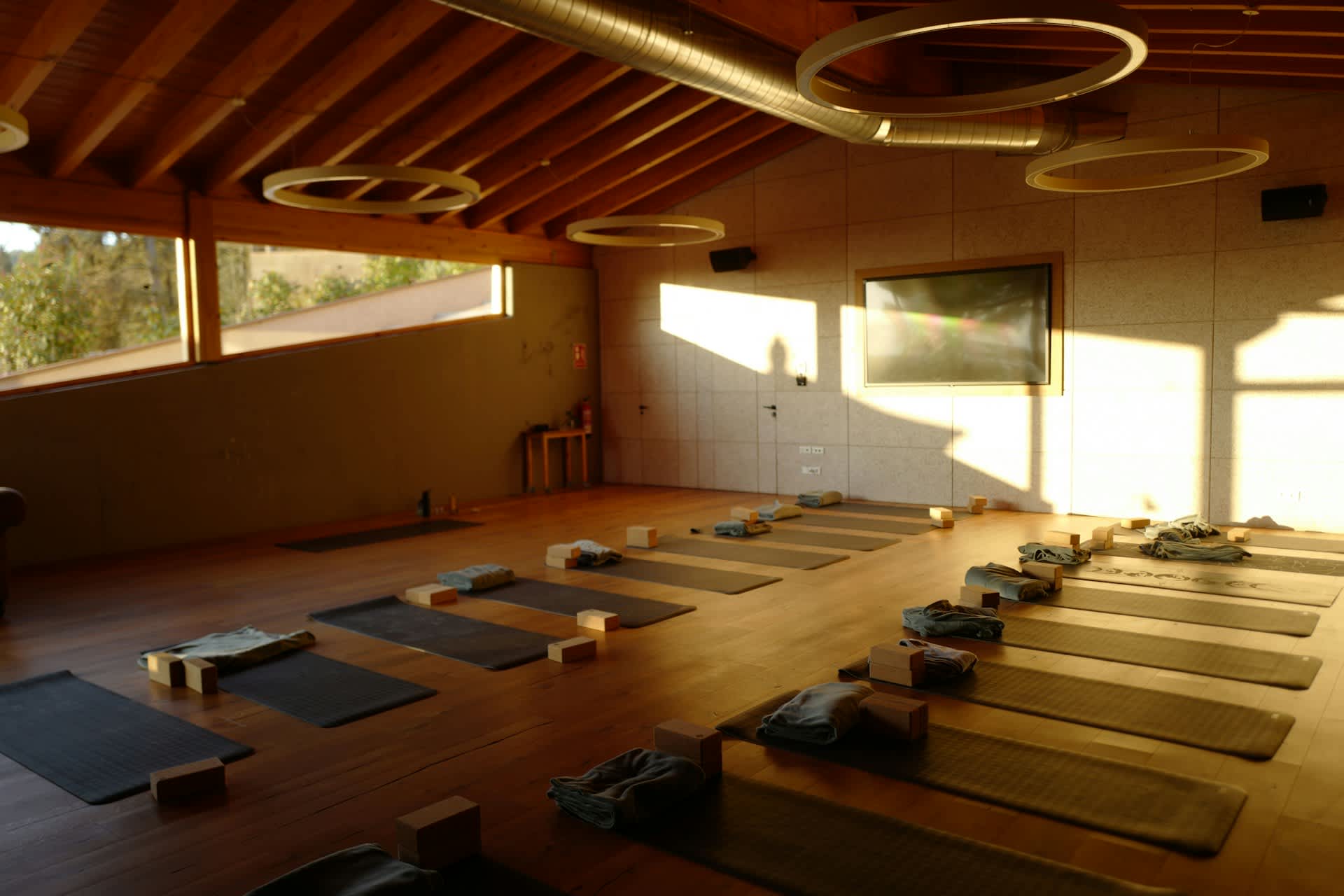
The FAQ lists free Wi-Fi, and states that yoga mats, blankets, cushions and props are provided. It advises travellers to bring comfortable yoga clothing and describes packing suggestions for different seasons. The retreat pages do not describe room types, so ask which accommodation applies to your dates, whether rooms are shared, and whether a private room is possible. For context, the institute’s teacher training page states that single rooms cost extra for that programme, which suggests that private accommodation is a question to settle explicitly for retreats too.
Teachers
The quality of teaching is an essential part of any retreat. The institute’s yoga teacher page lists the following teachers and their self-described backgrounds:
| Teacher | Published background |
|---|---|
| Dr. Bal Krishna Khanal | Founder and senior yoga teacher; Ph.D. in Yoga and Naturopathy from Nepal Sanskrit University; known for mantra chanting |
| Yogini Indu | Certified through Yoga Alliance USA; teaches Hatha, Ashtanga, Tantra and yoga philosophy; more than ten years of teaching |
| Dr. Roshan Baskota | Bachelor of Ayurvedic Medicine and Surgery from Tribhuvan University; teaches anatomy and physiology |
| Madhav Bhattarai | Trained at the Patanjali Institute in Haridwar; over five years of experience; has practised Vipassana meditation |
These are the teachers’ own published details and have not been independently verified here. The institute’s homepage displays a five-star Google rating based on 20 reviews, and its testimonials describe a homely atmosphere and praise the personal guidance of the lead teacher.
Deposits and Payment
The FAQ states that retreat packages require a deposit of 20% of the package price, with full payment due on arrival. Payment methods include bank transfer, Western Union, credit card or cash, arranged before arrival where applicable, and applications are processed within three working days and confirmed by email. Because no retreat price is published, the total depends on the quote you receive for your dates and group size. Ask for that quote in writing, along with a list of what it includes.
For context, the institute’s 200-hour teacher training, a separate programme, is published at $1,400 total with a $200 non-refundable deposit and the balance due on orientation day in Nepal. That figure does not apply to retreats.
A Note on Ayurvedic and Spa Treatments
Massage, sauna and steam are central to many retreats and are among the most appreciated comforts. A few sensible points apply to any retreat that offers Ayurvedic treatments, including those in Nepal.
Ayurveda is a traditional medicine system widely used in South Asia, and its therapies include herbal medicines, special diets, meditation, yoga, massage and medicinal oils. Treat it as a traditional wellness practice rather than a medical treatment. Reference sources describe the evidence for Ayurvedic approaches as limited, with few well-designed clinical trials, and report that some Ayurvedic products have been found to contain lead, mercury or arsenic. The overview of Ayurveda sets out these cautions in detail. In practical terms:
- Enjoy massage, oil treatments and sauna as relaxation, not as a cure.
- Be cautious about taking any herbal or mineral preparation internally unless a qualified practitioner has reviewed it for your situation.
- Tell the school about any medical condition, medication or pregnancy before treatments, and consider speaking to your own doctor first.
- Skip the optional steam bath or sauna if heat does not suit you. The institute’s pages describe the steam bath and nasal cleansing as optional.
None of this reduces the pleasure of a well-given massage. It simply keeps the comfort grounded in common sense.
Choosing Between a Resort-Style Retreat and a Simple, Teacher-Led Retreat
Neither style is better. The right one depends on what you mean by luxury.
| Question | Resort-style luxury retreat | Simple, homely, teacher-led retreat |
|---|---|---|
| Main comfort | Room, spa, service | Teaching, food, rhythm, care |
| Setting | Hotel or resort | Natural, quiet, homely |
| Group size | Varies; ask | Varies; ask |
| Price drivers | Accommodation and amenities | Programme length and group size |
| Best for | Travellers who value comfort and amenities | Travellers who value practice and quiet |
| What to verify | Teacher credentials, class size, what is included | Accommodation details, what is included |
Many travellers find a hybrid works well: a simple, teacher-led retreat for the practice, and a comfortable hotel for a few nights before or after. Nepal Yoga Institute’s published retreat structure suits that approach, because the retreat pages describe the programme and do not require you to build the rest of your trip around it.
Who Is a Luxury-Style Retreat Best For?
The overstretched professional. If your life is a series of decisions, a retreat where everything is arranged is a real relief.
The traveller who has never done a retreat. Comfort lowers the barrier. If you worry about discomfort, ask about rooms and food before you book.
The couple or small group. Many retreats offer pricing by group size. Nepal Yoga Institute states that its retreat prices depend on duration and group size, so a small group can ask for a joint quote.
The experienced practitioner. You may value a teacher who offers individual attention more than any amenity.
The person recovering from a busy season. Rest is the point. Look for a schedule with generous breaks, like the published rest blocks in the institute’s retreat days.
If instead you are looking for a minimal, budget-conscious stay, a luxury label may not be what you need at all.
How to Judge a Luxury Yoga Retreat in Nepal: A Checklist
- Ask for a written programme. It should list daily activities and timings.
- Ask for a written quote. It should list what is included and what is not.
- Ask about accommodation in detail. Room type, sharing, bathroom, heating or cooling, noise.
- Ask who teaches. Names, qualifications and how long they have taught.
- Ask about group size. Smaller groups mean more attention.
- Ask about food. Sample menus, dietary options, water quality.
- Ask about treatments. What is included, who performs them, and whether any can be skipped.
- Ask about transfers. Included or not, and the cost.
- Ask about cancellation and deposits. When you pay, how much, and what is refundable.
- Ask about health and safety. How the school handles injuries, medical conditions and emergencies.
- Ask about the setting at night. Peace and darkness matter to sleep.
- Read independent reviews. Look for specific details and mixed experiences, not just praise.
Understanding Pricing
Luxury retreats vary widely in price, and the reasons are not always visible. The main drivers are accommodation quality, length of stay, group size, treatments, transfers and the reputation of the teachers. Because Nepal Yoga Institute does not publish retreat prices, this guide does not quote one. What the institute does publish is how it arrives at a price: its retreat pages say that prices are calculated on request according to the duration of the package and the size of the group.
When you request a quote, ask for these items to be listed separately:
- Programme length and dates
- Accommodation type and number of nights
- Meals included
- Treatments included, such as the Ayurvedic oil massage and sauna in the published schedule
- Airport pickup or drop-off, which the booking form offers as an option
- Taxes and service charges
- Deposit amount and payment dates
The FAQ’s statement that retreat packages require a 20% deposit and full payment on arrival helps you plan cash flow, and the stated payment methods are bank transfer, Western Union, credit card or cash.
Seasons: When to Go
Nepal’s seasons shape comfort as much as any amenity. Autumn (roughly September to November) and spring (roughly March to May) are widely favoured for comfortable temperatures and clearer skies. In the Kathmandu Valley, the monsoon brings rain from roughly June to August. Winter can be cold in the mornings, so a retreat in that season benefits from warm layers and a clear answer about heating.
If comfort is your priority, ask how the property handles the season you plan to visit. Because the institute’s booking form lists start dates around the 15th of each month, ask the team which dates are currently open.
Adding Wellness Extras
Many travellers add small extras to deepen a retreat.
Sound and singing bowls. Singing bowls are part of Nepal’s soundscape and a popular souvenir. Nepal Yoga Institute’s guide to singing bowls in Nepal notes that research on sound healing is preliminary and that the instruments should not be treated as medical treatment. Enjoy a sound session for relaxation.
Counselling support. The institute’s psychological counselling page describes counselling as a confidential process with a trained professional. It publishes no price or session length, so ask if this is of interest.
Walks and treks. The institute’s yoga trek page describes hikes with yoga classes at prearranged locations, naming options such as Annapurna Base Camp, Sagarmatha Base Camp, Langtang Valley, Upper Mustang, Gosaikunda and Chisapani. It publishes no prices or durations, and trekking is a very different experience from a restful retreat, so consider it separately.
Monastery visits. If you are drawn to Buddhist monasteries, the institute’s guide to visiting a monastery in Nepal describes the best-known ones and how a visit differs from a retreat.
Beyond the Valley: Nagarkot and the Hill Rim
Some travellers who want a luxury yoga retreat in Nepal are drawn to the hills for the views. Nagarkot sits on the eastern rim of the Kathmandu Valley, about 32 km from Kathmandu, and is known for sunrise viewing and a wide Himalayan panorama. Reference sources note that it was historically a fort, later a summer retreat for the royal family, and then a hill station. Published elevation figures vary slightly between sources, at roughly 2,000 metres or a little more, so treat any single number with care.
Hill locations are cooler than the valley floor and can be cold in winter, which matters for comfort. If views are your idea of luxury, ask any retreat in the hills about heating, hot water and road access in the season you plan to travel.
A Simple Way to Design a Restorative Week
If your goal is rest rather than activity, a week built around a retreat works best when you protect the retreat days and place sightseeing around them. A simple structure looks like this.
| Stage | What to do | Why |
|---|---|---|
| Before the retreat | Arrive a day early if possible; sleep and acclimatise | Jet lag undermines the first retreat day |
| Retreat days | Follow the published programme; add nothing | The schedule already contains rest and treatments |
| After the retreat | Add one gentle day, such as a quiet walk or a heritage visit | Lets you integrate before travelling |
| Departure | Leave generous time for the airport | Kathmandu traffic can be slow |
The institute states that extra nights before or after a course can be arranged at a rate agreed in advance, and that airport pickup is an option on the booking form, so both are worth raising in your first enquiry.
Sleep, Rest and Recovery: The Quiet Heart of the Matter
It is easy to focus on rooms and treatments and forget that the most valuable luxury on a retreat is sleep. A few habits help you rest well wherever you stay.
- Keep a regular schedule. The published retreat day starts at 06:00 and ends with dinner around 19:00, a pattern that naturally supports an early night.
- Limit screens in the evening. Free Wi-Fi is available, but a retreat is easier to settle into if you put your phone down after dinner.
- Eat lightly in the evening. The institute’s sattvic meals are described as simple and fresh.
- Use the rest blocks. Do not skip the afternoon relaxation period to sightsee or answer email.
- Tell the teachers when you are tired. A good teacher adjusts the practice rather than expecting you to push.
Planning Timeline
| When | What to do |
|---|---|
| 3 to 4 months before | Decide the length and style of retreat; shortlist providers |
| 2 to 3 months before | Request written programmes and quotes; ask about accommodation and group size |
| 6 to 8 weeks before | Submit your booking; arrange the deposit |
| 4 to 6 weeks before | Book flights; arrange travel insurance; check visa requirements with official sources |
| 2 weeks before | Confirm airport pickup and arrival time; send dietary and health information |
| 1 week before | Pack; start a gentle daily practice |
| Arrival | Rest; do not judge the retreat by day one |
Common Mistakes
- Paying for the label. “Luxury” is a marketing word, so check what it means.
- Ignoring the teaching. Beautiful rooms do not teach you anything.
- Skipping the written quote. Verbal promises are hard to hold anyone to.
- Overlooking accommodation details. Ask whether rooms are private, and what is included.
- Assuming treatments are medical. Treat them as relaxation.
- Booking too long a first stay. Shorter is wiser for a first retreat.
- Ignoring health information. Tell the school about injuries, conditions and medications.
- Overpacking the itinerary. A retreat is not a tour.
What to Pack
- Comfortable, stretchy clothing for practice
- A shawl or scarf for temples and cool mornings
- Warm layers in winter; light clothing and rain gear in summer
- A hat and sunscreen
- Mosquito repellent
- A flashlight
- Regular medications and any toiletries you rely on
- A notebook
- Your own yoga mat, towel or mat cover if you prefer them, though the institute states that mats and props are provided
Frequently Asked Questions about Luxury Yoga Retreat Nepal
1. What is a luxury yoga retreat in Nepal?
It is a retreat that emphasises comfort, personal attention, care and unhurried time. The term is not regulated, so ask each provider what it includes.
2. Does Nepal Yoga Institute offer a luxury yoga retreat?
The institute does not describe itself as a luxury resort. Its pages describe a homely, natural setting, organic sattvic food, Ayurvedic massage, sauna, an optional steam bath and a structured yoga day. Its retreat pages do not describe room types, so ask about accommodation.
3. What retreats does Nepal Yoga Institute publish?
A Five Days Yoga Retreat Program, a Long Term / Short Term Yoga Retreat Package, a Five Days Stress Management Package and a Long Term / Short Term Stress Management Package.
4. How much does a retreat at Nepal Yoga Institute cost?
The institute does not publish fixed retreat prices. Its retreat pages say prices are calculated on request depending on duration and group size. Ask for a written quote.
5. What deposit is required for a retreat?
The FAQ page states that retreat packages require a deposit of 20% of the package price, with full payment due on arrival.
6. What treatments are included in the five-day retreat?
The published schedule includes an Ayurvedic massage on the first day, Ayurvedic oil massage and Ayurvedic sauna on the middle days, and an optional steam bath on the first day. Confirm the exact treatments in your written quote.
7. Is the food vegetarian?
The FAQ states that meals are organic, sattvic and vegetarian or vegan, and that meat, fish and eggs are not served. Send dietary needs in advance.
8. Can I have a private room?
The retreat pages do not describe room types. Ask the institute directly whether a private room is possible and whether it costs extra.
9. Is airport pickup available?
The booking form offers airport pickup as an option. The FAQ states the airport is about 22 km from the institute and a taxi costs roughly US$20.
10. Is Wi-Fi available?
The FAQ states that free Wi-Fi is available.
11. Are yoga mats provided?
Yes. The FAQ states that mats, blankets, cushions and props are provided, though you may bring your own.
12. Are Ayurvedic treatments medical treatment?
No. Treat them as traditional relaxation and wellness practices. Tell the school about medical conditions, medications or pregnancy, and consult your own doctor if unsure.
13. Which region is better, Kathmandu or Pokhara?
It depends on what you want. The Kathmandu Valley offers heritage and easy access from the airport. Pokhara, about 200 km west of Kathmandu, offers a lakeside setting with mountain views, but it needs a flight or long drive from the capital. Nepal Yoga Institute is in Kathmandu.
14. When is the best time to go?
Autumn and spring are the most popular seasons, while monsoon rain arrives roughly June to August in the valley and winter can be cold in the mornings. Ask the institute which start dates are currently open.
15. How do I book?
Use the Book Now form. The FAQ states that applications are processed within three working days and confirmed by email, and it advises reading the terms and conditions before paying.
Ready to Rest, Restore and Renew?
The best luxury yoga retreat Nepal can offer is the one that gives you the kind of comfort you actually need, and the surest way to find it is to ask clear questions. If a quiet, homely, teacher-led retreat in Kathmandu with daily treatments and organic food sounds right, start with the programme pages, then ask the team for dates, accommodation details and a written quote.
- Read the Five Days Yoga Retreat Program or the Long Term / Short Term Yoga Retreat Package.
- Looking for beginner-friendly background first? Read the guide to yoga retreats in Nepal for beginners.
- Ready to apply? Fill in the Book Now form.
- Have a question first? Talk to the yoga teacher on WhatsApp: +977 9860480478
Nepal Yoga Institute and Retreat, Budhanilkantha-11, Kathmandu 44600, Nepal Phone: +977 9823022196 / +977 9860480478 Email: info@nepalyogainstitute.com